If you’ve been watching our videos, you know I keep an eye on all the ways new technology and rules are quietly changing what it means to own and drive your own car. We’ve talked about speed limiters, kill switches, driver monitoring, and all the data your vehicle is already collecting. Today I want to bring you something that’s moving fast and most people have no idea about yet. And I won’t blame you if this gets you mad.
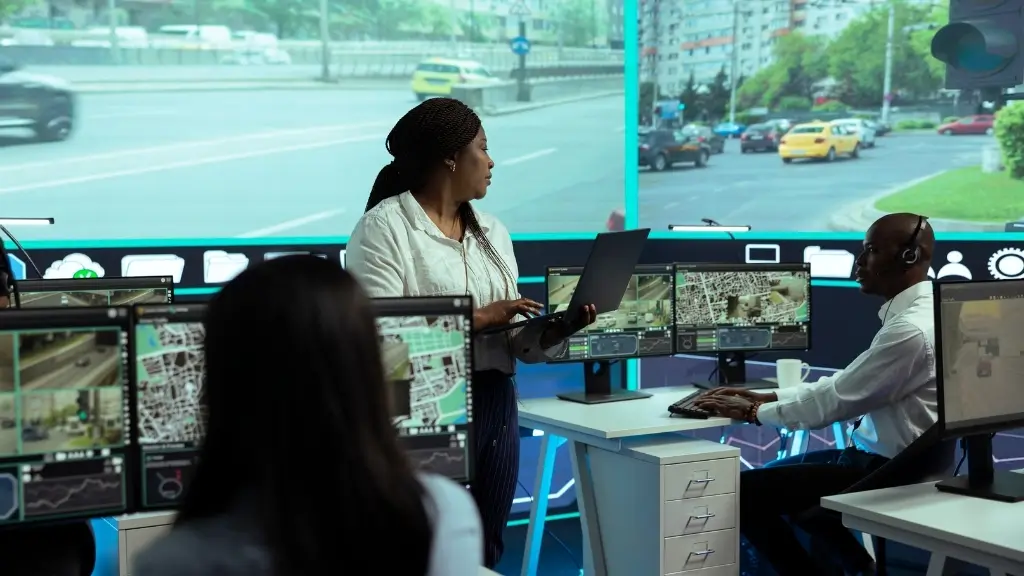
Those license plate cameras you see on highways, overpasses, and street corners? They’re not just reading tags anymore. A new system being sold to police and installed everywhere by government agencies are right now tracking your phones, smartwatches, car infotainment screens, pet trackers riding inside your vehicle, even health devices that many people wear.
First, let’s talk about the cameras. They’re called Automatic License Plate Readers or ALPRs for short. They are also known as Flock cameras – that may be the company’s name, but they definitely see us as a flock of sheep.
Police departments, toll authorities, and even some private companies have been using these types of cameras for years. They snap a picture of your plate plus your face, log the time and location, and store it in big databases.
It started as a tool that was claimed to be for finding stolen cars or Amber Alerts. That part makes sense could make sense if that was all. But the databases got huge, now they have billions of scans, and the data sticks around, even though we were told otherwise. Sometimes it gets shared. Sometimes it gets used in ways that go way beyond catching criminals. Many times this data is sold to multiple companies from technology, to health care, to insurance, or even just whoever happens to be the highest bidder. Civil liberties groups have been raising red flags about this for a while now.
So how do these ALPRs and Flock cameras work?
According to Flock, the cameras are activated by motion detection. Six to 12 frames of video are captured from each interaction. On its website, Flock claims that no facial recognition technology is involved and that its cameras are not “designed to search for people, scan faces, or track individuals.” Yet that’s a distinction without a difference: The Flock cameras can still keep tabs on a vehicle by its license plate, and there’s a good chance the owner will be in the same place.
ALPR cameras work by using Optical Character Recognition (OCR) technology to capture images of vehicle license plates, convert the images into digital text, and then compare that data against databases of vehicles of interest. They continuously monitor an area, often using infrared light to enhance visibility and accuracy in various conditions.
An ALPR camera is not just an imaging device, it is a tightly integrated vision system combining high-speed image capture, controlled illumination, and real-time data processing to reliably extract license plate data under real-world conditions.
Tech companies say that future ALPR cameras are expected to integrate AI-driven analytics for real-time crime response and multi-jurisdictional collaboration, with features like vehicle signature search and enhanced data-sharing controls to address privacy concerns.
Now the three and four letter acronyms are changing to confuse people. Automated license plate readers can be called ALPR, ANPR, or LPR, all as the government increasingly installs them to monitor the movement of people.
Now here’s where it gets more serious.
A defense contractor called Leonardo has been promoting something called SignalTrace. SignalTrace turns license plate reader cameras into advanced vehicle tracking technology. SignalTrace is a vehicle tracking technology that combines data from ALPR cameras with signals transmitted by nearby electronic devices. Yes all the devices I just mentioned. Even if you didn’t give it permission, nor access to your car’s Bluetooth or WiFi.
It’s basically an add-on sensor that clips onto existing ALPR and Flock cameras. Instead of just grabbing the plate number, it starts searching for wireless signals coming from inside or near the car: Bluetooth, Wi-Fi, RFID, that kind of thing.
So when you drive past one of these upgraded setups, it can pick up the unique signature from your phone, your smartwatch, your Bluetooth headphones, or the infotainment system in your dashboard any type of equipment with a signal. It can even grab signals from tire pressure sensors or an AirTag you left in the car. And yes: pet microchips, and fitness trackers are captured by this system.
The system then links all that device data to your license plate. Tying it together with a nice little bow. The goal, according to their own materials, is to “bridge the gap between vehicle and occupant.” In plain English: they want to know not just what car went by, but who was in it and what they were carrying, saying and doing. Leonardo calls this your “electronic fingerprint”.
SignalTrace is not restricted to roadside camera installations. Leonardo documentation referenced by multiple publications suggests the technology can also be deployed in transportation hubs, parking structures, event venues, and other public locations where wireless devices are commonly present. This capability allows the system to gather electronic fingerprint information even when license plate images are unavailable or when vehicles are not the primary focus of surveillance efforts. These cameras are acting as automative private investigators for the police, gathering and collating data about your life, whether you’re an investigation target or not.
This all touches two bigger points. First, who actually controls the data about where you go and what you carry with you. This may explain why all these data center are being built so fast to store all that data.
And second: now you know why I mentioned the 4th Amendment earlier.—
So let’s talk about what this really means for privacy — and why it connects to something I’ve been hammering on for years: connected car data rights.
This data collection violates your Fourth Amendment rights. Here’s a quick refresher if you don’t remember the language from the US Constitution:
“The right of the people to be secure in their persons, houses, papers, and effects, against unreasonable searches and seizures, shall not be violated, and no Warrants shall issue, but upon probable cause, supported by Oath or affirmation, and particularly describing the place to be searched, and the persons or things to be seized.”
It is central to privacy law and governs how law enforcement may use surveillance and obtain warrants.
That means everything they’re collecting about you while you drive is illegal. The only question is… is anyone doing something about it?
Lawmakers are now pressing for tighter limits on connected-car data after privacy advocates and drivers warned that modern vehicles collect location, speed, route history, braking patterns, voice commands, and everything inside the cabin including driver-monitoring attention, occupancy sensing, and interior microphones used for hands-free features and more. There is no way to opt out of this data collection. And even if you don’t accept the data collection, there is no way to prove that it not being collected.
Your modern car is basically a rolling computer that collects even more than location data, driving habits, how hard you brake, when you use the wipers, what you listen to on the radio or stream through your phone, and a whole lot more. Newer vehicles even have cameras inside that car that monitor the driver and all the passengers through the rear view mirror. All that information gets sent back to the manufacturer through telematics systems. The same systems that let you remote-start your car, help your mechanic diagnose your vehicle, or get roadside assistance. So you think you are gaining all these great services, but at what cost.
Here’s the problem most drivers don’t realize: they don’t own or fully control that data. The manufacturer does. They decide who else gets to see it: insurance companies, data brokers, government agencies, law enforcement through various agreements, and marketing companies. You might get some basic privacy settings in the car’s menu, but they’re limited. And when you sell or trade the car, a lot of that personal data can stay connected to that car unless you know exactly how to wipe it.
All these cameras and data collection were secretly installed under the guise that this is all for your protection, the government passed the funding in other bills so you wouldn’t notice. Because if it was obvious you’d push back. Instead the funded was buried in the 2021 Infrastructure Bill that also hid funds for the kill switches.
This is all about power and control.
The politicians say they can justifies the power, a policy, or an exception by telling you it’s to protect the vulnerable. They’re not protecting the vulnerable. They may think they are, but the true ulterior motive is data collection that limits your freedom. Then they can use this story to expand the scope.
The funding for the cameras and the installation comes from your tax dollars. So you are paying for the surveillance, installation and collection of your data and everyone else’s. Elected officials were given the power and they are using it to control every aspect of our lives.
But there is more to all of this data collection. Massive data center build outs and camera installations are creating jobs, true, but are they building digital infrastructures that are prisons of your freedom? Think about that.
What else are they utilizing all this data for? Let’s focus on just automobiles.
I’ve talked about the REPAIR Act and other right-to-repair efforts plenty of times before. And quite a lot recently. It seems to be at the crux of so many issues these days.
There’s a growing push to give vehicle owners and independent shops real access to that data and the tools to use it. The idea is simple: it’s your car. You should have the right to see, control, and even delete the data it generates about you. Some states already give you rights under laws like California’s CCPA to know what’s being collected and ask for it to be deleted. But federally we’re still playing catch-up, and manufacturers have pushed back hard.
Now layer SignalTrace on top of all that.
Not only is the manufacturer collecting data from your car, but external cameras on public roads can now grab signals from the devices you bring into the car and tie them straight to your plate. It creates a much richer picture of your movements and associations — who you ride with, where you go regularly, what gadgets you carry.
This is classic “pattern of life” surveillance. Do it enough times and authorities (or anyone who gets access to the data) can figure out your routines, your relationships, even sensitive locations like a doctor’s office or a protest. And because it’s passive, just picking up signals already in the air, it happens without you knowing and often without a warrant for every scan.
The company says it’s only capturing frequencies and identifiers, not the actual content of your calls or messages. That might be technically true, but it doesn’t change the fact that the end result is detailed tracking of you through your stuff. Once the data exists in a database, history shows it tends to get used more broadly over time. All those data centers are being built for a reason.
So what does this mean for regular people who just want to drive their cars and keep the government out of it?
It means your expectation of privacy on public roads is shrinking fast. It means the data ecosystem around your car — what the manufacturer knows plus what these surveillance systems can pick up — is getting bigger and more connected. And it means we need stronger rules about who can collect this stuff, how long they can keep it, and what they can do with it.
I’m not saying every police department is going to abuse this tomorrow. But once the capability exists and the cameras are already up, the temptation to use it for more than just stolen cars is real. We’ve seen it with other surveillance tools.
This is what you can do right now. First, get familiar with your car’s privacy and data settings. Many vehicles let you turn off certain data sharing or location tracking. Do it. It’s not perfect, but it helps.
Second, be mindful of Bluetooth and Wi-Fi. When you’re not actively using them, turn them off in your phone and in the car. Those signals are exactly what systems like this are designed to grab.
Third, if you use AirTags or pet trackers, I’m not telling you to stop using them – but know they can be detected. That’s convenient when you lose something — less convenient when someone else is mapping your movements.
Fourth, when you sell or trade your car, take the time to factory reset it and remove any paired devices. A lot of people skip this and leave their personal data behind. You are giving someone access to your dat It takes seconds to clear it out.
Fifth — and this is the bigger picture — support real right-to-repair and data-privacy legislation. Laws that give you ownership and control over the data your car generates. The REPAIR Act and similar efforts are trying to do exactly that. Make your voice heard with your representatives. These issues don’t get fixed by accident.
Sixth – there are group fighting back against these cameras. Check out the Freedom Society of the Republics, the are investigating is the relationship between connected-vehicle systems, vehicle-generated data, telematics, and government access through third parties.
Stay informed as these new technologies don’t announce themselves with big press conferences. They show up in police budgets and vendor contracts. That’s why I bring them to you
Bottom line: Your car is supposed to work for you. Not the other way around. When new surveillance tools start linking your plate to every gadget you own, it’s worth paying attention — and pushing back where it goes too far.
I’ll keep watching this space and bringing you updates as more departments adopt or test these systems. And I’ll let you know about the wins too.
If you’re wondering “where are all these cameras?” you will be shocked. Check out websites like deflock.org an open-source project mapping license plate readers. Or eyesonflock.com an aggregating Flock Safety Transparency Portal data and haveibeenflocked.com where you can enter your plate number to find out more.
What do you think? Have you noticed more of these cameras in your area? Drop a comment below.
Check out my full commentary on this story: https://youtu.be/5MojWSOFjRs
Looking for more automotive news? https://www.CarCoachReports.com
Listen to The Drive Car Show – https://www.youtube.com/@thedrivecarshow