Despite ongoing concerns surrounding affordability, interest rates, and uncertainty in the Middle East, the dealership buy-sell activity is moving in the opposite direction. Joining us on today’s episode of Inside Automotive is Ryan Kerrigan, Managing Director of Kerrigan Advisors, to discuss record franchise turnover, rising valuations, and what’s driving continued momentum in the 2026 dealership M&A market.
According to Kerrigan, the buy-sell market is running at full speed, with franchise sales up 21% in the first quarter of 2026 compared to the same period last year.
"The buy-sell market is hitting on all cylinders."
Demand holds
Despite strong transaction volume, Kerrigan points to a persistent tension in the broader market. The U.S. SAAR remains above 16 million units and inventory levels are relatively stable, but the average selling prices now exceed $50,000, pricing out a growing segment of buyers. He also cited a recent Wall Street Journal report estimating that roughly one million consumers who would otherwise buy new this year are simply priced out. Many are choosing instead to hold onto existing vehicles, which Kerrigan notes is driving service retention.
Additionally, Kerrigan notes that public dealer groups drove much of the first-quarter volume, deploying roughly $800 million in capital on acquisitions. That figure represents roughly four times what publics spent in Q1 2025.
Among the recent headlines circulating, AutoNation acquired a high-volume Toyota store in Newnan, Georgia, and Penske paid $670 million for two Lexus stores in Orlando, Florida, which Kerrigan describes as an all-time record for a two-store transaction.
Geopolitics and disruptions
Kerrigan warns that long-term valuation modeling can no longer rely on historical metrics alone. He referenced an AlixPartners report that ranked automotive as the most disrupted industry across all sectors and noted that Chinese OEM expansion, tariffs, oil prices and geopolitical risk are reshaping how Kerrigan Advisors evaluates franchise value going forward.
Notably, buyers are now factoring AI-driven margin improvements into their underwriting, Kerrigan said, which is lifting valuations for growth-oriented operators. He points to Group 1 Automotive’s recent announcement of a 700-person headcount reduction tied to automation, expected to generate $50 million in incremental annual profit, as a leading example of how AI is reshaping dealership economics.
“We’re not the only industry that’s reacting to AI, but we remain a very kind of paper-incentive, process-driven, people-intensive model.”
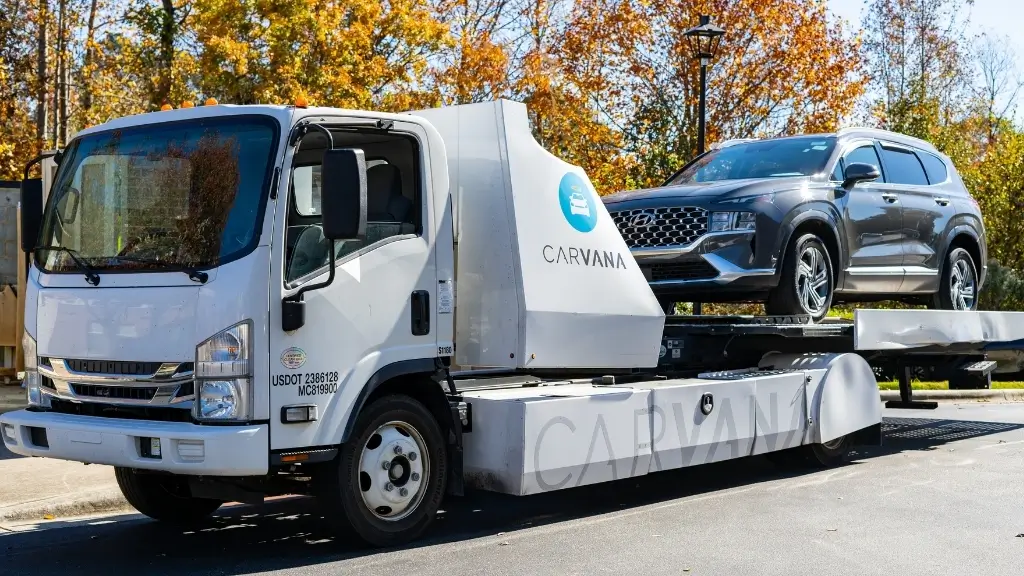
He flags Carvana’s move into franchise retail as one of the most closely watched developments in the market. The company acquired several Stellantis stores and grew one small Arizona location into the highest-volume Stellantis store in the country, operating without traditional management layers and leaning heavily on technology.
Additionally, he notes that access to OEM inventory and franchise approval will determine how far Carvana can extend its business beyond Stellantis. Although the industry is absorbing lessons from outside entrants like Carvana and CarMax, legacy pricing and customer experience structures have been slow to change, contends Kerrigan, but he alludes that external pressure is forcing greater openness.
Franchise value & outlook
Kerrigan Advisors increased the lower end of Kia’s blue sky multiple in its Q1 Blue Sky Report, citing robust dealer partnerships and ongoing acquisition interest. The firm also reduced Audi’s multiple, citing rising inventory levels, squeezed margins, heightened domestic competition, and tariff risks associated with its German manufacturing base. Additionally, Nissan exited negative watch after posting over 9% U.S. sales growth in Q1 year-over-year, the largest among major brands. Kerrigan believes Nissan has reached a bottom and remains a leading player in the under-$40,000 segment.
Nevertheless, Kerrigan said his firm’s pipeline is as full as it has ever been and projected a record year for Kerrigan Advisors by a wide margin, contingent on macroeconomic stability.