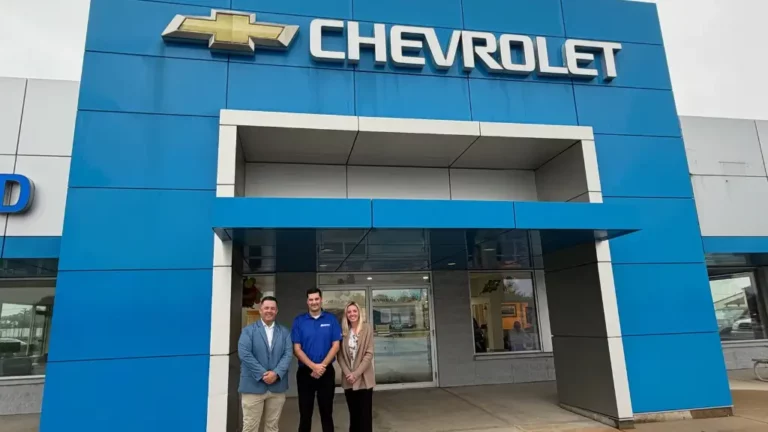
Just months after acquiring an underperforming Chevrolet GMC dealership in a small North Carolina market, Scott Simons and his team at Simons Chevrolet GMC have achieved 280% of their new vehicle sales objective through Chevrolet, tying them for number one in the zone for volume. While sales and service are up 258% overall, parts have climbed 150%, numbers that have turned heads across the region and caught the manufacturer’s attention.
The results are striking on their own. The context makes them more so.
On today’s episode of Inside Automotive, Simons mentions that the newly acquired store in Whiteville, a town with about 5,000 residents and a median household income near $48,000, faces competition from larger markets and better-funded rivals. After stepping away from his CEO role following the end of his CMA partnership in 2024, he chose to re-enter retail with a hands-on approach.
Building teams from the ground up
When Simons started, he did not restructure from a distance. He sat down with every member of the existing staff, offered each one an opportunity to stay, and made clear where he intended to take the store. Not everyone believed it was possible, with a few choosing to leave. But the core of what would become a high-performing team took shape quickly, reinforced by key hires Simons brought in from previous roles.
From there, the focus turned to alignment. Simons introduced daily performance tracking through GM sales reports, monitoring not only the store’s own numbers but the standings of every competitor in the zone. Rankings were shared openly with the team, creating a competitive internal culture built around real-time awareness of where Simons Chevrolet GMC stood relative to the market, and who they were gaining on.
Inventory strategy was equally crucial. Simons analyzed which vehicles sold fastest in his local market and adjusted his stocking choices accordingly, particularly emphasizing high-volume, lower-margin GMC Trax units. This strategy focused on throughput and brand recognition rather than per-unit gross profit, a calculated decision that improved zone rankings and OEM visibility. The store also maintains a 4.9 Google rating and has gathered 137 Facebook reviews since November, with CSI monitored daily.
Financing as a growth lever
Early on, Simons identified that roughly half of incoming customers required credit assistance. To address this, he recruited a finance specialist with a strong track record in subprime approvals, a move he views as critical to unlocking demand.
The strategy also extends to marketing, with the dealership sharing anonymized approval stories on social media to highlight credit challenges and successful outcomes. These posts attract buyers facing similar situations and drive inbound leads.
The team also leverages referrals by contacting customer references, which often leads to additional opportunities and opens communication efforts.
Community-first approach
Entering as an outsider, Simons prioritized visibility in the local community. His efforts include sponsoring events, attending local functions, and participating directly in school programs and activities.
His philosophy on community involvement emphasizes presence over passive support. Dealers who want community support, he argues, have to be visible in the community, attending events, making personal appearances, and giving residents a reason to support the store over a competitor in a larger market.
Notably, Simons acknowledged ongoing challenges, like those of affordability constraints, interest rates, and fuel costs, which are amplified in a lower-income market. His response centers on disciplined inventory management and expanded financing capabilities to meet local demand.
Future outlook
In the near future, Simons is looking to expand Simons Automotive Group. He identifies underperforming stores through OEM data, build relationships with owners, and explores acquisition opportunities over time.
The longer-term vision, according to Simons, is to build Simons Automotive Group into a multi-store enterprise, one, as he puts it, that will be here long after he is gone. For now, the foundation is being laid one day at a time, starting at 4:30 in the morning, in a town of 5,000 people that not everyone thought could support the kind of operation Simons had in mind.