Welcome back to the latest episode of “The Future of Automotive” on CBT News, where we put recent automotive and mobility news into the context of the broader themes impacting the industry.
I’m Steve Greenfield from Automotive Ventures, and I’m glad that you could join us.
This week, a look at a quiet but profound shift happening in our driveways and garages.
There was a time—not that long ago—when cars were, at their core, mechanical machines. If you had the patience, the elbow grease, and the right tools, you could bring just about any old vehicle back to life. And once you did, that car could be maintained indefinitely. But in terms of upgrades, you were stuck. Whatever features the next model year introduced, well… you simply didn’t get them.
But that world is changing. Fast.
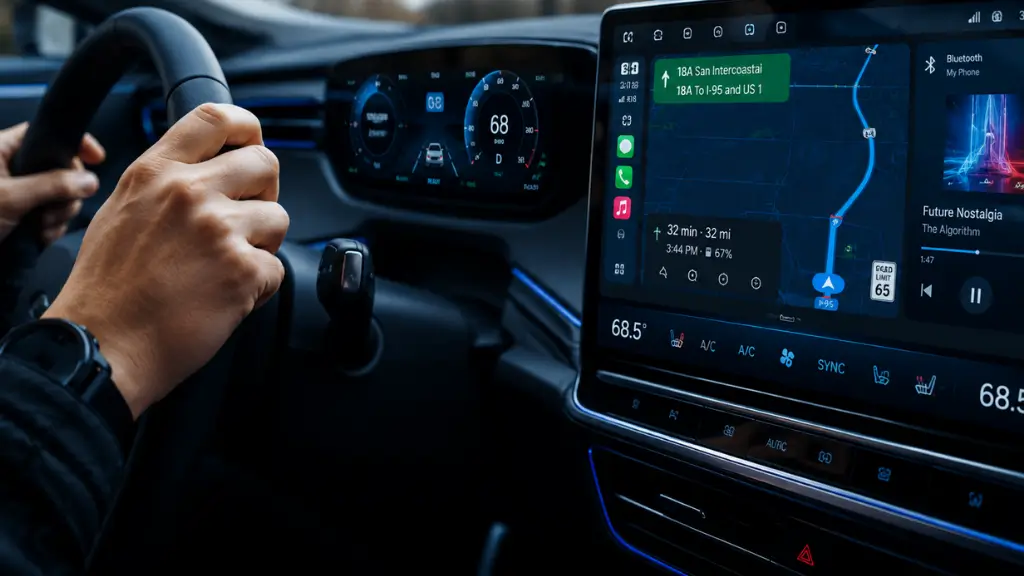
Take a Tesla. There are almost no buttons, no dials—just a giant touchscreen running nearly everything. And Tesla isn’t alone. Increasingly, modern cars, especially electric ones, are less like machines and more like software platforms, constantly updating themselves over the air to fix bugs, tweak performance, even add the occasional easter egg inside the cabin.
In other words, your car is starting to behave a lot like your phone. And that comparison—“a smartphone on wheels”—has already become a cliché inside the auto industry. There are real perks to that: continuous improvement. Better navigation. The introduction of new convenience features that didn’t exist before.
But there’s also a catch. Software ages. Hardware gets left behind. And a car—something we expect to last a decade or more—can suddenly feel outdated because an app crashes, not because a gasket fails.
How well these software-dependent cars will age is still an open question. Automakers now promise vehicles that evolve, that get better over time. But technology doesn’t work on the same timeline as automobiles. Americans replace their phones every couple of years. The average car on the road today is nearly 13 years old. And automakers are legally required to support safety recalls for 15 years—long after your smartphone would’ve been tossed in a drawer.
Future updates may simply be too demanding for older in-car computers. As companies race to roll out AI-driven features and more sophisticated autonomy, some models may fall behind—slowed by outdated chips or incompatible systems. Imagine trying to run the latest Microsoft Windows suite on a 2010 laptop. It wouldn’t be pretty.
And we’ve seen what obsolescence looks like already. In the 2010s, many cars relied on 3G networks to power remote locking, emergency assistance, and crash detection. When 3G was shut down in 2022, millions of still-drivable cars suddenly lost those features. A few manufacturers offered upgrades; others simply shrugged and said, “Connectivity’s gone.” And that was that.
Some automakers are trying to get ahead of the problem. Rivian, for example, says it’s building extra computing “headroom” into its vehicles—enough, it hopes, to keep them updated for seven to ten years. But what happens after that?
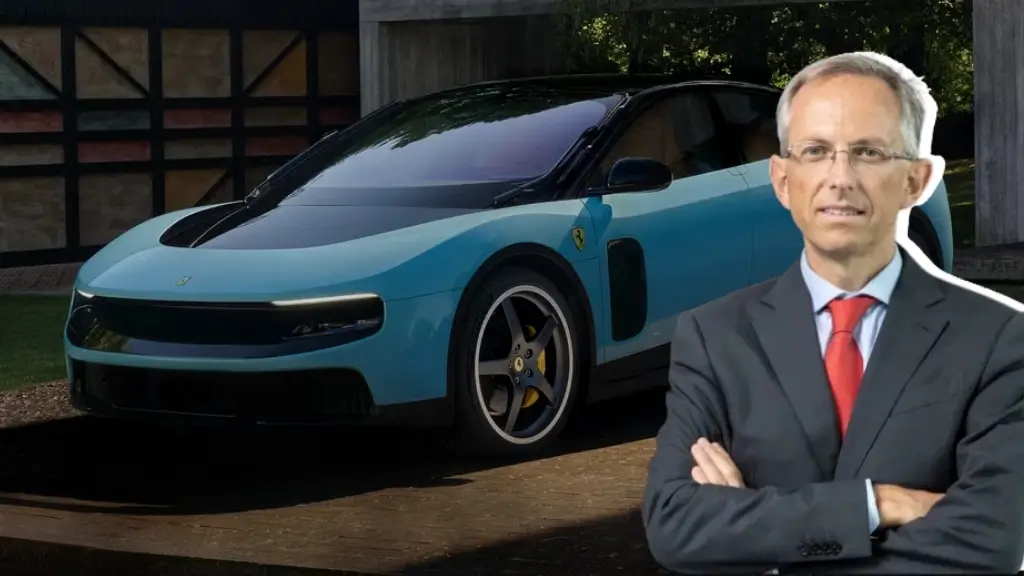
In the collector car world, many Ferrari enthusiasts already view electric vehicles with suspicion—not just because EVs lack the roar and rumble of a combustion engine, but because long-term value depends on longevity. A rare Ferrari V12 can still turn heads—and commands seven figures—half a century later. But if an electric Ferrari stops receiving software support after 10 years, what happens to its collectability and value?
There’s also the cautionary tale of Fisker, which went bankrupt in 2024. With the company gone, so were the software patches. Some of its 11,000 SUVs risked becoming expensive paperweights without fixes for critical glitches. Larger, established companies are far more stable, but even they’re not immune to financial pressure. Keep in mind that Rivian lost roughly $100,000 per vehicle last quarter; Lucid wasn’t far behind. Will these automakers even be around in 10 or 20 years to continue to provide software updates? Longevity, in the software era, can no longer be taken for granted.
And here’s the irony: electric cars, mechanically speaking, are built to last. Fewer moving parts. Less wear and tear. Replace a battery or a motor and an EV could, in theory, outlive many gas-powered cars. But if the software supporting it stops evolving—or stops working—your car may become nothing more than an oversized paperweight.
So, with that, let’s transition to Our Companies to Watch.
Every week we highlight an interesting company in the automotive technology space to keep an eye on. If you read my weekly Intel Report, we showcase a company to watch, and we then take the opportunity here on this segment each week to share that company with you.
Today, our new company to watch is WarrCloud.
WarrCloud is a technology and service solution that transform’s an automotive dealerships’ warranty processing to enhance the primary driver of your dealership’s gross profit: the Service Department.
Warranty processing is an increasingly important part of a dealership’s revenue. Lower your costs associated with it by taking advantage of WarrCloud’s automatic warranty processing technology.
From fully automated recalls to manual claims, WarrCloud can process claims up to 5x faster and reduce your warranty processing costs.
Automatic end-to-end warranty claims management means you’re getting productive time back in your workday. Spend it focusing on the customer experience, which drives higher customer satisfaction and improved retention.
If you’d like to learn more about WarrCloud, you can check them out at www.WarrCloud.com

So that’s it for this week’s Future of Automotive segment.
If you’re an entrepreneur looking to solve a big problem anywhere across the Mobility spectrum, we want to hear from you. We are actively investing out of our new Mobility Fund.
Don’t forget to check out my first book, “The Future of Automotive Retail,” and my newest book, “The Future of Mobility”, both of which are available on Amazon.
Thanks (as always) for your ongoing support and for tuning into CBT News for this week’s Future of Automotive segment. We’ll see you next week!