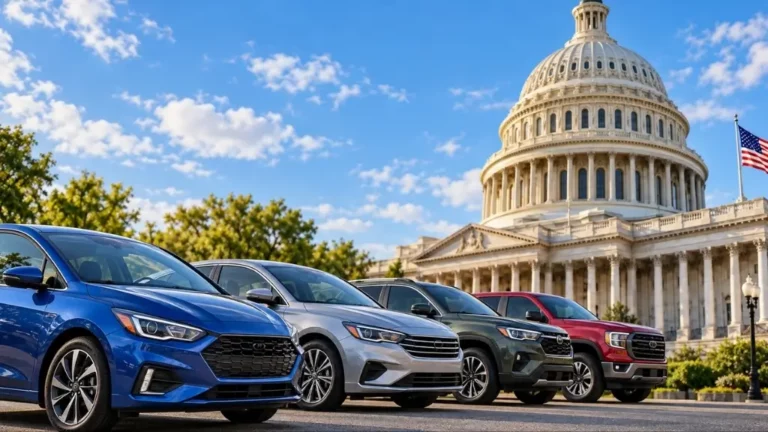
The Federal Reserve voted to hold its benchmark interest rate steady for the fifth time this year, keeping it in the range of 4.25% to 4.50%, despite growing political pressure from the Trump administration. While two Fed governors, Christopher Waller and Michelle Bowman, dissented in favor of cuts, Chair Jerome Powell emphasized a cautious approach as the central bank continues to assess the inflationary impact of tariffs and economic growth signals.
Though the Fed’s rate decisions influence broader borrowing costs, recent movement in auto loan trends is being driven more by dealership strategies than by central bank policy. With inventory building back up post-tariff surge, a rising share of consumers, particularly those with strong credit, are now accessing 0% financing offers, helping revive affordability despite high APRs elsewhere.
Here’s why it matters:
For auto retailers, the Fed’s current hold pattern means no immediate relief from borrowing costs, but improving consumer financing conditions signal an opportunity to move inventory. Although tariffs may continue pushing vehicle prices higher, attractive dealer-backed financing, especially for prime credit buyers, can help close deals during a slower sales cycle. Credit qualification, not Fed action, is becoming the real driver of affordability on the lot.
Key takeaways:
- Fed holds rates at 4.25%–4.50% for 5th straight meeting
Despite dissent from two governors, Powell’s Fed is holding firm, awaiting clearer data on inflation and labor market health. - Tariffs are a key reason behind the pause
The Fed believes Trump’s trade duties have inflated prices on consumer goods like appliances and toys, and may impact vehicles next. - Auto loan rates are slowly easing
The average new car loan rate dropped to 9.06% in July, down 27 basis points (bps) from June. For top-tier credit (760+), rates are as low as 5.4%, the lowest since Sept. 2022. - 0% financing offers surge
Roughly 7% of July’s dealer-financed loans came with a 0% APR, the highest share in three years. These deals are mostly limited to well-qualified buyers. - Credit score matters more than Fed action for buyers
A one-tier improvement in credit score (~100 points) can unlock better loan terms than any potential rate cut from the Fed.