
TSLA433.5907.58%
GM79.7901%
F15.3250.395%
RIVN14.3900.17%
CYD59.0401.69%
HMC26.420-0.05%
TM190.0901.01%
CVNA70.1501.87%
PAG166.5901.86%
LAD283.0506.47%
AN191.7601.78%
GPI329.6303.45%
ABG190.0202.3%
SAH78.6900.53%
TSLA433.5907.58%
GM79.7901%
F15.3250.395%
RIVN14.3900.17%
CYD59.0401.69%
HMC26.420-0.05%
TM190.0901.01%
CVNA70.1501.87%
PAG166.5901.86%
LAD283.0506.47%
AN191.7601.78%
GPI329.6303.45%
ABG190.0202.3%
SAH78.6900.53%
TSLA433.5907.58%
GM79.7901%
F15.3250.395%
RIVN14.3900.17%
CYD59.0401.69%
HMC26.420-0.05%
TM190.0901.01%
CVNA70.1501.87%
PAG166.5901.86%
LAD283.0506.47%
AN191.7601.78%
GPI329.6303.45%
ABG190.0202.3%
SAH78.6900.53%

New vehicle days’ supply shrinks as affordability drives demand

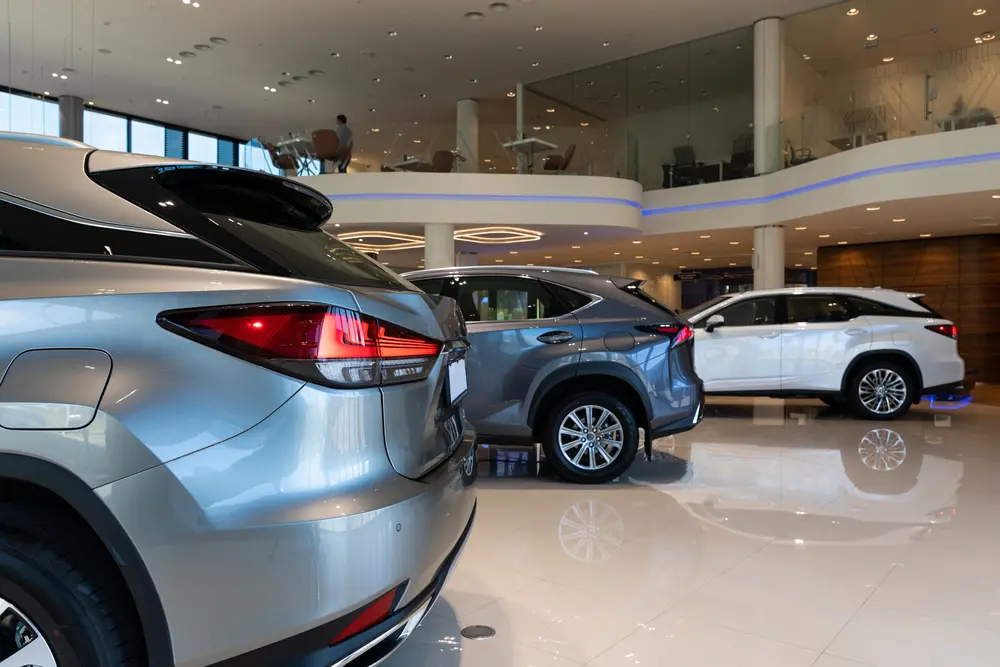
April's new vehicle inventory levels remain well ahead of last year but are held back by strong demand.

New vehicle inventory was stable month-over-month in early April due to a sizeable increase in demand but remained far ahead of prior-year levels thanks to the recovery of OEM production.

Cox Automotive recorded a total early-April new vehicle supply of 2.77 million units, roughly 1% ahead of March’s volume but 46% greater than last year’s 1.9 million. However, while inventory grew, the average days’ supply shrank compared to the previous month, driven by a higher daily sales rate. Days’ supply dropped from 79 days in March, one of the highest levels recorded in the years since the COVID-19 pandemic, to 72 days.

New vehicle prices were ahead of last year’s average but only by a narrow margin, rising less than 1%. On a monthly basis, prices have trended downward at a near-glacial pace, with April’s initial average listing equaling $47,240, down just $4 from early February. Regardless, sales picked up as overall affordability improved. Consumers also leveraged further driving demand.

As has been the norm, Toyota saw some of the lowest inventory levels in the industry at the start of April, partly due to the sustained effects pandemic-era supply chain disruptions have had on Asian automakers and to the high demand for the brand’s products. However, Ford and GMC saw above-average days’ supply, as did Stellantis, whose Dodge, Ram, and Fiat subsidies carried double the industry average.

Read More
More from Articles
Dealer sentiment climbs on strong spring in Q2, future confidence falls

Dealer sentiment climbs on robust Q2 sales, future confidence falls

- May 27, 2026
On the Dash: Spring sales pushed dealer sentiment higher for the second straight quarter, but future confidence fell sharply. The franchised and independent dealer divide widened across nearly every metric...
Scout Motors to bring 1,200 jobs to new Charlotte HQ

Scout Motors to bring 1,200 jobs to new Charlotte HQ

- May 27, 2026
On the Dash: Scout Motors is accelerating preparations for its 2027 vehicle launch with major investments in manufacturing and corporate operations. The company’s Carolinas expansion could strengthen regional supplier networks...
Volvo secures U.S. approval to continue vehicle sales despite China-linked restrictions

Volvo secures U.S. approval to continue vehicle sales despite China-linked restrictions

- May 27, 2026
On the Dash: Volvo’s approval removes near-term uncertainty around the brand’s ability to continue selling connected vehicles in the U.S. Increased U.S. production could improve inventory stability and reduce dealers'...
Toyota expands Tundra recall over engine contamination concerns

Toyota expands Tundra recall over engine contamination concerns

- May 27, 2026
On the Dash: Toyota’s expanding recall adds pressure to service departments already handling high recall volumes. Dealers should prepare for increased customer concerns surrounding Tundra reliability and engine performance. The...