
TSLA404.110-5.88%
GM72.630-0.47%
F13.0600.03%
RIVN12.900-0.45%
CYD50.420-0.02%
HMC25.3200.11%
TM185.470-1.9%
CVNA63.415-2.605%
PAG156.460-3.29%
LAD257.090-7.8%
AN178.590-3.35%
GPI305.470-11.71%
ABG177.5001.22%
SAH72.870-1.19%
TSLA404.110-5.88%
GM72.630-0.47%
F13.0600.03%
RIVN12.900-0.45%
CYD50.420-0.02%
HMC25.3200.11%
TM185.470-1.9%
CVNA63.415-2.605%
PAG156.460-3.29%
LAD257.090-7.8%
AN178.590-3.35%
GPI305.470-11.71%
ABG177.5001.22%
SAH72.870-1.19%
TSLA404.110-5.88%
GM72.630-0.47%
F13.0600.03%
RIVN12.900-0.45%
CYD50.420-0.02%
HMC25.3200.11%
TM185.470-1.9%
CVNA63.415-2.605%
PAG156.460-3.29%
LAD257.090-7.8%
AN178.590-3.35%
GPI305.470-11.71%
ABG177.5001.22%
SAH72.870-1.19%

Cornell engineers develop a five-minute charging lithium battery

The team's research focuses on the kinetics of electrochemical reactions, using the "Damköhler number" to measure the rate at which materials are delivered
A group of engineers at Cornell University has developed a new type of lithium battery that can be charged in under five minutes.

After fast charging their new lithium battery, the researchers observed its indium anode had a smooth lithium electrodeposition, whereas other anode materials can grow dendrites that impact the battery’s performance. Courtesy of Cornell

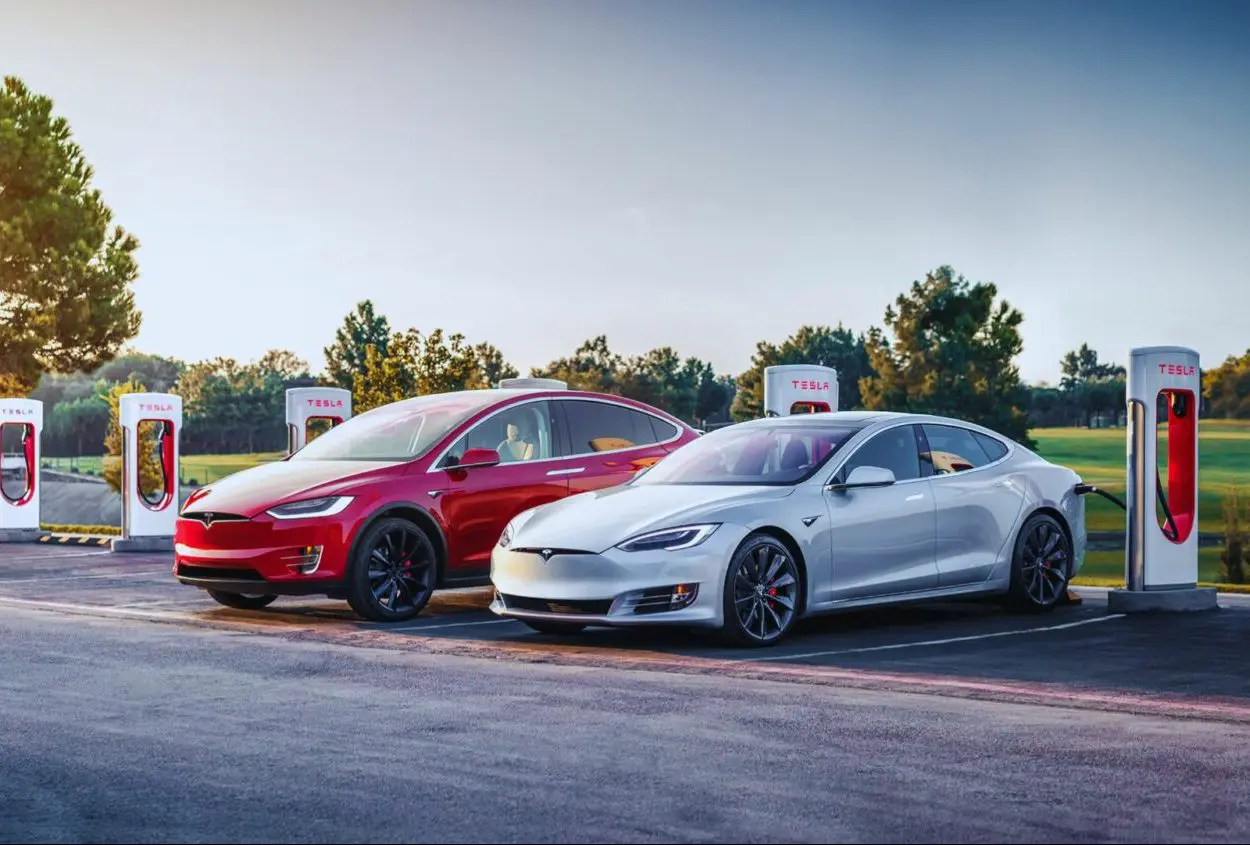
A group of engineers at Cornell University has developed a new type of lithium battery that can be charged in under five minutes and maintains its performance over extended charging and discharging cycles. This breakthrough addresses the “range anxiety” felt by drivers worried about electric vehicles’ ability to travel long distances without a time-consuming recharge.

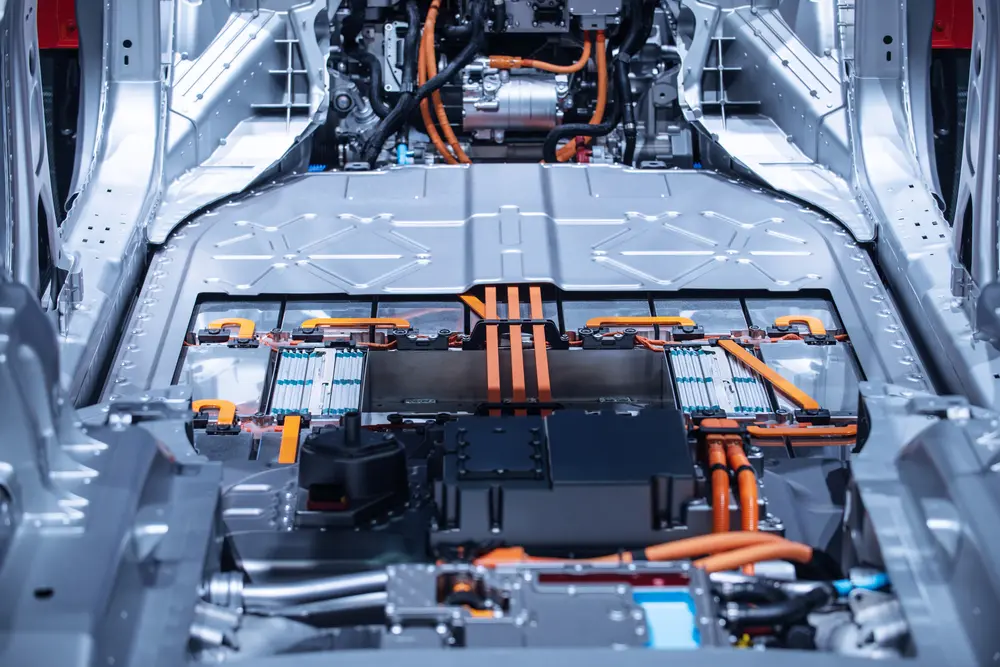
Lithium-ion batteries are commonly used in electric vehicles and cell phones because they are reliable, energy-efficient, and lightweight. However, they take hours to recharge and cannot withstand significant current spikes.

The project leader and dean of Cornell Engineering, Lynden Archer, announced that his team has developed a path to eliminate range anxiety by using rational electrode designs. By creating a battery that can be charged in just five minutes, EVs can now use smaller batteries with less range, resulting in reduced costs and encouraging greater adoption.

The team’s paper, “Fast-Charge, Long-Duration Storage in Lithium Batteries,” was published on January 16. Shuo Jin, a chemical and biomolecular engineering doctoral student, is the primary author.

The team’s research focuses on the kinetics of electrochemical reactions, using the “Damköhler number” to measure the rate at which materials are delivered to the reaction site and the rate at which chemical reactions occur.

According to Jin, the team sought to create battery electrode designs consistent with everyday charging and discharging routines to improve battery life and charging speed. To achieve this, they discovered a unique indium anode material that works well with various cathode materials to create a battery that charges quickly and discharges slowly.

According to the new study, indium has two essential properties for a battery anode: a modest exchange current density, which is connected to the pace at which ions are reduced in the anode, and an incredibly low migration energy barrier, which determines the rate at which ions diffuse in the solid state. It takes both slow surface reaction kinetics and rapid diffusion to achieve long-term storage and quick charging.

When electric vehicles are combined with wireless induction charging on public roads, the battery size and cost will be reduced, making them more appealing to drivers. The study was funded by the U.S. Department of Energy Basic Energy Sciences Program through the Center for Mesoscale Transport Properties, an Energy Frontiers Research Center.

Further Reading
More from Articles
CBT News heads to Washington, D.C., to host Auto Leadership Summit

CBT News heads to Washington, D.C., to host Auto Leadership Summit

- May 19, 2026
ATLANTA, Georgia (May 19, 2026)— CBT News, the auto dealer community’s No.1 resource for industry insights and news coverage, announced it will bring together the auto industry for the Auto...
TrueCar says it will now include mandatory dealer fees in advertised vehicle prices, exceeding FTC standards.

TrueCar gets ahead of FTC compliance, folds dealer fees into upfront pricing

- May 19, 2026
On The Dash: TrueCar says it will include mandatory dealer fees directly in advertised prices, exceeding FTC standards. In March, the FTC sent warning letters to nearly 100 dealer groups...
Elon Musk predicts self-driving domination within a decade as Tesla, Waymo face new recalls

Elon Musk predicts self-driving domination within a decade as Tesla, Waymo face new recalls

- May 19, 2026
On The Dash: Musk predicted Tesla's unsupervised self-driving service will expand nationwide by the end of 2026. Musk said AI will handle 90% of all miles driven within a decade. ...
S&P Global Mobility opens FeeSync to entire automotive industry at no cost, establishing first-of-its-kind dealer fee transparency infrastructure

S&P Global Mobility opens FeeSync to entire automotive industry at no cost, establishing first-of-its-kind dealer fee transparency infrastructure

- May 19, 2026
NEW YORK — May 18, 2026 — S&P Global Mobility today announced that it is opening access to FeeSync powered by Market Scan, its automotive payments-as-a-service platform, to the entire automotive industry at...
CBT News
Privacy Overview

This website uses cookies so that we can provide you with the best user experience possible. Cookie information is stored in your browser and performs functions such as recognising you when you return to our website and helping our team to understand which sections of the website you find most interesting and useful.