On the Dash:
- The Pajero could give Mitsubishi dealers a more competitive entry into the growing rugged SUV segment if the automaker brings it to the U.S.
- Its body-on-frame platform, seven drive modes, locking center differential and three-row layout would broaden Mitsubishi’s U.S. product mix.
- Mitsubishi has not confirmed a U.S. launch, leaving dealers waiting to see whether the Pajero becomes part of the brand’s planned lineup expansion.
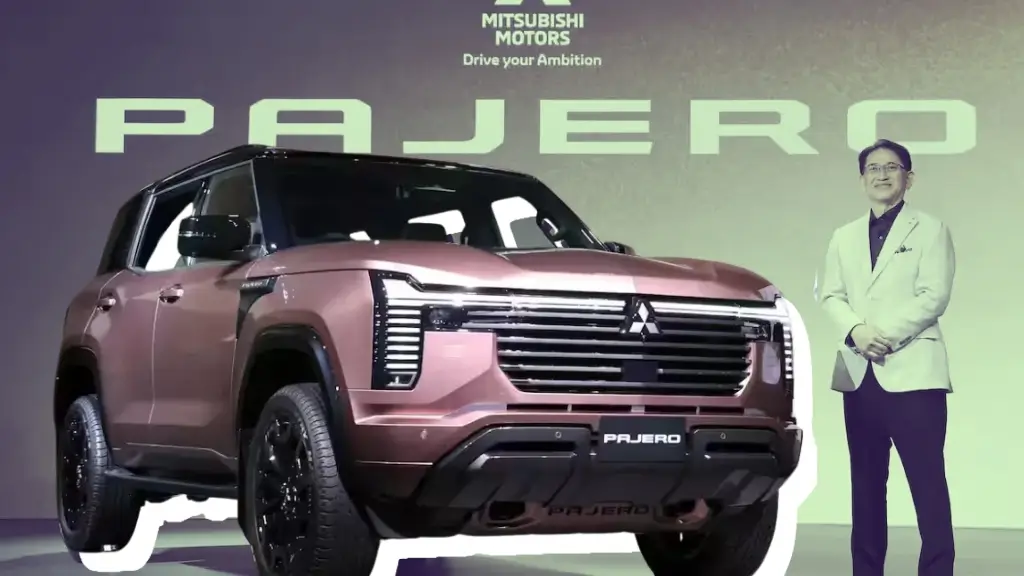
Mitsubishi’s presence in the U.S. is relatively modest compared to its global reputation, but launching the fifth-generation Pajero could be a strategic move to boost the brand’s popularity in the American market. The SUV positions itself alongside established rugged models like the Toyota Land Cruiser, but Mitsubishi has not yet announced any plans to sell the Pajero in the U.S.
The new Pajero rides on a ladder-frame chassis and pairs a five-link rigid rear axle with an independent double-wishbone front suspension. Its full-time four-wheel drive, locking center differential and seven drive modes emphasize its off-road capabilities. With more than nine inches of ground clearance, the Pajero stands apart from Mitsubishi’s current U.S. offerings.
The Pajero’s three rows of seating extend its appeal beyond off-road enthusiasts, seating seven passengers, and the second-row bench slides forward nearly six inches while also tumbling forward. Mitsubishi optimized second-row footroom to improve access and comfort for third-row passengers. The boxy design gives the Pajero ample passenger and cargo space.
Pajero’s updated design
The interior would enhance Mitsubishi’s reputation for quality in the U.S. Higher trim levels feature camel-toned leather upholstery and a more upscale cabin environment. The addition of dual 14.3-inch displays brings technology that Mitsubishi’s U.S. portfolio currently lacks. Overall, the interior elevates the Pajero’s premium positioning while preserving its rugged character.
Mitsubishi builds the Pajero in Thailand and powers it with a 2.4-liter turbodiesel four-cylinder engine that generates just over 200 horsepower and 354 lb-ft of torque. However, this diesel powertrain may limit its potential success in the U.S. market. If Mitsubishi decides to adapt the SUV for American consumers, it could consider a Nissan-sourced engine instead, although the company has not confirmed this.
Mitsubishi recently announced plans to expand its U.S. lineup from four to six models by 2027, including a new pickup it is developing with Nissan. A rugged SUV like the Pajero could complement that truck and give dealers additional products in high-demand segments, fitting into Mitsubishi’s broader strategy to strengthen its U.S. presence.
The decision now rests with Mitsubishi. The Pajero is set to launch in Thailand later this year, but the company has yet to confirm whether it will reach the U.S. If Mitsubishi adapts the Pajero for U.S. regulations, pricing and consumer preferences, it could become one of the brand’s most important products in years, giving dealers a significant opportunity to diversify their SUV inventory.