Welcome back to the latest episode of The Future of Automotive on CBT News, where we put recent automotive and mobility news into the context of the broader themes impacting the industry.
I’m Steve Greenfield from Automotive Ventures, and I’m glad that you could join us this week.
No matter where you sit in the auto industry right now, you almost have to feel for the carmakers. They’re juggling a lot — tariffs from the Trump administration, slower-than-expected adoption of electric vehicles, big challenges with software, shrinking market share in the face of Chinese competition, and no clear path on when, or if, autonomous vehicles will really take off.
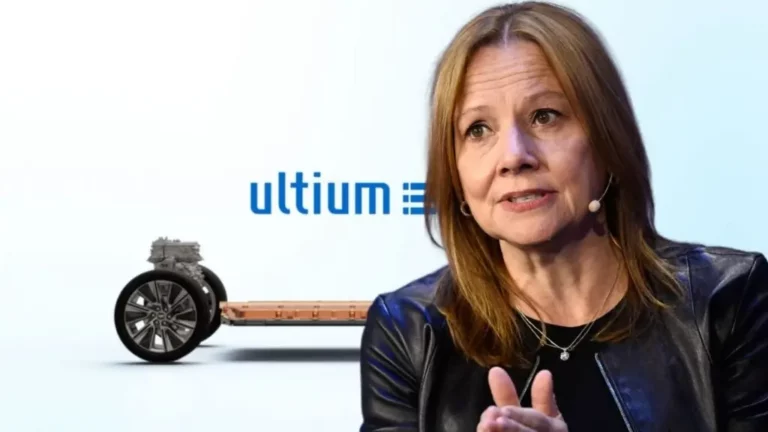
And the latest sign of just how fast things are changing? Look at General Motors. In the past eight months alone, GM has made nearly a dozen high-profile hires out of Silicon Valley — from companies like Google, Meta, and Amazon Web Services. Their goal: to build a small but elite artificial intelligence team, much of it based in Mountain View, California.
Among the marquee hires — Barak Turovsky, formerly Google’s head of product for languages AI, who’s now GM’s first-ever chief AI officer. And John Anderson, a former Google researcher and Pixar veteran, now heading up AI research at the automaker.
Now, legacy companies have tried this before — setting up innovation labs or AI hubs in and around Silicon Valley. Sometimes it works. More often, it doesn’t. The big challenge is less about writing the code, and more about making sure the work aligns with the broader company — everything from factory floors, to back-office systems, to the cars themselves.
GM has learned that the hard way. Remember Cruise, its robotaxi unit? The company spent nearly a decade — and about ten billion dollars — only to shut the program down late last year. Now, GM says it wants to try again, this time focusing not on robotaxis, but on autonomous technology for personal vehicles. Think hands-free, eyes-free systems that still keep a human in the car, with the long-term goal of a vehicle that can drive itself with no one behind the wheel.
The AI team’s scope, though, goes far beyond self-driving. They’re looking at factory robotics, ways to speed up over-the-air software updates, even using generative AI tools to help their own engineers. They’re also working with GM’s motorsports division — NASCAR today, and soon Formula One — to squeeze every last bit of performance out of race-day data.
But as Volkswagen can attest, this is easier said than done. VW’s Cariad software unit was blamed for costly delays in new models, buggy infotainment systems, and billions in losses. Just this year, Cariad announced layoffs of 1,600 employees.
To help solve that problem, Volkswagen is now leaning on Rivian — the California EV startup. Earlier this summer, the two announced a joint venture to co-develop software-defined vehicle technology. As part of that deal, VW also invested $1 billion in Rivian, with up to $5.8 billion planned over time.
And it raises the big question: how much can any one carmaker really take on? Software, artificial intelligence, autonomous vehicles, competing with China, all while ramping up electric vehicle production? More and more, we’re seeing companies conclude they can’t do it all themselves. That’s why partnerships — like VW with Rivian — may well become the rule, not the exception, in the years ahead.
So, with that, let’s transition to Our Companies to Watch.
Every week we highlight an interesting company in the automotive technology space to keep an eye on. If you read my weekly Intel Report, we showcase a company to watch, and we then take the opportunity here on this segment each week to share that company with you.
Today, our new company to watch is Privacy4Cars.
Privacy4Cars enables the automotive ecosystem to delete personal information from vehicles in a fast, traceable, and cost-effective manner to reduce liability, meet regulatory requirements and improve customer satisfaction.
70% of consumers have trade-ins, but dealers only capture 33-38%. Boost your trade-in acquisitions with Privacy4Cars: Offer free data deletion services with a Certificate of Deletion to increase trade-in capture rates.
If you’d like to learn more about Privacy4ars, you can check them out at www.Privacy4Cars.com.

So that’s it for this week’s Future of Automotive segment.
If you’re an AutoTech entrepreneur working on a solution that helps car dealerships, we want to hear from you. We are actively investing out of our DealerFund.
Don’t forget to check out my first book, “The Future of Automotive Retail,” and my new book, “The Future of Mobility”, both of which are available on Amazon.
Thanks (as always) for your ongoing support and for tuning into CBT News for this week’s Future of Automotive segment. We’ll see you next week!