On the Dash:
- Scammers can copy dealership branding, vehicle listings, photos and even customer testimonials.
- Shoppers should confirm a vehicle and dealership exist before sending money.
- Buyers purchasing remotely should use an independent mobile inspection service before completing a transaction.
According to a Consumer Alert the Federal Trade Commission (FTC) released Tuesday, the car-buying process can be stressful, especially when consumers shop online, and scammers are exploiting that stress by impersonating legitimate dealerships. Victims may arrive expecting to pick up a vehicle, only to find that the dealership has no record of their order or payment.
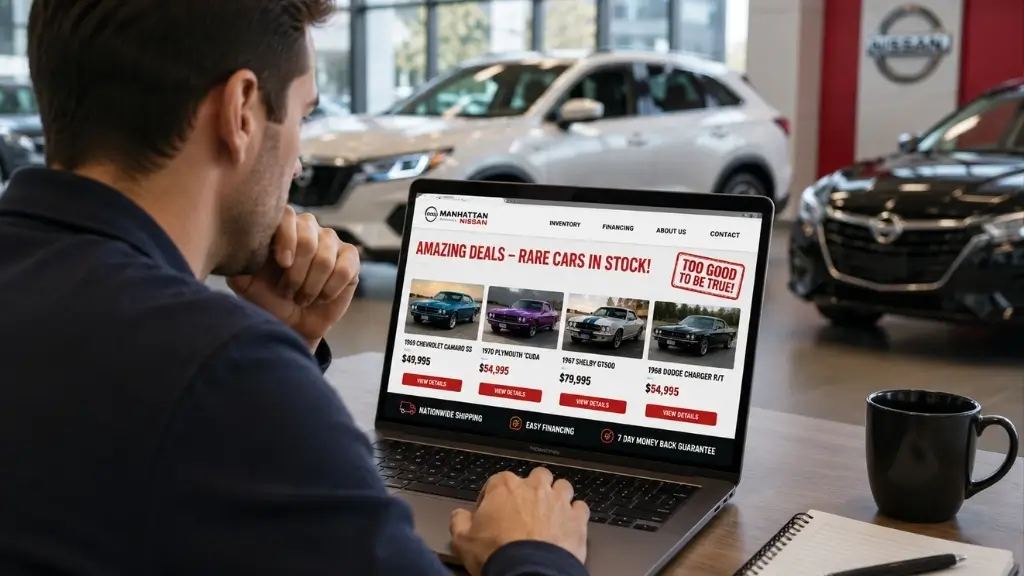
Fraudsters create fake websites that look like real dealership sites. They may use AI to replicate:
- Dealer logos
- Vehicle listings
- Vehicle photos
- Customer testimonials
The counterfeit sites often advertise rare muscle cars and hard-to-find classics to lure buyers in. Scammers also describe the buying process in detail and offer flexible return policies to make the operation look legitimate.
The FTC said the scam centers on collecting an upfront payment for a vehicle that doesn’t exist. To avoid getting duped, the agency advises shoppers to search the dealer’s name alongside terms such as “scam,” “review,” or “complaint” and treat negative results as a red flag. Because scammers often impersonate real dealerships, shoppers may still find glowing reviews, so the FTC recommends going a step further.
Buyers should always ask to see the vehicle and the dealership in person, and they should treat a refusal as a warning sign. For remote purchases, buyers can request an independent mobile inspection before completing a transaction, and the FTC recommends taking their business elsewhere if the seller declines.