Welcome back to the latest episode of “The Future of Automotive” on CBT News, where we put recent automotive and mobility news into the context of the broader themes impacting the industry.
I’m Steve Greenfield from Automotive Ventures, and I’m glad that you could join us.
This week, we’re taking a look at a promise that once captivated Silicon Valley, Wall Street, and the American public: fully autonomous vehicles.
For years, we’ve been told that self-driving cars were just around the corner. But here we are in 2025 — and the road to that future has been bumpier than almost anyone could have predicted.
It all started back in the Mojave Desert. Two decades ago, the U.S. military launched the DARPA Challenge — a bold contest that set robotic vehicles loose across punishing terrain. It kicked off what many believed would be a race to a driverless future.
By 2015, the buzz was deafening. Billions of dollars poured in. Tech companies promised revolutionary change. Automakers made bold predictions. We were told we’d soon be passengers in our own cars.
That… didn’t happen.
Instead, one by one, many of the biggest names in the industry backed away. Ford and Volkswagen shut down their autonomous driving venture, Argo AI, after investing billions.
Apple abandoned its long-secretive car project earlier this year, despite years of effort and astronomical costs.
General Motors pulled the plug on Cruise after a troubling pedestrian accident in San Francisco, instead refocusing on assisted-driving features — and just last month, hired Tesla’s former Autopilot chief.
And in Texas, Aurora Innovation recently put human drivers back behind the wheel of its trucks — only weeks after launching a driverless service — at the request of its manufacturing partner, Paccar.
Why is getting to full autonomy so hard?
Experts point to a simple answer: it turns out that teaching a computer to handle the unpredictable chaos of real-world driving is vastly more complicated — and expensive — than anticipated. Add to that the intense scrutiny following a handful of tragic crashes, and the risks quickly outweigh the hype.
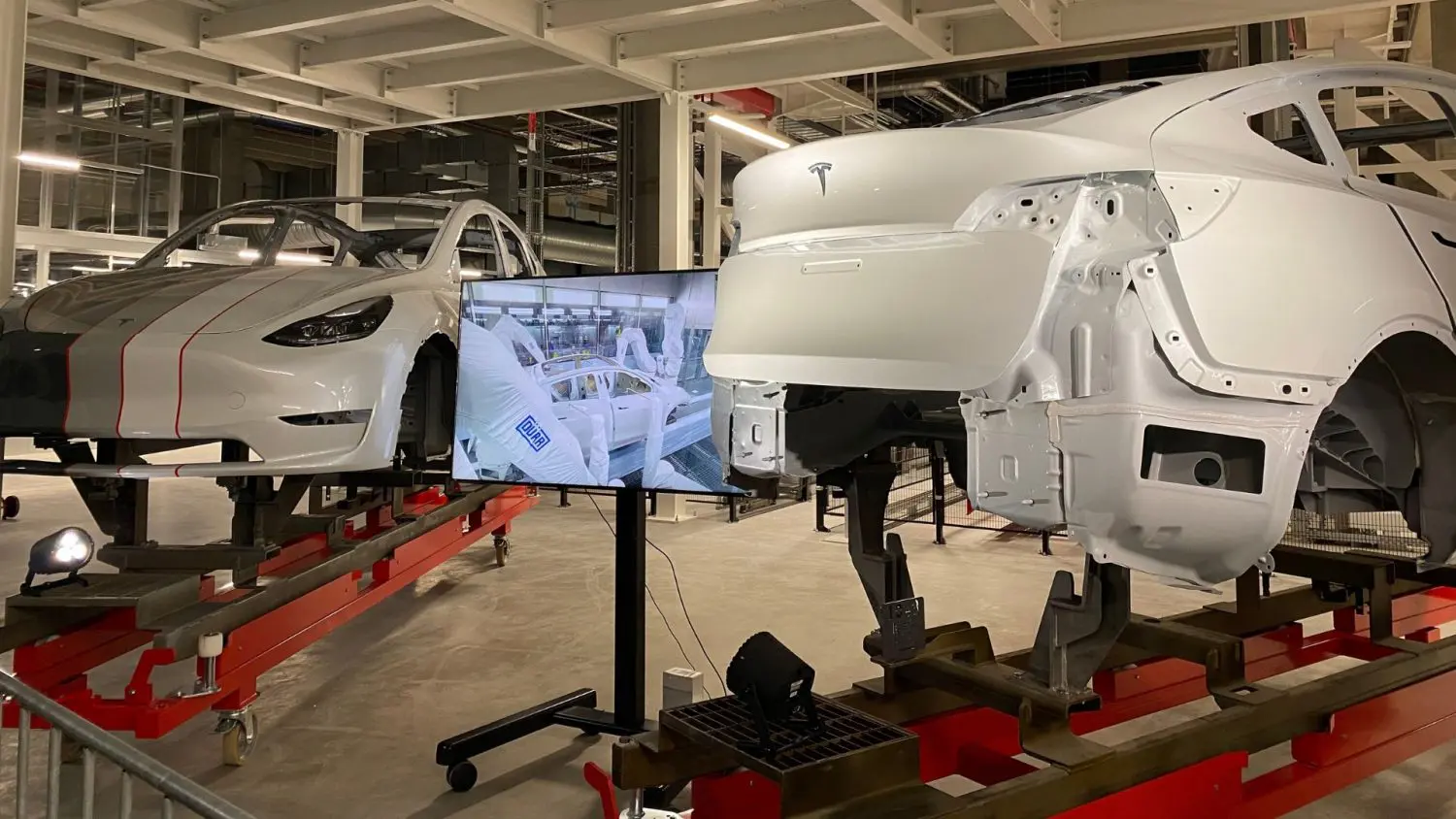
Tesla’s Elon Musk once promised a cross-country drive in a fully autonomous vehicle by the end of 2017. That never happened. He also claimed a million robotaxis would be on the road by 2020. That didn’t happen either. Now, Tesla is planning to quietly roll out a pilot service in Austin this summer — with just a handful of Model Ys, all under remote supervision.
Still, there are signs of progress.
Waymo — Google’s self-driving unit — recently launched its driverless taxi service in a fourth major U.S. city, through a partnership with Uber.
Amazon’s Zoox is also beginning to test its futuristic vehicles in select locations.
And Tesla’s much-anticipated “Cybercab” is slated to begin testing in Austin within weeks.
After years of false starts, layoffs, and missed deadlines, getting to full autonomy may finally be happening.
But make no mistake: we’re not at the finish line — not even close. According to S&P Global, a true, fully autonomous Level 5 vehicle (where you will be able to take a nap in the backseat) likely won’t arrive before 2035 — if at all.
For now, the dream of the driverless future is still just that: a dream. But in a handful of cities, on a few carefully mapped streets, it’s starting to look just a little more real.
So, with that, let’s transition to Our Companies to Watch.
Every week we highlight interesting companies in the automotive technology space to keep an eye on. If you read my weekly Intel Report, we showcase a company to watch, and we then take the opportunity here on this segment each week to share that company with you.
Today, our new company to watch is HopDrive
For Fleet management moves or customer concierge, HopDrive provides fast and reliable drive services.
Impress your customers with a concierge service that takes their car from driveway to dealership and back, with minimal effort.
Book drives in HopDrive’s easy-to-use portal and enjoy 24 to 48-hour SLA’s with real-time monitoring of your vehicle’s movements.
HopDrive’s comprehensive solution means they seamlessly manage vehicle delivery so you don’t have to.
If you’d like to learn more about HopDrive, you can check them out at www.HopDrive.com
So that’s it for this week’s Future of Automotive segment.
If you’re an AutoTech entrepreneur working on a solution that helps car dealerships, we want to hear from you. We are actively investing out of our DealerFund.
Don’t forget to check out my first book, “The Future of Automotive Retail,” and my new book, “The Future of Mobility”, both of which are available on Amazon.
Thanks (as always) for your ongoing support and for tuning into CBT News for this week’s Future of Automotive segment. We’ll see you next week!