
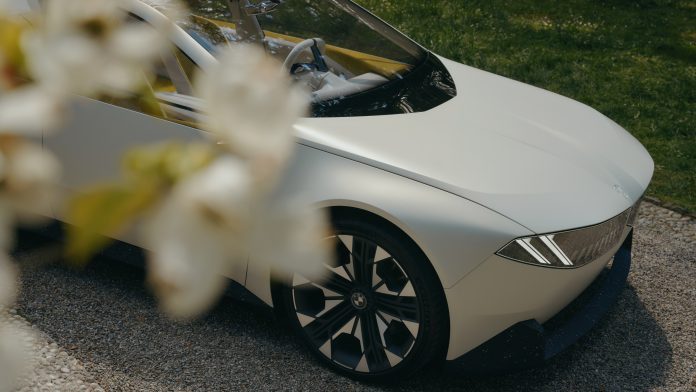
BMW is charging ahead with its EV strategy despite signs of cooling demand in the United States, and its new vehicle platform called “Neue Klasse” is central to this push.
The German automaker plans to transition several core models to its next-generation EV platform beginning in 2025. The first vehicle will be an electric sedan the size of today’s 3 Series, followed by a similarly sized SUV in 2026. These models will eventually replace the current i4 and iX3, both of which will be phased out around the same time.
In the U.S., the iX3 is expected to reenter the market only as a Neue Klasse model. The 3 Series will continue with ICE and hybrid powertrains through 2030, though it will coexist with its Neue Klasse electric successor. A second-generation iX will also arrive later in the decade on the new platform, replacing the current model.
At the same time, BMW will discontinue several older EV nameplates to streamline its lineup. The i3 sedan and iX3 SUV will be retired globally, and the i4 will be phased out and replaced by a Neue Klasse variant.
Meanwhile, newer EVs like the i5 and i7—both based on current ICE platforms—will remain for now but are expected to migrate to the Neue Klasse platform around 2027 or later.
Here’s why it matters:
BMW’s investment in the Neue Klasse platform is one of its most significant—and consequential—investments in the company’s history, making its success vital. The carmaker anticipates that these new models will make up half of its global sales by the end of the decade.
However, cooling consumer demand, coupled with the scrapping of the federal EV tax incentive, may prove to be a challenge for BMW as the U.S. is its second-largest market. The U.S. market is only second to China, where legacy automakers are rapidly losing market share to domestic rivals.
Key takeaways:
- Neue Klasse is BMW’s biggest investment
The platform represents the most significant investment in the carmaker’s history, underscoring its importance to the company’s long-term strategy. - BMW will overhaul its lineup
Several BMW nameplates will transition to the Neue Klasse platform, while others like the i3, i4 and iX3 will be phased out entirely. - ICE and EV models will coexist—for now
BMW will continue offering combustion and hybrid versions of models like the 3 Series alongside their Neue Klasse EV successors to ease the transition. - Neue Klasse could drive half of BMW’s global sales
BMW anticipates these new EV models will account for about 50% of its worldwide sales by the end of the decade. - Consumer demand for EVs is declining in the U.S.
The U.S., BMW’s second-largest market, is seeing softening demand and loss of EV tax incentives, which could challenge consumer adoption.