On the Dash
- U.S. officials have discussed a tariff-relief program for automakers making significant domestic manufacturing investments, with Audi potentially receiving a reduction in its EU import tariff from 15% to about 10%.
- Audi’s proposed Georgia factory is expected to produce up to 200,000 SUVs annually, with construction scheduled to begin next year and production targeted for the early 2030s.
- Audi says tariffs cost the company approximately €1.2 billion, or $1.4 billion, last year because it imports all vehicles sold in the U.S. from Europe or Mexico.
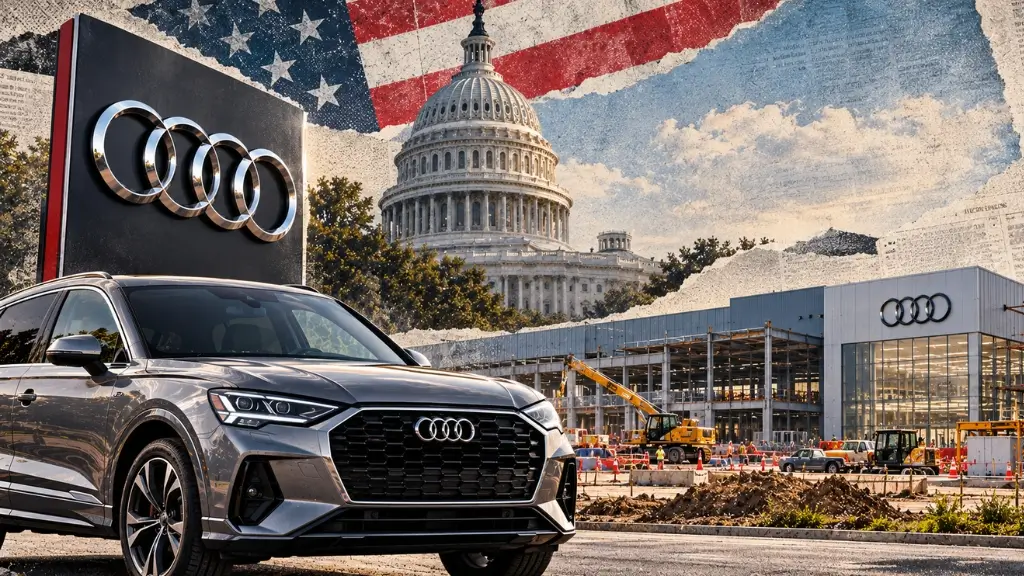
The Trump administration has indicated that it may provide tariff relief to Audi as the automaker moves forward with plans for a $4 billion assembly plant in Georgia, according to two sources familiar with the discussions. U.S. officials informed Audi executives that the government intends to establish a broader tariff relief program for automakers making significant investments in U.S. production.
According to the Wall Street Journal, which first reported the plan, U.S. officials told Audi executives that the government plans to offer broad tariff relief to automakers that make significant investments in U.S. production.
According to the sources, Audi has pushed the U.S. to cut the 15% tariff it pays on imports from the European Union to 7.5%, but the Commerce Department is expected to agree to around 10%. Officials could unveil details of the broader program in the coming weeks, and other automakers with announced U.S. investments would also qualify.
Audi reportedly plans to build a $4 billion assembly plant in Georgia that will produce up to 200,000 SUVs annually. The company expects the investment to create about 4,500 jobs, with construction beginning in 2027 and production starting in the early 2030s. However, Volkswagen’s supervisory board still must approve the investment.
Audi CEO Gernot Döllner said the company made its decision after “many months of careful planning and intense negotiations.” According to the company, tariffs on vehicles, steel, aluminum and parts cost the automaker about €1.2 billion ($1.4 billion) in 2025. Since Audi imports all vehicles it sells in the U.S. from Europe or Mexico, a Georgia plant would give the company a domestic manufacturing base and could reduce its reliance on imports and the tariffs that come with them.
However, critics argue the tariffs have raised vehicle prices and delayed automaker investments, and the relief program aims to prod more automakers to add U.S. production.