As automotive retail becomes increasingly digital, dealerships face a growing challenge: ensuring that faster transactions do not introduce greater financial and compliance risks.
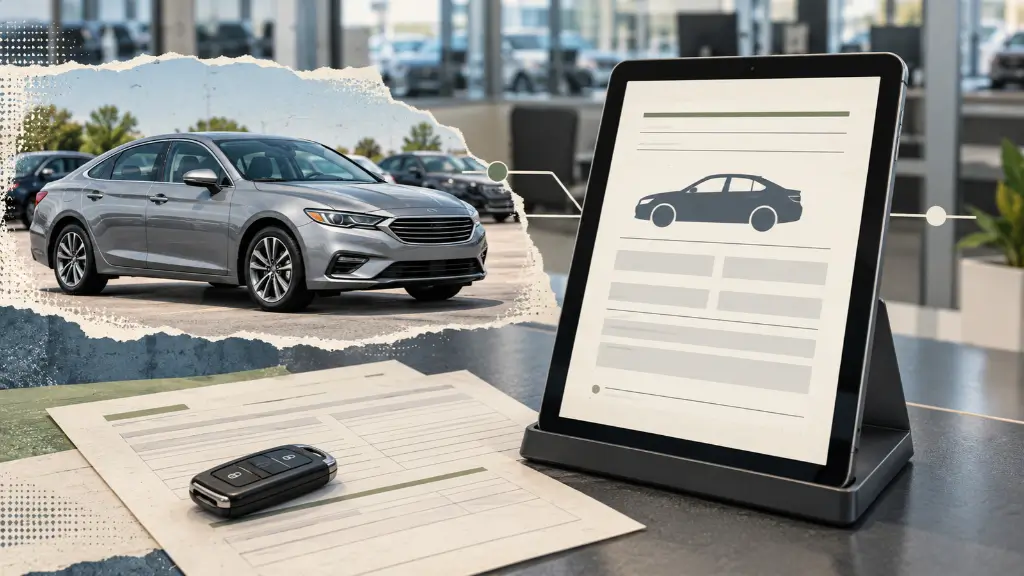
Vehicle titling remains a critical vulnerability. Incomplete ownership records, unresolved liens, fraudulent documentation, and inconsistent state requirements can expose dealerships to costly delays, compliance concerns, and potential financial losses. While technology has helped streamline administrative processes, digitizing paperwork alone does not eliminate these risks.
For dealerships navigating increasingly complex transactions, the question is no longer simply how quickly a title can be processed, but how confidently ownership can be verified and transactions completed.
The hidden risks behind traditional titling
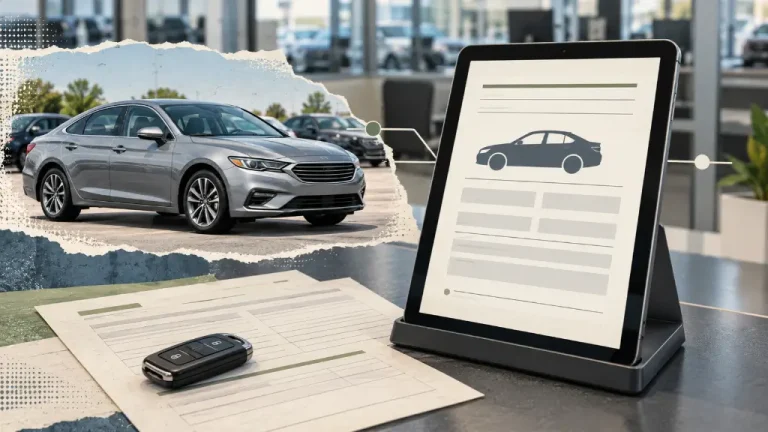
Despite advances in automotive technology, many title transactions still rely on fragmented workflows involving paper documentation, manual verification, and disconnected systems.
These limitations become particularly concerning when vehicles move across state lines. Different jurisdictional requirements and processing timelines can complicate ownership verification, lien releases, and title transfers. When discrepancies are discovered late, dealerships may face delayed inventory turnover, additional administrative costs, or compliance exposure.
Commercial titling platforms have helped simplify document collection and information exchange. However, digitizing a workflow does not necessarily mean the underlying transaction is connected to the government authority responsible for issuing the title. That distinction matters when evaluating both operational efficiency and risk. A digital document is not the same as an authoritative title record.
For dealerships, protecting the integrity of a transaction requires reliable information and a clear connection to the official title process.
A different approach: State-backed digital infrastructure
The National Digital Titling Clearinghouse (NDTC) was established to address this infrastructure challenge.
Created in 2023 through West Virginia House Bill 2506, NDTC enables licensed non-resident businesses to submit title applications electronically to West Virginia. Operating through a partnership involving the West Virginia Department of Transportation, Tyler Technologies, and CHAMP, NDTC connects participating businesses directly to the state’s title processing system. Through a direct system-to-system integration, required transaction information and documentation are submitted electronically, allowing the West Virginia DMV to process applications and issue titles through its official system. Unlike solutions focused primarily on facilitating document exchange, this model connects the transaction directly to the government authority responsible for title issuance.
This approach supports a more transparent process, where title decisions originate from the official state system rather than relying solely on information exchanged between commercial platforms.
Reducing risk through earlier validation
For dealerships, one of the most important advantages of modern titling infrastructure is the ability to identify and address transaction issues earlier.
West Virginia often processes NDTC title applications within 24 hours, returning an electronic decision. Approved transactions provide the issued title number, while rejected transactions include detailed explanations that allow dealerships to correct and resubmit information.
This visibility can help dealerships address discrepancies before they create additional delays or operational complications. NDTC also supports electronic signatures, electronic notarization, and document consolidation, reducing reliance on traditional manual processes. For eligible transactions involving trades, dealer-to-dealer transfers, auction purchases, and certain end-of-lease scenarios, these capabilities can help improve transaction consistency and reduce administrative friction.
Although no technology can eliminate every instance of title fraud, connecting digital workflows to authoritative government processing provides a stronger foundation for identifying discrepancies and maintaining transaction integrity.
Strengthening interstate title integrity
Interstate transactions introduce additional complexity because ownership information must remain accurate as vehicles move between jurisdictions.
NDTC’s West Virginia infrastructure supports this process through reporting and jurisdictional coordination. West Virginia title updates are reported daily to the National Motor Vehicle Title Information System (NMVTIS), and the system supports notifications when vehicles change jurisdictions.
When a vehicle is retitled in another state, the corresponding West Virginia title record is automatically terminated. These capabilities help maintain the integrity of vehicle identification and title records while reducing the potential for conflicting information across jurisdictions.
For dealerships, reliable title information is not simply an administrative benefit. It is an important component of operational risk management.
The competitive difference: Connecting to the source
As dealerships evaluate digital titling solutions, speed and convenience should not be the only considerations.
The more important question is whether the technology simply digitizes the steps surrounding a transaction or connects directly to the government infrastructure responsible for processing it. NDTC’s state-backed model demonstrates how digital title processing can support operational efficiency while strengthening the reliability of transaction information.
As the automotive industry continues to modernize, dealerships should prioritize solutions that address both efficiency and risk. The future of digital titling is not just about processing transactions faster. It is about processing them with greater confidence.
To learn more about CHAMP and NDTC’s state-backed innovations, visit the CHAMP State-Backed Innovations page.