The light pole outside your neighborhood probably doesn’t catch your attention anymore. You drive past it every day on your way to work, the grocery store, church, or your kids’ soccer practice. It blends into the background, just another piece of public infrastructure that has always been there.
What if I told you that the same light pole knows more about your daily routine than some of your closest friends?
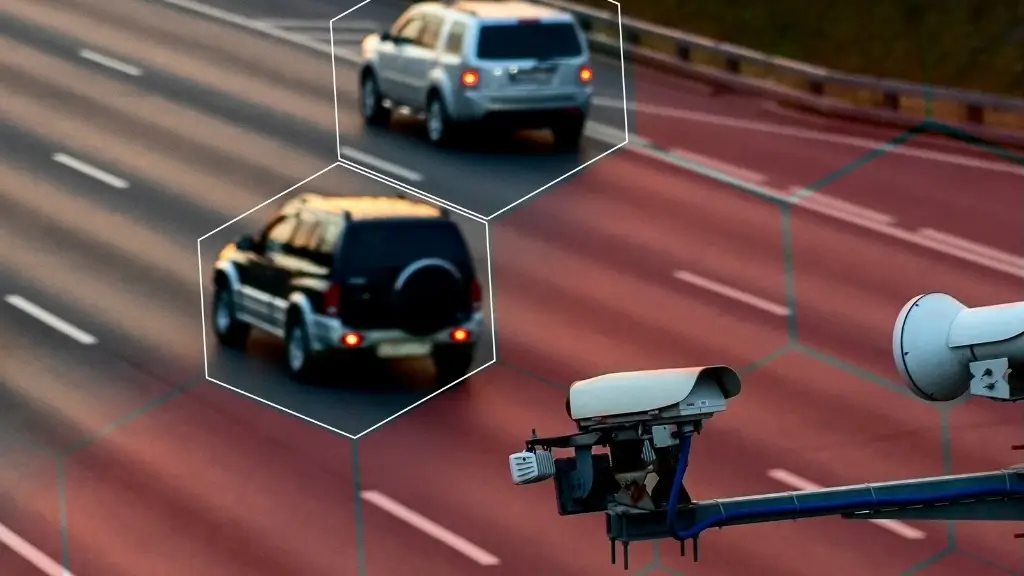
Not because it’s reading your license plate. That’s yesterday’s technology. Today’s systems can identify your vehicle by its color, make, model, bumper stickers, roof rack, dents, scratches, and other unique characteristics. They can search for your car even if your license plate isn’t visible. Some are now connected to autonomous drones that can launch automatically and follow a vehicle before a police cruiser has even left the parking lot. If that sounds like science fiction, it isn’t. It’s happening now, and most Americans have no idea how quickly this technology has evolved.
This didn’t happen because Congress voted to create a nationwide vehicle tracking network. It happened the way so many expansions of government and technology happen, one small step at a time. Each new capability sounded reasonable on its own. Each was marketed as another tool to fight crime. By the time anyone stepped back to look at the entire picture, the picture had completely changed. This was all funded under the Biden administration’s 2021 Infrastructure Act, the same one that gave us the kill switches.
Americans were introduced to automated license plate readers as a simple public safety tool. If a stolen vehicle drove past a camera, police could receive an alert in seconds. Most people could understand the value of that. Nobody wants stolen cars on the road, and everyone wants missing children found safely. Those are legitimate public safety goals, and that’s exactly how companies like Flock Safety built support for their technology.
But while the public was focused on license plates, the technology quietly moved far beyond license plates.
Today, Flock’s system doesn’t need a plate number to locate a vehicle. Officers can search using plain English, typing in a description like “white pickup with a ladder rack” or “blue SUV with rear bumper damage.” The software uses artificial intelligence to search millions of vehicle images based on physical characteristics, creating what amounts to a digital fingerprint for every vehicle that passes one of its cameras. That’s a very different capability than simply reading a license plate.
At the same time, another evolution was taking place that received even less public attention. Axon, the company best known for Tasers and police body cameras, partnered with infrastructure company, Ubicquia, to move the technology into something Americans never think twice about, existing streetlights. Instead of installing dedicated camera poles that residents might notice or question, surveillance equipment can now be mounted directly into the light poles already lining city streets. The camera disappears into infrastructure that has been part of the landscape for decades, making the surveillance network almost invisible to the people living beneath it.
Then came the next step.
Autonomous drones are now being integrated into these systems. A camera identifies a vehicle, software generates an alert, and a drone can launch automatically to provide a live aerial view while officers respond. That’s a remarkable technological achievement, but it also represents something very different from the license plate readers Americans were originally told about. What began as fixed roadside cameras is steadily becoming an interconnected surveillance ecosystem operating from the roadside and the sky.
The technology is impressive. The question is whether the public fully understands what it has become.
Whenever these systems are discussed, the conversation almost always returns to the same argument: public safety. Recover stolen vehicles. Find suspects. Protect officers. Those are worthwhile goals, and no reasonable person disputes them. What rarely gets discussed is where the line should be drawn. Who owns the enormous amount of data being collected? How long is it stored? Who has access to search it? What safeguards prevent abuse? Those questions deserve answers before the technology becomes so commonplace that asking them seems unnecessary.
Following the money makes those questions even harder to ignore.
Flock Safety has become a multibillion-dollar company by rapidly expanding its camera network across the country. Axon has transformed itself from a body camera and Taser manufacturer into a technology company focused on integrating cameras, drones, software, and real-time crime centers into a single platform. Every additional camera means more software subscriptions, more cloud storage, more recurring revenue, and more taxpayer-funded contracts. Public safety may be the product being sold, but data is the business.
Supporters argue the benefits outweigh the risks, but history suggests every surveillance system eventually faces the same problems. False matches happen. Innocent drivers have reportedly found themselves stopped at gunpoint after technology identified the wrong vehicle. Police officials have been accused of improperly searching databases for personal reasons. Security researchers have also discovered exposed camera feeds that were accessible online. Those incidents don’t prove the technology should be abandoned, but they do prove that powerful surveillance systems require meaningful oversight, not blind trust.
The legal system is only beginning to grapple with what all of this means. The Supreme Court’s decision in Carpenter v. United States recognized that long-term tracking of a person’s movements raises serious Fourth Amendment concerns, even when the information is held by a third party. More recent cases involving automated license plate reader networks suggest judges are increasingly questioning whether massive, interconnected surveillance systems fundamentally change the constitutional balance. As these camera networks become denser and integrate with artificial intelligence and other technologies, courts are acknowledging that constitutional analysis may have to evolve as well.
Commonwealth v. Bell, this is actually a case about Flock, the Court granted a motion to suppress Flock ALPR evidence ruling that Norfolk’s 172 camera Flock network constituted a fourth amendment search requiring a warrant. So Flock and other cameras companies are actually violating our Fourth Amendment rights.
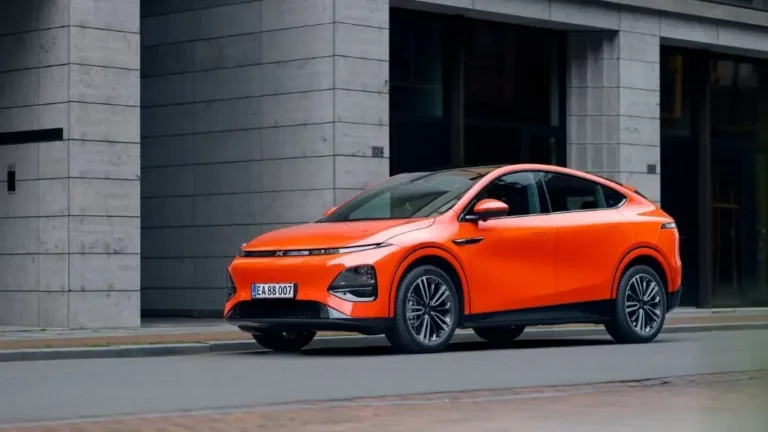
Today’s vehicles are safer, smarter, and more capable than ever before. But somewhere along the way, the conversation shifted. We stopped talking only about the technology inside our vehicles and started surrounding those vehicles with technology designed to watch them.
That’s the conversation Americans should be having.
This isn’t really about whether license plate readers can help solve crimes. They can. It’s about whether the public knowingly agreed to an artificial intelligence network capable of identifying vehicles by appearance, embedding cameras into everyday infrastructure, absorbing all your data from Bluetooth, linking those systems across jurisdictions, and eventually coordinating with autonomous drones overhead. Those are two very different conversations. This is 100% a violation of our rights and our freedom.
The next time you stop at an intersection, look up at the light pole beside you. It may still be nothing more than a light.
Or it may be the newest member of a surveillance network that grew so gradually, most Americans never realized it was being built.
Check out my full commentary on this story: https://youtu.be/PA5-hka0T2A
Looking for more automotive news? https://www.CarCoachReports.com
Listen to The Drive Car Show – https://www.youtube.com/@thedrivecarshow