On the Dash:
- Hyundai’s investment signals robotics will play a larger role in future vehicle manufacturing and production efficiency.
- Greater automation could improve long-term manufacturing productivity but may increase labor negotiations across the industry.
- Dealers should expect robotics and AI to become increasingly important as automakers work to lower costs and improve production flexibility.
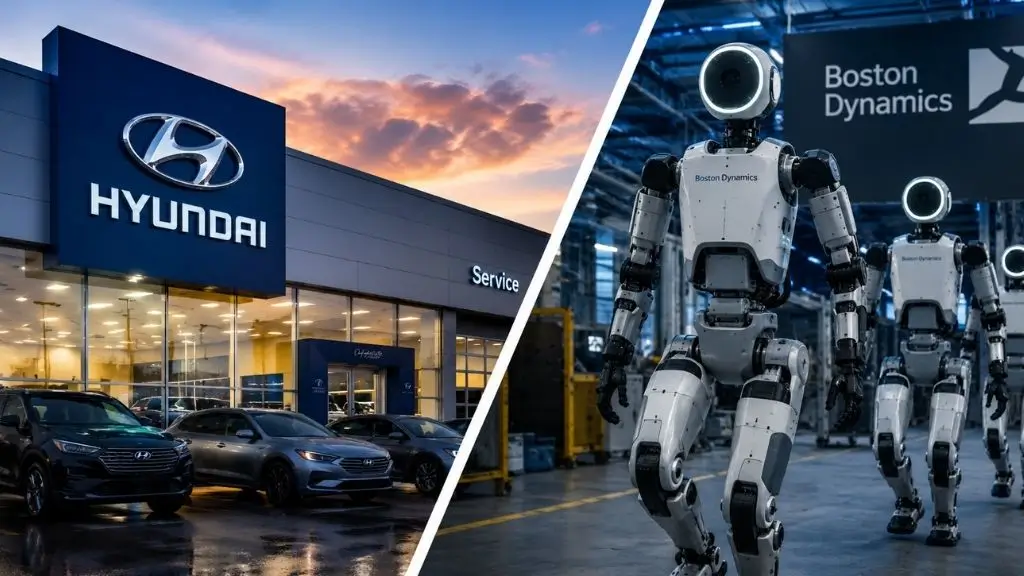
On Thursday, Hyundai Motor announced that it will acquire SoftBank’s remaining stake in Boston Dynamics, making the robotics company a wholly owned subsidiary.
While South Korean outlets report the stake at approximately 500 billion won, or about $336.8 million at current exchange rates, Reuters and other international outlets have cited the transaction at approximately $325 million for SoftBank’s roughly 9.65% stake. SoftBank triggered the deal by exercising a put option it retained from Hyundai’s original 2021 purchase of an 80% stake in Boston Dynamics.
According to the automaker, full ownership will give the company greater flexibility in long-term investments, business strategy, and a potential future initial public offering for Boston Dynamics.
The company plans to deploy Boston Dynamics’ Atlas humanoid robot at its Metaplant in Savannah, Georgia, beginning in 2028. Atlas will start with parts sequencing before Hyundai expands its role into assembly operations, according to the company, a move that fits into Hyundai’s broader push to expand automation across its manufacturing network.
Rising labor tensions in South Korea
The acquisition comes as Hyundai’s South Korean union escalates strike activity over wages, bonuses, and job security. Union leaders argue that heavier investment in robotics and artificial intelligence could shrink future hiring and displace manufacturing jobs. They estimate that roughly 2,000 union members will retire each year through 2032 and warn that workforce reductions could accelerate if Hyundai doesn’t replace them.
Ultimately, Hyundai’s 2021 deal valued Boston Dynamics at around $1.1 billion, but the new transaction suggests a valuation of about $3.4 billion based on the stake sold. Hyundai’s shares dropped 2.1% after the announcement, matching a broader Korean market decline, while some analysts believe the transaction removed a catalyst that might have clarified the company’s value.