On the Dash:
- Volkswagen will stop producing the ID.4 at its Chattanooga, Tennessee, plant in April 2026, marking a major shift in its U.S. EV strategy.
- The move reflects broader industry challenges, including declining EV demand following the expiration of federal tax incentives.
- Volkswagen plans to refocus U.S. production on higher-volume gasoline models while reassessing its long-term EV roadmap.
Volkswagen will halt U.S. production of its ID.4 electric SUV in April 2026, signaling a strategic pullback as automakers grapple with slowing electric vehicle demand.
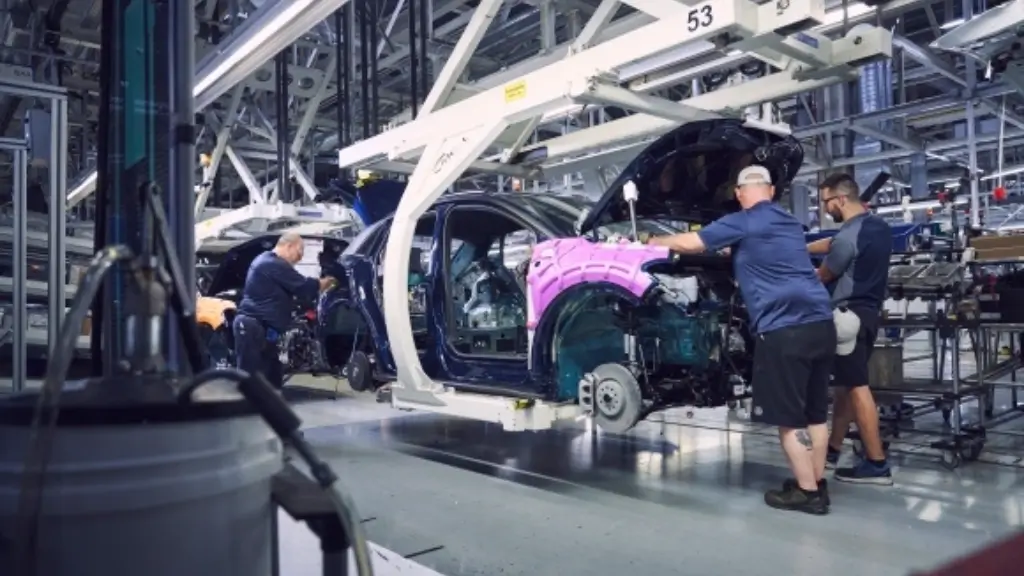
The German automaker said it will end assembly of the ID.4 at its Chattanooga, Tennessee, facility, its primary EV production site in North America. The model has been a cornerstone of Volkswagen’s U.S. electrification efforts since its launch.
The decision comes as the U.S. EV market faces mounting pressure, particularly after the federal government eliminated the $7,500 consumer tax credit in late 2025. The policy shift has reduced affordability for buyers and contributed to softer demand across the segment.
Volkswagen is not alone in adjusting its strategy. though. Automakers across the industry have scaled back EV production plans, citing inconsistent consumer demand and rising costs tied to electrification investments.
The company said it will continue selling the ID.4 using existing inventory, which is expected to last into 2027. No immediate job cuts are planned, with workers expected to transition to other production lines.
Volkswagen intends to shift its Chattanooga operations toward higher-volume internal combustion models, including the next-generation Atlas SUV, as it prioritizes profitability and volume in the U.S. market.
Despite the production halt, Volkswagen has indicated that a next-generation electric vehicle for North America remains under consideration, though timing and location details have not been finalized.