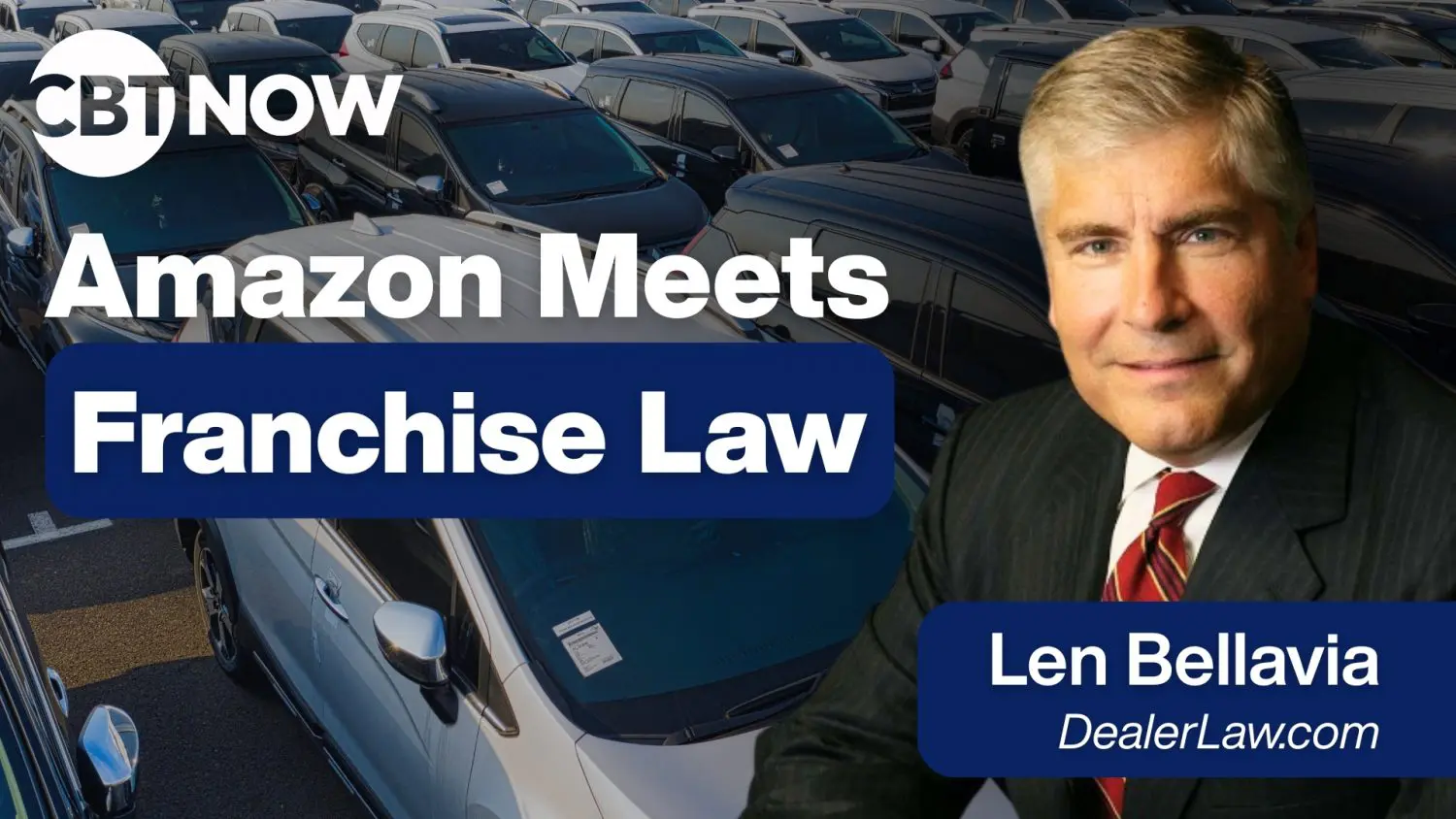
As automakers test new retail pathways, franchise dealers are closely monitoring where innovation intersects with franchise law. A key example is Ford’s alliance with Amazon, which places certified pre-owned vehicles into a digital retail environment while keeping dealers at the center of the transaction. On today’s episode of CBT Now, Len Bellavia, founding partner of Bellavia Cohen, PC, examines the Ford Amazon CPO initiative through the lens of franchise law, dealer operations, and what this early experiment may signal for the broader retail automotive industry.
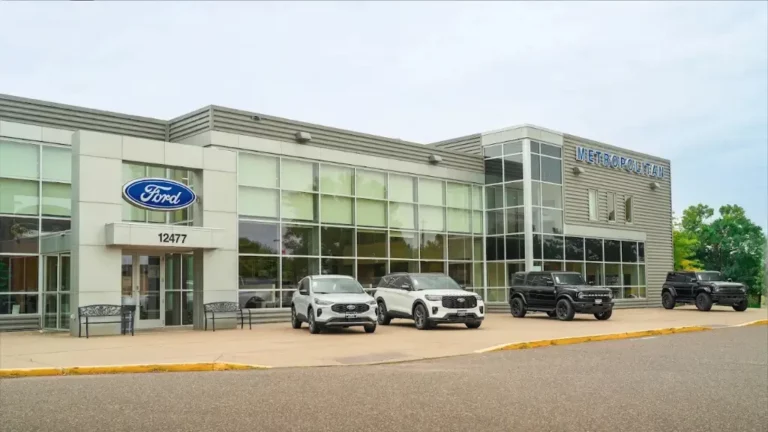
At its core, the Ford Amazon program applies only to used and certified pre-owned vehicles, not new inventory. Vehicles remain dealer-owned, dealer-priced, and ultimately delivered through the franchise system. Customers are directed back to the dealership to complete the transaction, keeping the structure within the legal framework that prevents manufacturers from selling directly to consumers.
The model represents a hybrid approach rather than a departure from the franchise system. While Ford previously explored direct sales strategies that were later abandoned, this initiative acknowledges the role dealers play in pricing, inventory management, and fulfillment. In that sense, the program reflects an effort to modernize retail access without fully bypassing existing protections.
Operationally, the structure introduces new considerations for dealers, particularly around trade-ins. Trade values are set within defined limits, including a maximum adjustment of $750 once the vehicle is physically inspected. While this creates consistency on the front end, it also raises questions about how condition-related discrepancies are handled when repairs exceed that threshold.
Return policies add another layer of complexity. While marketing materials have referenced extended return windows, the program rules outline a shorter notification period followed by a limited timeframe to return the vehicle. Managing returned inventory, even temporarily, affects cash flow and inventory turn, especially when vehicles cannot be immediately resold.
Despite these challenges, dealer participation suggests measured interest rather than resistance. The program has launched in select states, including Washington, California, and Texas, where some dealers view it as an opportunity to test whether digital exposure through a platform like Amazon can drive incremental traffic without undermining dealership control.
From a broader perspective, the initiative offers insight into consumer behavior. Fully digital vehicle purchases have yet to gain widespread adoption, even during periods when in-person transactions were limited. Used vehicle buyers, in particular, continue to value physical inspection and dealership interaction before committing to a purchase.
The larger question is not whether this program will dramatically reshape used vehicle sales, but what it may preview for the future. If refinements are made and the model proves workable, similar structures could be explored elsewhere. That possibility keeps dealer councils and legal advisors focused not just on the current framework, but on how future iterations are shaped.
For now, the Ford–Amazon alliance stands as a controlled experiment. It reflects the industry’s effort to balance digital innovation with the practical realities of retail automotive operations, while reinforcing that any evolution of the sales model must continue to operate within the franchise system’s established guardrails.