On the Dash:
- The U.S. and Japan held the first formal meeting to evaluate projects under their $550 billion investment agreement.
- Project recommendations will flow to an investment committee, with final approvals made by President Donald Trump.
- Japan risks higher tariffs if it fails to fund approved projects within 45 days of final decisions.
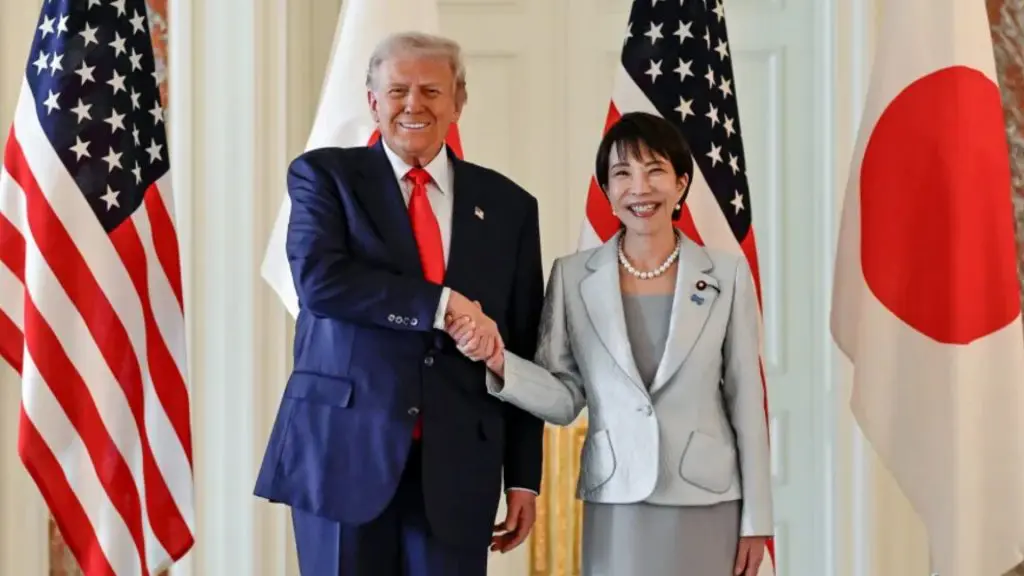
The United States and Japan have taken the first formal step toward deploying a $550 billion investment fund under their recent trade agreement, convening a bilateral consultation panel to evaluate potential projects.
The panel held its inaugural meeting online this week, bringing together officials from the U.S. Commerce and Energy Departments and Japan’s foreign, trade, and finance ministries. The meeting focused on exchanging views on possible investments and confirming continued cooperation between the two governments, according to Japan’s Foreign Ministry.
The session marks the start of a structured selection process for projects backed by the investment mechanism. Following its discussions, the consultation panel is expected to submit recommendations to an investment committee led by U.S. Commerce Secretary Howard Lutnick. President Donald Trump will make final project approvals.
The investment fund is a central component of the US-Japan trade deal and is designed to advance both economic growth and national security objectives. Target areas include semiconductors, critical minerals and energy, with funding expected to flow on a project-by-project basis from Japan into the United States.
The agreement also includes enforcement provisions. Japan risks a return of higher U.S. tariffs if it does not commit funding to approved projects within 45 days of the president’s decisions. Earlier this year, the Trump administration raised tariffs on most Japanese goods to 25%, then reduced them to 15% after Japan agreed to increase U.S. investment through the $550 billion mechanism.
Officials from the Japan Bank for International Cooperation and Nippon Export and Investment Insurance participated in the meeting and are expected to play a central role in financing selected projects. Both institutions are positioned to provide equity investments, loans and loan guarantees as part of the fund’s structure.
During President Trump’s visit to Japan in October, the two governments identified an initial list of potential projects for consideration. This week’s meeting moves the process from concept to execution, setting the stage for investment decisions that could shape supply chains and industrial capacity in key strategic sectors.