On the Dash:
- EU officials are considering loosening the 2035 ban on combustion engines, including a possible five-year extension, amid industry pressure and job concerns.
- Automakers warn current rules could trigger fines exceeding $1.2 billion as EV demand slows and costs rise.
- Critics caution that prolonged flexibility could widen Europe’s technology gap with U.S. and Chinese EV leaders.
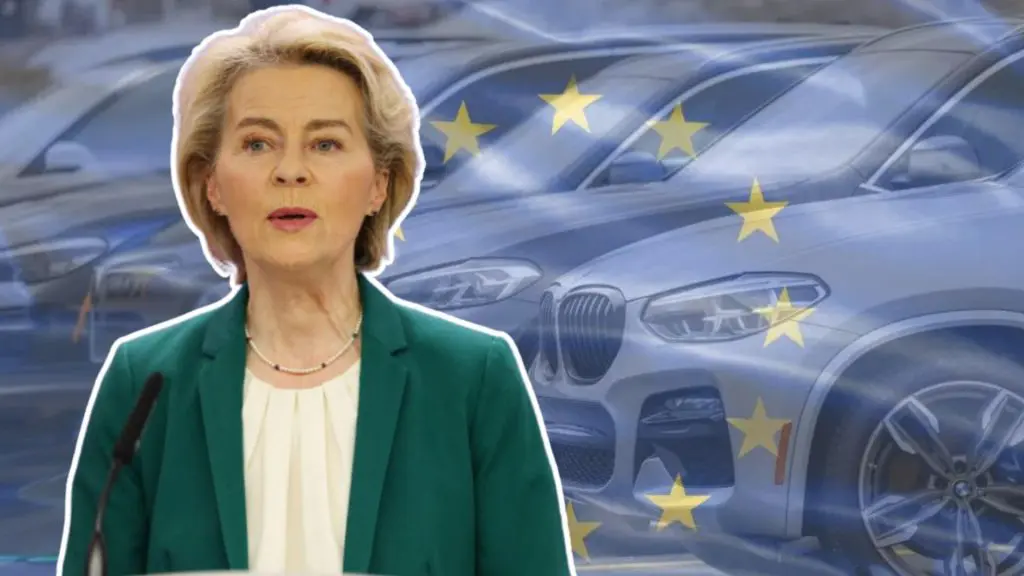
European Union policymakers are preparing to soften rules that would have effectively banned new combustion-engine vehicles from 2035, offering embattled automakers potential relief as they struggle with the transition to emission-free driving. While discussions remain fluid, loopholes under consideration could result in a five-year extension or even remove the ban, according to people familiar with the talks.
Draft documents reviewed by Bloomberg News suggest the European Commission is also considering reducing regulatory burdens and offering incentives for small electric cars made in the region. The measures may be announced as early as Tuesday, although EU policy prevents officials from commenting on draft legislation.
The push reflects ongoing pressure from automakers such as Stellantis and Mercedes-Benz Group, which warned that fines could surpass 1 billion euros ($1.2 billion) under current regulations. Additionally, major auto-producing countries, led by Germany, have supported changes to reduce political tensions and prevent job losses in an industry that generates around 1 trillion euros ($1.2 trillion) in economic output.
While the proposed stepback could offer short-term relief, critics warn it risks hindering innovation and widening the technology gap with Tesla and Chinese competitors like BYD, possibly making Europe dependent on outdated technologies.
The debate arises as EV adoption remains inconsistent across the region. For instance, European Environment Agency data show that transport emissions increased by 0.7% in 2024, underscoring the sector’s slow progress. Automakers have also borne much of the transition burden so far, while limited national incentives and fiscal constraints have hindered consumer adoption.
To address those gaps, the Commission is expected to propose measures next week to boost demand for small electric vehicles made in Europe, including a 10-year exemption from certain safety and emissions requirements, along with incentives such as subsidies and reserved parking. However, Brussels has limited authority over national taxation, leaving key financial decisions to member states.
While the timing is politically sensitive, earlier this month, the EU agreed to a new 2040 climate target while delaying carbon pricing at the pump until 2028 amid concerns about voter backlash.
For manufacturers and suppliers, the potential delay offers a narrow window to reassess investment plans disrupted by rising costs and uncertain EV demand. Battery-plant projects have been slowed or scaled back, while suppliers face pressure as combustion-engine orders decline faster than electric volumes increase. Industry groups warn that without a transition better aligned with market realities, thousands of smaller parts makers could face severe disruption.
Even with added flexibility, automakers say deeper challenges remain, including high energy prices, slow permitting, and limited local battery production. Critics also caution that easing pressure could entrench reliance on interim technologies and leave Europe further behind as China accelerates its EV push. Nonetheless, the months ahead will test whether policymakers can balance industrial competitiveness to eliminate net emissions within the next 25 years.