Welcome back to the latest episode of “The Future of Automotive” on CBT News, where we put recent automotive and mobility news into the context of the broader themes impacting the industry.
I’m Steve Greenfield from Automotive Ventures, and I’m glad that you could join us.
More than a decade ago, we were told by some of the world’s biggest and most respected consulting firms that by now, every new car sold in America would be fully autonomous. One hundred percent. No steering wheels, no pedals.
Clearly… that didn’t happen. And in hindsight, a lot of those predictions look wildly optimistic.
But tonight, it does feel like something is shifting. Quietly at first, and now unmistakably, we may be approaching a genuine tipping point for autonomous vehicles.
Waymo, the company most aggressively pushing fully driverless technology, is preparing for a rapid expansion through 2025 and 2026—rolling into major U.S. cities including San Diego, Detroit, Las Vegas, Miami, Dallas, Nashville, Washington, D.C., Houston, Orlando, and San Antonio.
Waymo’s goal: broad national coverage by 2026. And for the first time, the company is looking overseas, with plans for London and testing underway in places like Tokyo and New York, as it prepares its fleet for something long considered the holy grail: freeway autonomy.
In parallel, we’re starting to see something even more significant—evidence that autonomous vehicles may actually be dramatically safer than human drivers. Every year, roughly 42,000 people in the U.S. die in vehicle-related crashes. Forty-two thousand.
Waymo has now released safety data covering nearly 100 million fully driverless miles across four American cities—more data than anyone else has published, by far.
And the results are striking.
Compared to human drivers operating in the same environments, Waymo vehicles saw 91% fewer serious-injury or fatal crashes, and 80% fewer crashes involving any injury at all. At intersections—the places trauma surgeons dread most—Waymo showed a 96% reduction in injury-causing collisions.
To put it simply: if these numbers hold, this technology could one day eliminate one of the leading causes of death in the United States.
But it’s not just Waymo pushing the conversation forward. Legacy automakers are now openly envisioning a world where the car is no longer just a mode of transportation, but a kind of intelligent personal assistant.
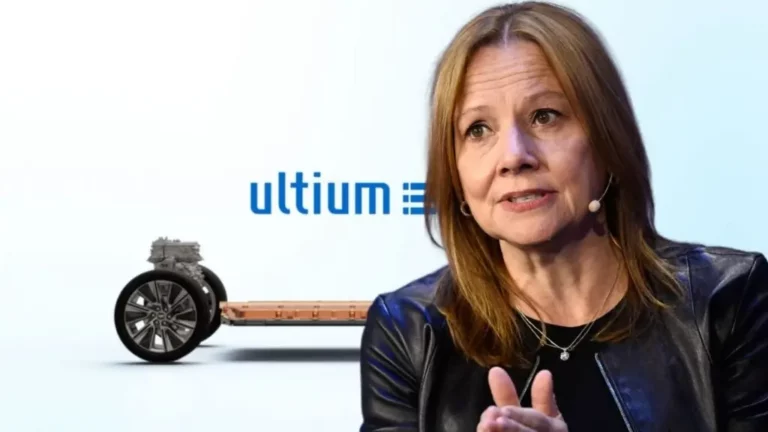
At a recent showcase in New York, GM CEO Mary Barra sketched out a future where your car drives you to work while you answer emails or watch a show. Where it then heads off on its own for a brake inspection, picks up your dry cleaning, grabs dinner, and returns in time to shuttle the kids to soccer practice.
“It’s more than just a vehicle,” she said. “It makes your life easier, more streamlined, and—more importantly—safer.”
Still, a fundamental question remains: Will people actually want to own a self-driving car?
Even as companies pour billions into autonomous technology, there is real debate over whether the future looks more like a fleet of shared robo-taxis… or privately owned autonomous vehicles sitting in driveways, waiting for their next errand.
Some of the biggest names in the space—Waymo, Tesla, Lucid, even newcomers like Tensor—say private ownership is the endgame. Earlier this year, Tensor, an obscure startup spun out of China’s AutoX, announced it would be the first to sell fully autonomous vehicles directly to consumers. Few took it seriously at the time. But the idea itself is gaining traction.
And yet, the hurdles are enormous.
Today’s robotaxis are confined to carefully mapped cities and limited conditions. A privately owned autonomous car might come with similar restrictions—“you can drive here, but not there,” “you can operate in sunshine, but not in a storm.” Would consumers accept that?
And what about maintenance? These vehicles rely on arrays of sensors that need constant calibration and cleaning. Waymo has tiny wipers to clear its lidar; Tesla says it’s developing robot vacuums for its interiors. But none of this answers the basic question: How exactly would an average owner maintain a robot car?
Some experts imagine a model closer to fractional jet ownership—you own the vehicle, but a management company handles the day-to-day upkeep.
Then there’s the issue of autonomy levels. Tensor and Lucid are talking about Level 4 cars—vehicles that can drive themselves entirely, but only under certain conditions. That means there will still be moments when the system says: “I’m confused, so I’m handing over control to you.”
How will consumers react to owning a car that promises full autonomy… except when it doesn’t?
Surveys repeatedly show that while early adopters love the technology, most Americans remain deeply skeptical. Even advanced driver-assist systems—much simpler than full autonomy—aren’t widely embraced yet.
And so we’re left with this tension:
The industry may finally be approaching the future it’s spent decades promising… but consumers may not be ready to meet it.
And as these cars continue to learn, and we continue to question, it’s worth remembering that technology doesn’t change the world on its own — people do. The real test won’t be what these vehicles can do, but whether we’re ready to trust them to take us where we’re going.
So, with that, let’s transition to Our Companies to Watch.
Every week we highlight an interesting company in the automotive technology space to keep an eye on. If you read my weekly Intel Report, we showcase a company to watch, and we then take the opportunity here on this segment each week to share that company with you.
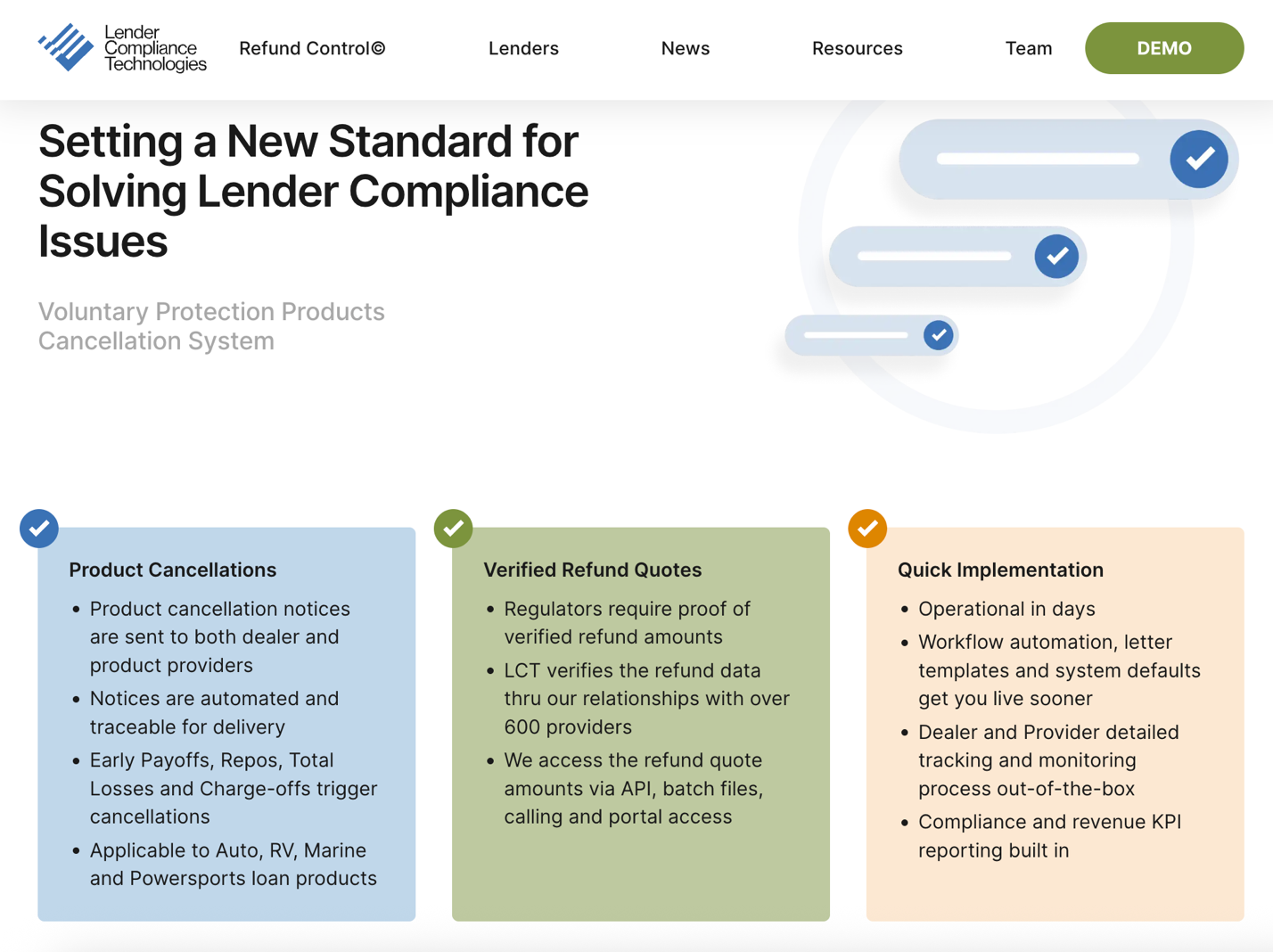
Today, our new company to watch is Lender Compliance Technologies.
Lender Compliance Technologies’ Refund Control product is the lender-managed, cancellation and refund system for loan products that protects your relationships with dealers as well as your bottom line.
The reality is state and federal regulators are ramping up scrutiny of F&I product refunds and holding lenders accountable to accurately refund consumers.
The challenge for lenders is the lack of a reliable, comprehensive workflow to monitor and track the refund process from cancellation through consumer refund as required by consumer protection laws.
Your time, money, and reputation are literally at stake.
Refund Control is the only comprehensive solution built for your bottom line.
If you’d like to learn more about Lender Compliance Technologies, you can check them out at www.lct1.com
So that’s it for this week’s Future of Automotive segment.
If you’re an entrepreneur looking to solve a big problem anywhere across the Mobility spectrum, we want to hear from you. We are actively investing out of our new Mobility Fund.
Don’t forget to check out my first book, “The Future of Automotive Retail,” and my newest book, “The Future of Mobility”, both of which are available on Amazon.
Thanks (as always) for your ongoing support and for tuning into CBT News for this week’s Future of Automotive segment. We’ll see you next week!