
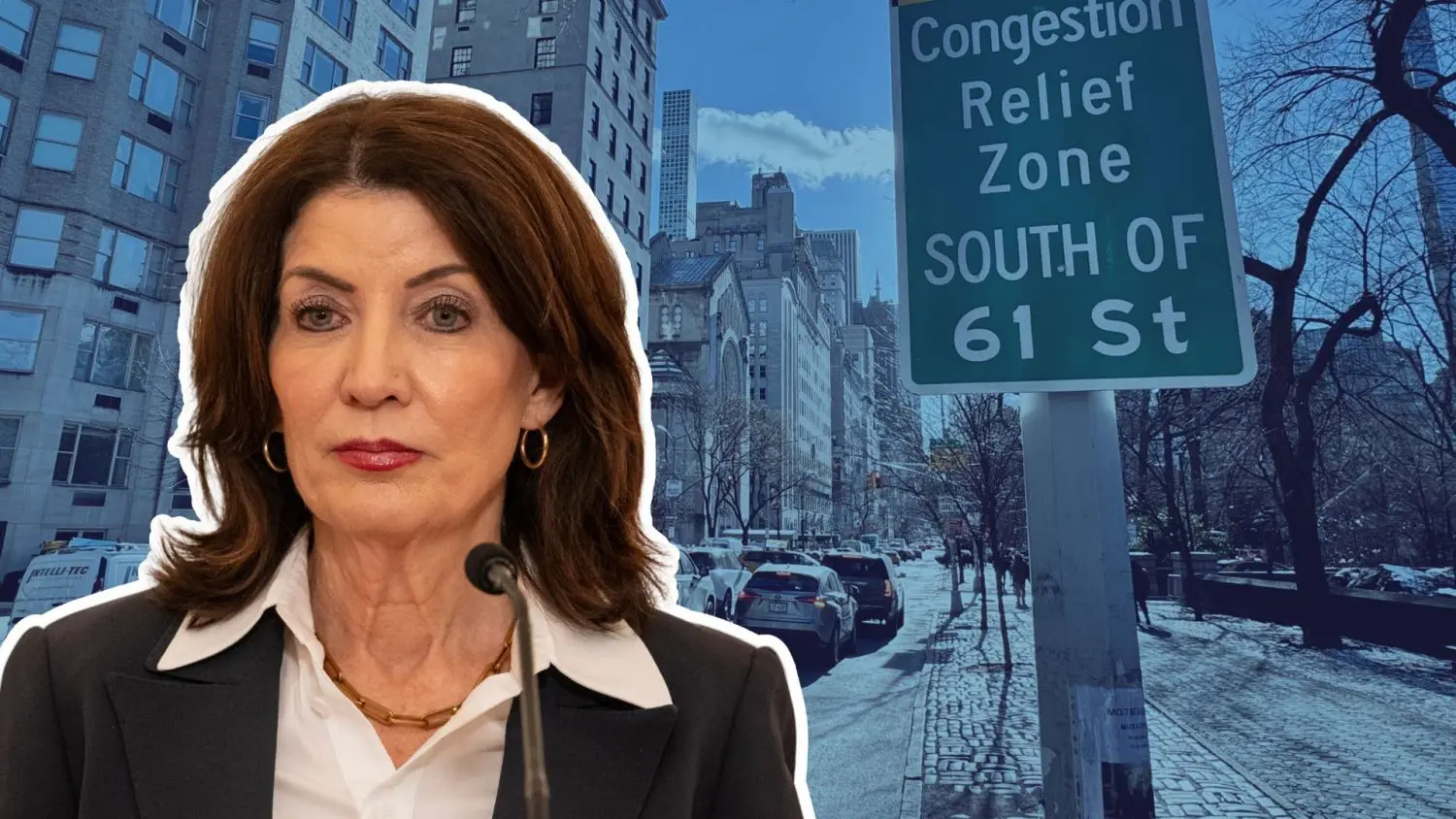
A federal judge has issued a temporary order barring the Trump administration from withholding federal approvals or funding tied to New York’s congestion pricing program, preserving the Metropolitan Transportation Authority’s (MTA) ability to implement tolls and finance critical infrastructure upgrades.
On Tuesday, U.S. District Judge Lewis Liman granted the MTA’s request for a restraining order through June 9 while the court weighs whether the federal government can legally revoke its prior approval of the tolling system. The ruling helps stabilize the city’s first-in-the-nation congestion pricing program, which began earlier this year to reduce traffic and fund transit improvements.
Judge Liman found that the MTA was likely to succeed in its legal claims and said the agency could suffer “irreparable harm” without the injunction. He cited potential impacts on the value of MTA bonds and warned against coercive threats from the federal government. The judge also ordered both parties to meet and propose a schedule to expedite the case’s progress, emphasizing the public interest.
The congestion pricing plan charges most drivers $9 during peak hours to enter Manhattan south of 60th Street. From January through April, the toll reduced vehicle entries into the area by 8.1 million, or an average of 11% per day. The MTA says the program generated $159 million in its first three months and is projected to raise $500 million by year-end. The agency plans to borrow against the toll revenue to fund $15 billion in transit upgrades, including signal modernization and subway expansion.
Although the Biden administration had approved the program, U.S. Secretary of Transportation Sean Duffy rescinded that support in February under President Trump’s directive, warning the MTA to shut it down or risk losing authorizations and funding. The administration argues that the toll unfairly burdens working-class Americans and small business owners traveling into the city. However, Governor Kathy Hochul and the MTA dispute that claim, citing traffic relief and growing public support as evidence that the toll is working.
The legal dispute escalated after Duffy issued a letter setting a shutdown deadline of May 21. The MTA sued, seeking to prevent what it called an unlawful and politically motivated reversal. Roberta Kaplan, attorney for the MTA, stated that accepting the administration’s position would grant the federal government sweeping authority to terminate any contract unilaterally, thereby creating long-term uncertainty.
Despite the federal government’s insistence that no enforcement action was imminent, the court found the threat credible enough to warrant intervention. The MTA’s $68.4 billion capital program for 2025–2029 relies on $14 billion in federal funding, including near-term projects for subway and bus maintenance, as well as track upgrades.
Outside the courthouse, MTA Chairman Janno Lieber welcomed the judge’s decision as a clear signal that further threats from the government would not be tolerated. Governor Hochul called it “a massive victory for New York commuters,” affirming the state’s right to manage its own transportation policy.
The legal battle over congestion pricing continues, but for now, the toll remains in effect, along with the funding New York needs to modernize its aging public transit system.