TSLA342.2702.31%
GM86.7700.38%
F14.3650.475%
RIVN15.360-0.46%
CYD45.240-0.32%
HMC31.5800.38%
TM191.1102.4%
CVNA75.6201.92%
PAG219.8501.18%
LAD377.550-1.10999%
AN209.4101%
GPI263.9500.94001%
ABG210.6600.08%
SAH80.8301.59%
TSLA342.2702.31%
GM86.7700.38%
F14.3650.475%
RIVN15.360-0.46%
CYD45.240-0.32%
HMC31.5800.38%
TM191.1102.4%
CVNA75.6201.92%
PAG219.8501.18%
LAD377.550-1.10999%
AN209.4101%
GPI263.9500.94001%
ABG210.6600.08%
SAH80.8301.59%
TSLA342.2702.31%
GM86.7700.38%
F14.3650.475%
RIVN15.360-0.46%
CYD45.240-0.32%
HMC31.5800.38%
TM191.1102.4%
CVNA75.6201.92%
PAG219.8501.18%
LAD377.550-1.10999%
AN209.4101%
GPI263.9500.94001%
ABG210.6600.08%
SAH80.8301.59%

Biden Administration finalizes milder fuel economy rules for trucks and SUVs

Conversely, environmental advocates criticized the new rules.
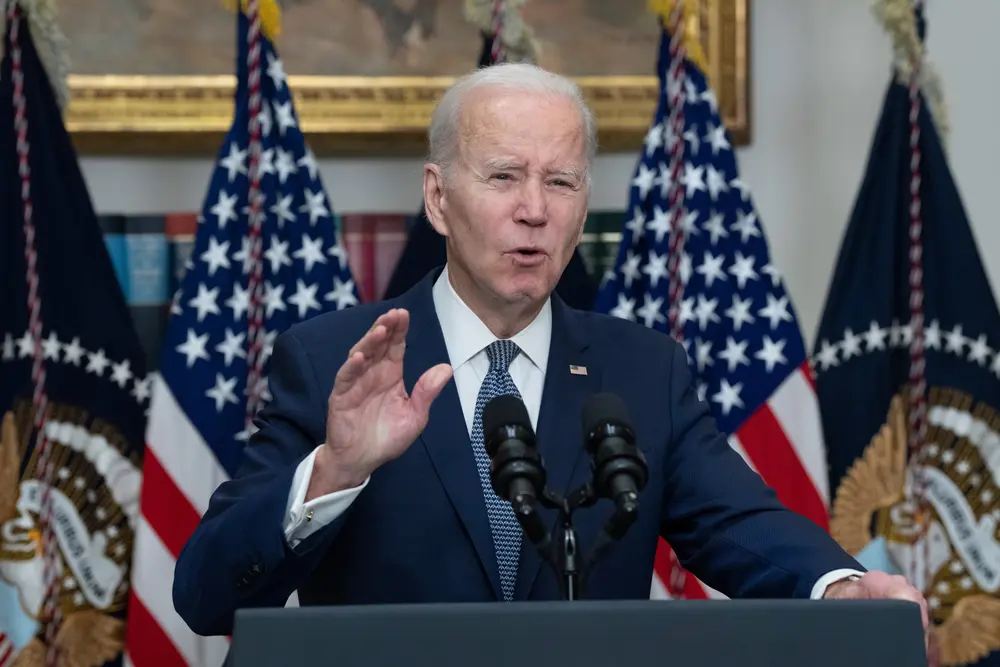
The Biden administration has finalized less stringent fuel economy rules for trucks and SUVs through 2031 than initially proposed.

President Joe Biden’s administration has finalized less stringent fuel economy rules for trucks and SUVs through 2031 than initially proposed, according to the National Highway Traffic Safety Administration (NHTSA). This adjustment is seen as a significant win for Detroit automakers, reducing the compliance penalties they face.

The revised rules have drawn praise from automakers and criticism from environmental groups. In July 2023, the NHTSA proposed increasing Corporate Average Fuel Economy (CAFE) requirements by 2% per year for passenger cars and 4% per year for light trucks from 2027 through 2032. However, under the final rule, there will be no required increase for light trucks in 2027 and 2028, with only a 2% annual increase from 2029 through 2031.

Initially, the proposed fuel economy standards were expected to cost the auto industry $14 billion in projected fines through 2032, with General Motors (GM), Stellantis (parent of Chrysler), and Ford facing substantial penalties. The final rule significantly reduces this financial burden, projecting fines of up to $1.83 billion through 2031, and potentially none at all, depending on various compliance models.

In June 2023, reports indicated that GM and Stellantis paid $363 million in fines for failing to meet previous fuel economy standards. However, the new rule aims to increase fuel economy to about 50.4 miles per gallon by 2031, up from the current 29.1 mpg. This is a decrease from last year’s projection of 58 mpg by 2032.

This decision marks the third recent regulatory action by the Biden administration that has relaxed vehicle regulatory proposals. Earlier changes included less stringent compliance calculations for EVs and revised tailpipe rules requiring fewer EVs than initially forecasted.

John Bozzella, head of the Alliance for Automotive Innovation trade group representing major automakers, welcomed the revisions, stating they would dramatically reduce the penalties automakers feared. Bozzella argued that the original fines would not have produced environmental benefits or additional fuel economy and would have diverted the capital needed for the EV transition.

Conversely, environmental advocates criticized the new rules. Dan Becker, director of the Center for Biological Diversity’s Safe Climate Transport Campaign, accused the NHTSA of caving to automaker pressure. He argued that the weakened final rule would result in higher fuel consumption, increased pollution, and a competitive disadvantage for U.S. automakers in the clean vehicle market.
Read More
More from Articles
Charlie Obaugh acquires Campus Ford in Virginia

Charlie Obaugh acquires Campus Ford in Virginia

- August 14, 2026
Charlie Obaugh Auto Group has acquired Campus Ford in Waynesboro, Virginia, from Matt McMurray. The transaction was announced in August 2026, with Performance Brokerage Services serving as the exclusive buy-side...
Revised USMCA proposals could cost billions annually, Detroit automakers warn

Revised USMCA proposals could cost billions annually, Detroit automakers warn

- August 14, 2026
On the Dash: USMCA revisions raising U.S. content thresholds to 50% could add at least $2 billion in annual costs per company. GM projects $2.5 billion to $3.5 billion in...
New-vehicle inventory tightens to 75 days' supply as July sales climb 8.5%

New-vehicle inventory tightens to 75 days’ supply as July sales climb 8.5%

- August 14, 2026
On the Dash: New-vehicle inventory drops to 75 days' supply as July sales climb 8.5%. Toyota, Lexus and Honda keep the tightest inventories while Stellantis works through excess stock. ...
Cox Automotive report finds dealers use AI widely, results still lag expectations

Cox Automotive report finds dealers use AI widely, results still lag expectations

- August 14, 2026
On the Dash: Focus AI investments on measurable dealership needs, not adoption for its own sake. Prepare teams for shoppers who are using AI before they reach the showroom. Build...
CBT News
Privacy Overview

This website uses cookies so that we can provide you with the best user experience possible. Cookie information is stored in your browser and performs functions such as recognising you when you return to our website and helping our team to understand which sections of the website you find most interesting and useful.