

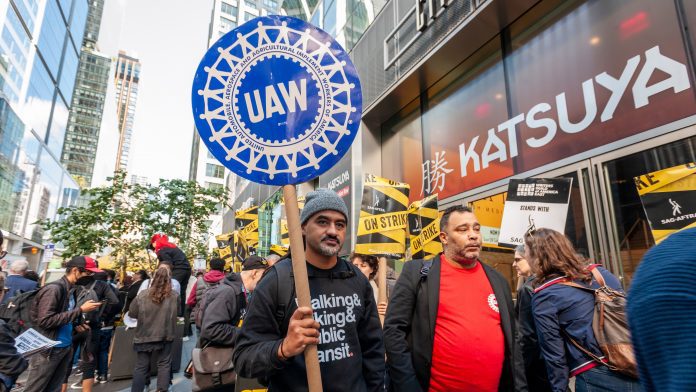
New import tariffs enacted by President Donald Trump’s administration are projected to significantly reduce profit-sharing payouts for United Auto Workers (UAW) members at General Motors, Ford, and Stellantis. These annual bonuses, which can exceed $14,000 for some workers, are tied directly to company profits. With tariffs now imposed on key automotive raw materials, parts, and finished vehicles, automaker costs are expected to rise sharply.
While the stated goal is to strengthen U.S. manufacturing, industry analysts warn the policy could hit the Detroit Three’s profits hard due to their reliance on cross-border supply chains, especially with Mexico. Billions in lost profits could translate to smaller checks for UAW members, even as the union leadership publicly supports the tariff policy, citing the potential for increased U.S. investment and job growth.
Here’s why it matters:
For the automotive industry, the tariffs could have a twofold effect: higher production costs for automakers and reduced take-home pay for union workers. Dealers may also feel downstream impacts if manufacturers adjust vehicle pricing, production schedules, or incentives to offset profit declines. Because the Detroit Three’s supply chains are deeply interconnected with foreign suppliers, particularly in Mexico, even modest tariff increases could ripple through operations. While the UAW hopes the policy will create more domestic manufacturing jobs, the immediate financial hit to profit-sharing checks could affect worker morale and household spending, potentially influencing local economies in automotive hubs.
Key takeaways:
- Tariffs directly threaten UAW profit-sharing payouts
Bonuses for GM, Ford, and Stellantis workers are tied to company profits, meaning higher production costs could sharply reduce payments. - Potential billions in lost profits for Detroit Three
Tariffs on raw materials, parts, and finished vehicles raise manufacturing expenses, directly cutting into automakers’ bottom lines. - Record-setting bonuses could be harder to repeat
In recent years, payouts reached $14,500 for GM workers, $10,416 for Ford employees, and $14,760 for Stellantis staff. These levels are now at risk. - UAW leadership backs tariffs despite risks
Union President Shawn Fain argues automakers can absorb the costs without raising prices, calling the companies “massively profitable” over the past decade. - Dealers and supply chains may face indirect effects
Higher costs and potential production adjustments could impact dealer pricing, inventory availability, and incentive programs.