On the Dash:
- Farley said the F-150 supplier issue is fixed but will reduce third-quarter wholesale shipments.
- Dealers held about 40 days of pickup supply, below Ford’s 50- to 60-day target.
- Training programs produce 55 skilled trades workers for every 100 needed, a report released Wednesday found.
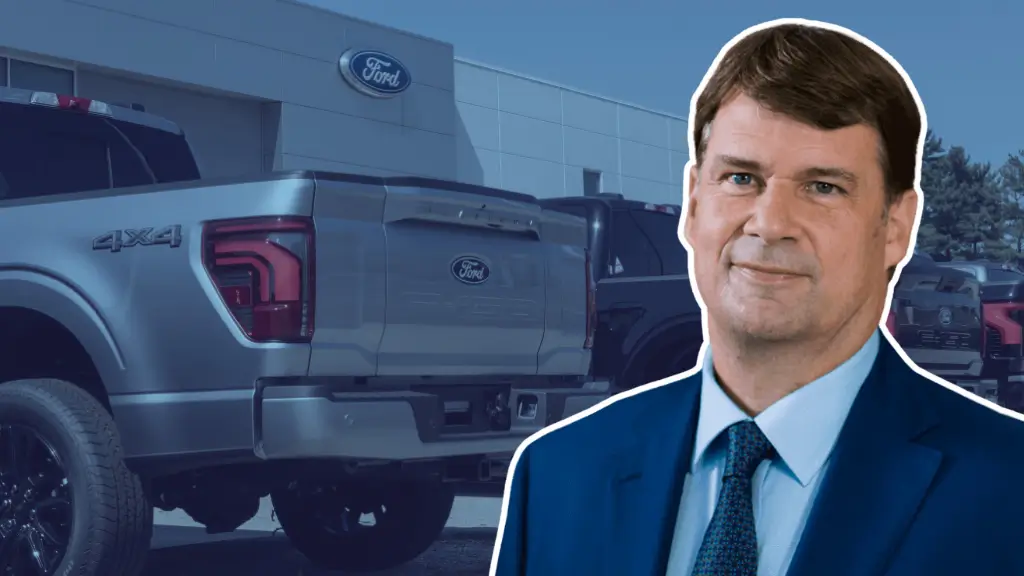
Ford’s F-150 supplier issue will reduce third-quarter wholesale shipments, CEO Jim Farley told reporters Wednesday. An internal memo said F-150 production halted last week at the Dearborn Truck Plant, but was set to resume Tuesday. Farley said the problem has since been fixed and that Ford has ways to address the impact.
Dearborn and Kansas City lost production days
Dearborn production stopped Sept. 24, and about 3,500 to 4,000 workers stayed home during the shutdown, CBT News reported. Union officials said Ford tied the timing partly to facility repairs as well as the supplier issue.
Ford has canceled 15 F-150 shifts at Kansas City since Sept. 1, UAW Local 249 Bargaining Chair Jim Fisher said. The company typically gives very late notice of the cancellations, he said.
Supplier issue separate from Novelis fires
The disruption is unrelated to the Novelis aluminum shortage caused by fires at the supplier’s Oswego, New York, plant. Farley said Ford has fully recovered from those fires, which limited truck output for much of 2026.
Novelis returned that plant to service in June after a nine-month shutdown. The outage is expected to cost Ford $1.5 billion this year. F-150 output had reached its highest level since August 2024 before the latest disruption. Super Duty production hit 39,000 units in August, Ford’s best month since March 2006.
Dealer pickup supply was already below target
Dealers held about 40 days of pickup supply earlier this month, below Ford’s target of 50 to 60 days. Trucks would reach dealer lots over the next 30 to 90 days, Ford Head of U.S. Sales Rob Kaffl said at the time.
F-Series sales, which fuel the bulk of Ford’s profits, fell 11% year over year through August. CBT News also covered the production halt at two plants earlier this week.
Farley also flags skilled trades shortage
Farley also spoke Wednesday at Ford’s second ACCELERATE the Essential Economy forum at Michigan Central in Detroit, which focused on the skilled trades shortage.
Training programs produce 55 skilled trades workers for every 100 needed, according to a report the Alliance for America’s Skilled Trades released Wednesday. The report found that Texas will need 86,000 auto mechanics by 2034.
Nearly a quarter of the skilled workforce is 55 or older, Farley said at the forum, according to The Detroit News.
The report also found that only half of those who enroll in skilled trades training finish. High-quality apprenticeships have completion rates above 90%. Barriers such as transportation, childcare and the need for a paycheck keep many from finishing, according to the alliance.