Welcome back to the latest episode of “The Future of Automotive” on CBT News, where we put recent automotive and mobility news into the context of the broader themes impacting the industry.
I’m Steve Greenfield from Automotive Ventures, and I’m glad that you could join us.
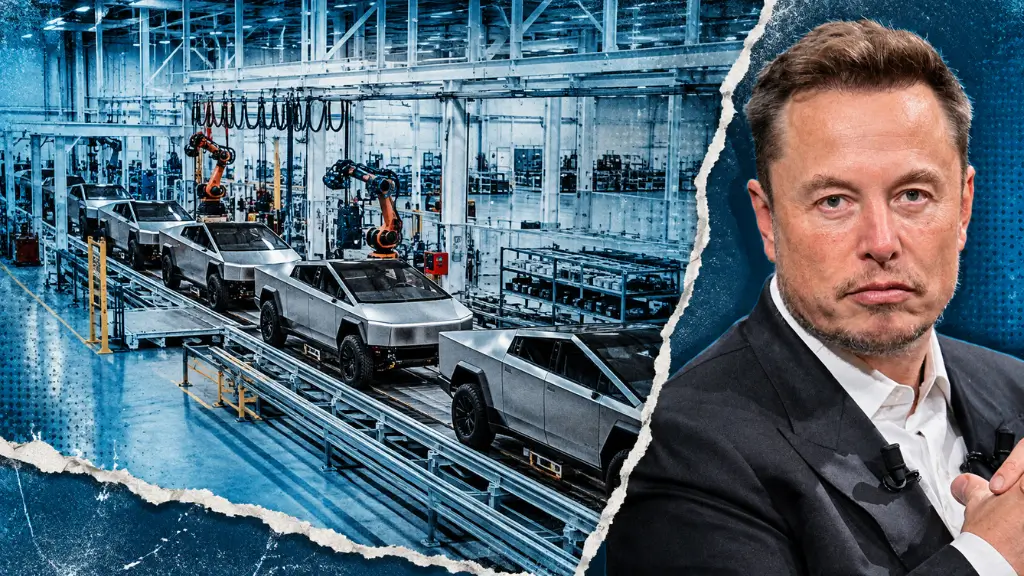
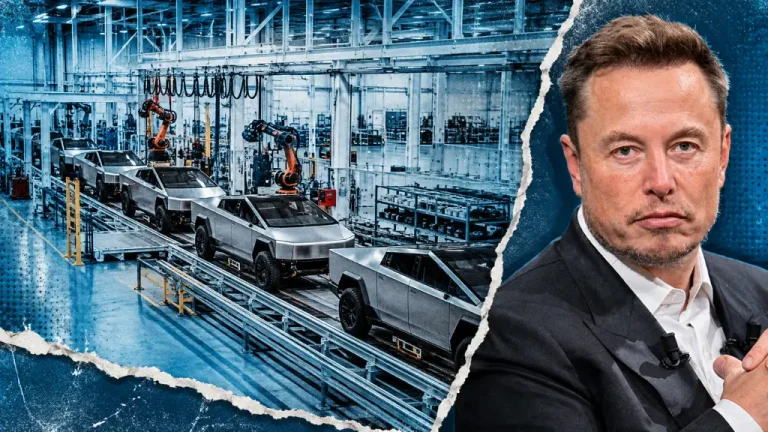
This week, we’re hearing once again from Elon Musk—this time, about a future where work is optional and money doesn’t really matter.
At the U.S.–Saudi Investment Forum in Washington this week, Musk laid out a sweeping vision for the next 10 to 20 years, one in which advances in artificial intelligence and robotics make traditional jobs… well, more of a hobby than a necessity.
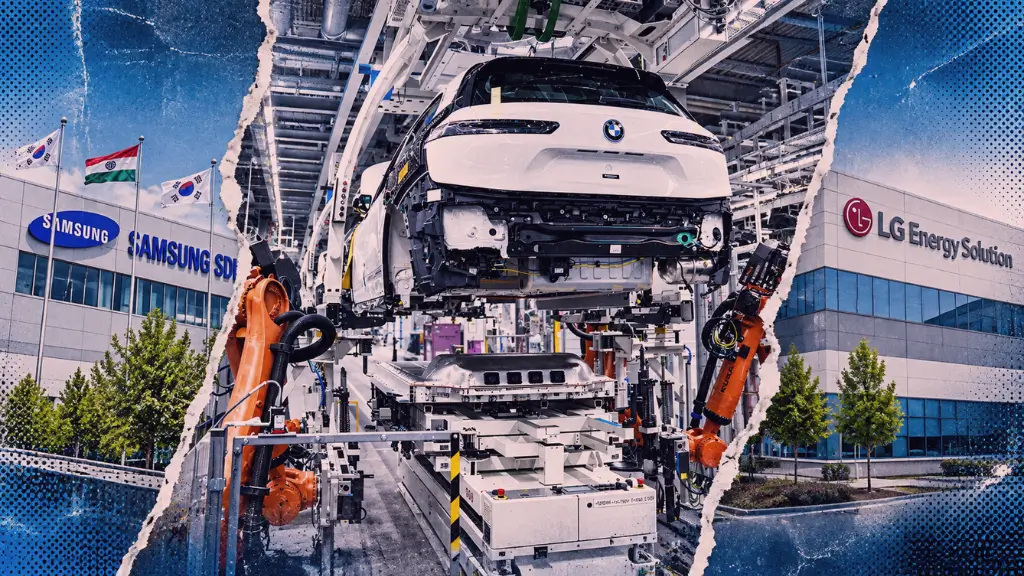
Musk compared the idea of working in the future to tending a backyard vegetable garden: something people could do, even enjoy, but certainly not something they must do. “Work will be optional,” he said. “Like playing sports, or a video game.” Most of the heavy lifting, he predicts, will be handled by millions of robots—part of his broader ambition to transform Tesla from an electric-car company into an AI and robotics leader.
It’s a big bet. Musk has said he expects as much as 80 percent of Tesla’s value to eventually come from its Optimus humanoid robots, even as those bots continue to face delays. And while Musk paints a picture of a kind of techno-utopia, not everyone shares his optimism.
Because for many Americans—especially younger workers—automation isn’t a promise, it’s a threat.
We’re already seeing early signs of AI displacing entry-level jobs. Wages for Gen Z have largely stalled. And concerns are mounting that this so-called AI revolution could widen the economic divide even further.
Still, Musk insists that in this future world, money itself will become irrelevant. He points to the science-fiction novels of Iain M. Banks—stories set in a post-scarcity society where ultra-intelligent machines handle most labor, and where traditional currency simply isn’t needed.
Closer to the real world, Musk has floated the idea of a “universal high income,” though—like many of his predictions—the details remain vague. It echoes the universal basic income championed by OpenAI CEO Sam Altman: government-backed payments that would help people get by in a world where human labor just doesn’t command the same value.
But making any of that happen is complicated. Robotics remains expensive. The technology to automate most jobs may not be affordable—or accessible—anytime soon.
And even if it were, there’s a more fundamental question: what happens to societies built around work, once work disappears?
Researchers have long found that many of our closest relationships, and a lot of our sense of purpose, come from the workplace. If labor becomes optional, future generations may have to redefine where they find meaning, community, and identity.
And then there’s the question of who benefits. We’re already seeing a widening gap between tech’s biggest winners—companies like those in the so-called “Magnificent Seven”—and almost everyone else. Musk himself recently drew attention for what could become a $1 trillion pay package. Meanwhile, earnings expectations for the rest of the S&P 500 are being revised downward.
So, is a work-optional society actually desirable—and for whom?
That’s still unclear. The promise of AI and humanoid robots in every home sounds impressive. But as anyone who’s seen the Pixar film Wall-E might recall, a world where machines do everything raises profound questions about what’s left for us to do—and who we become when we stop doing it.
For now, Musk is imagining a future shaped by machines. The bigger challenge may be imagining the future we want for ourselves.
So, with that, let’s transition to Our Companies to Watch.
Every week, we highlight an interesting company in the automotive technology space to keep an eye on. If you read my weekly Intel Report, we showcase a company to watch, and we then take the opportunity here on this segment each week to share that company with you.
Today, our new company to watch is SellMyRide.
SellMyRide was built for one reason: to help dealerships acquire more of the right cars – without auctions, middlemen, or inflated costs.
SellMyRide has helped automotive dealers acquire more than $1 billion in used car inventory.
Dealers can dial in the types of vehicles they want to acquire, and the cost is less than you would pay if acquiring inventory at an auto auction.
If you’d like to learn more about SellMyRide, you can check them out at www.SellMyRide.com

So that’s it for this week’s Future of Automotive segment.
If you’re an entrepreneur looking to solve a big problem anywhere across the Mobility spectrum, we want to hear from you. We are actively investing out of our new Mobility Fund.
Don’t forget to check out my first book, “The Future of Automotive Retail,” and my newest book, “The Future of Mobility”, both of which are available on Amazon.
Thanks (as always) for your ongoing support and for tuning into CBT News for this week’s Future of Automotive segment. We’ll see you next week!