On the Dash:
- Scout Motors plans about 100 stores with lifts and technicians for test drives and service.
- Keogh said about 85% of each store’s footprint will go to service.
- Scout is building service capacity ahead of volume, with customer deliveries targeted for 2028.
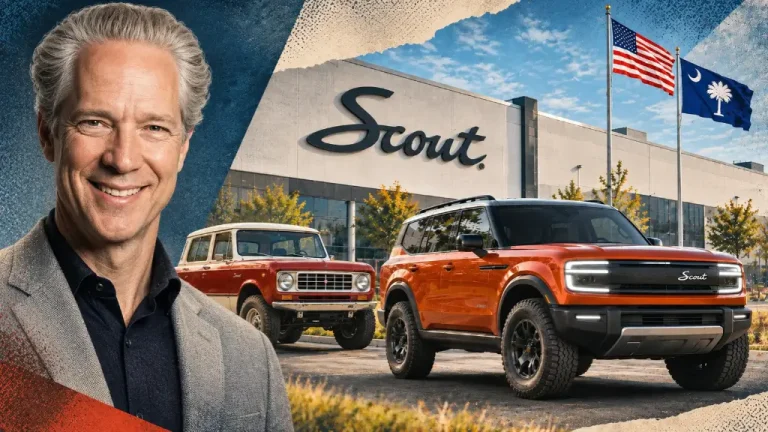
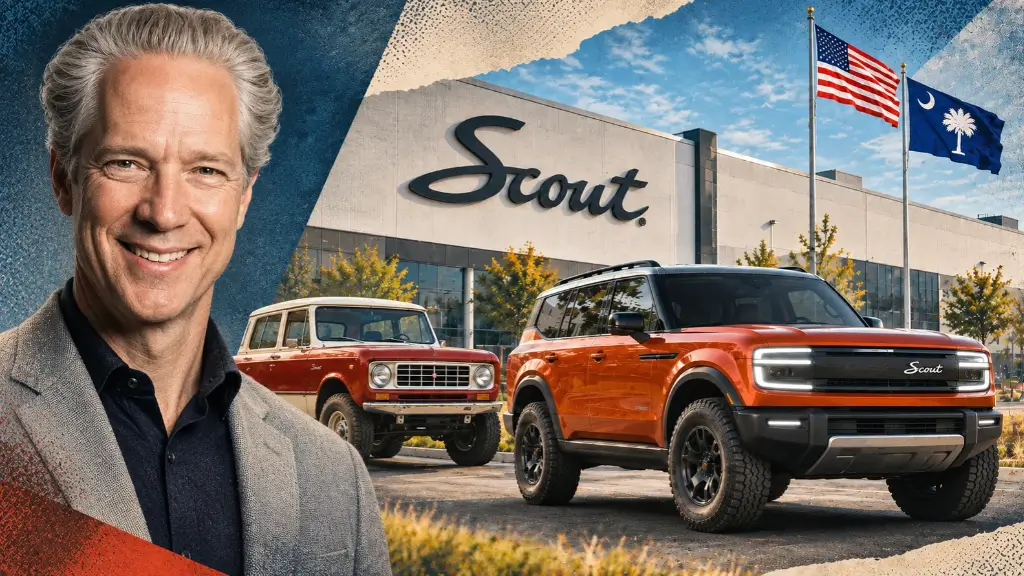
Scout Motors is planning to build its service operation before its vehicles reach volume, CEO Scott Keogh said, as the Volkswagen Group startup works toward getting cars to customers in 2028. Scout plans to sell directly to consumers, and Keogh said that does not mean owners will be left to deal with an app when a vehicle needs work.
Keogh made the comments to The Drive’s podcast, The Drivecast, earlier this month. When asked how owners will get service, he said the company will build about 100 stores in the U.S. with lifts and technicians, and customers will go there for both test drives and repairs.
Scout to scale service centers
According to Keogh, Scout will handle service itself and rejected the idea that direct-to-consumer means a mobile app and a digital operation that abandons owners. The company is building physical locations to answer that, and customers will visit the stores for test drives and again when a vehicle needs service, with lifts and technicians on site for repairs. He said service will take up about 85% of each store’s footprint.
Keogh compared the stores to restaurants, where the kitchen is open, and diners can watch the flames and the fryers. Scout wants customers to see its service area the same way, as part of the store and not something tucked out of sight. Owners can bring their vehicle into the service center or have a mobile service technician dispatched to their home, he said.
Keogh said Scout learned from Tesla, which he said focused less on service. That’s one reason Scout is building its service infrastructure before deliveries begin, rather than waiting to see how many vehicles end up on the road. Service capacity has to be in place ahead of demand, not after it, he said. The first vehicles will be in customers’ hands in 2028, Keogh confirmed, despite the company originally expecting deliveries sometime in 2027.
Dealer lawsuits and license fights continue
Keogh’s service comments come as dealers continue to challenge Scout’s direct sales model in court, with one lawsuit arguing that selling directly deprives dealers of vehicle sales, financing and service revenue. Scout is Volkswagen’s EV brand, built around the International Harvester Scout name, with a $2 billion plant in Blythewood, S.C. It decided in 2024 to bypass dealers and sell directly to buyers, following the model Tesla, Rivian and Lucid use, and it now has about 212,000 reservations for the Terra pickup and Traveler SUV.
NADA vowed to fight the plan in courthouses and statehouses across the country, and in July 2025 Scout urged the U.S. Department of Justice to eliminate state franchise laws. Dealers have answered with lawsuits in several states.
Two Volkswagen dealerships filed a class action on March 3, 2026, in the U.S. District Court for the Eastern District of Virginia, claiming Volkswagen breached its dealer agreements by selling Scout vehicles directly online. Ten Colorado dealers sued in Denver District Court on Jan. 20 after the state’s dealer board granted the automaker a license, and the Washington State Auto Dealers Association filed a federal suit June 29, joining challenges in Florida and California.
Last month, Tennessee regulators denied the company a dealer license, with 14 of 16 Motor Vehicle Commission members voting no. Scout argues Tennessee law restricts direct sales only where a manufacturer competes with a dealer of the same line-make, and it says it remains committed to direct sales.