When President Trump emerged from a recent meeting with automotive executives and remarked that he found it strange some industry leaders appeared opposed to Americans repairing their own vehicles, most coverage focused on the politics. I was more interested in what happened afterward. Because the deeper you dig into the latest Right to Repair battle, the more one question keeps surfacing: Why are automakers fighting so hard to control information generated by vehicles that consumers already own?
Follow the money and the picture becomes much clearer.
The U.S. automotive service market generates roughly $200 billion annually. Service departments provide some of the most consistent revenue in the industry. As vehicles become more software-driven and connected, manufacturers have discovered something valuable: the sale of a vehicle no longer has to be the end of the customer relationship. Software subscriptions, connected services, vehicle data, maintenance programs, warranty work, and dealer service operations all create recurring revenue opportunities long after the vehicle leaves the showroom.
There is nothing inherently wrong with companies seeking new revenue streams. Every business does it. Problems arise when protecting those revenue streams begins limiting consumer choice.
That’s why the latest legislative fight deserves attention.
The debate centers around H.R. 7389, the Motor Vehicle Modernization Act of 2026. Supporters describe the legislation as a way to modernize regulations and codify existing agreements that provide independent repair facilities access to repair information. On the surface, that sounds like a win for consumers.
Then something interesting happened.
One of the most important portions of the broader Right to Repair debate disappeared.
Language involving telematics access, the wireless vehicle data that increasingly powers diagnostics, repairs, calibrations, software updates, and vehicle communications, was removed from the legislation before it advanced through committee. For many independent repair advocates, that wasn’t a minor detail. It was the entire ballgame.
That’s where I started asking different questions.
If independent repair facilities already perform most post-warranty repairs, as industry groups frequently point out, why has access to vehicle data become such a battleground? If manufacturers have spent years arguing they support repair access, why remove provisions dealing with the very information modern repairs increasingly depend upon?
The answer may have less to do with repairs than many consumers realize.
For decades, vehicle ownership came with a simple understanding. Once you purchased a vehicle, you controlled what happened next. You chose the mechanic. You decided where repairs were performed. Independent shops competed with dealerships. Consumers benefited from competition because they had options.
Today’s vehicles operate very differently.
Modern vehicles continuously generate information. They monitor component performance, transmit diagnostic data, communicate with manufacturers, collect driving information, receive software updates, and rely on increasingly sophisticated electronic systems. Information that once remained inside the vehicle now moves through manufacturer-controlled networks.
Control the information and you gain influence over the repair process.
That reality helps explain why automakers, dealer associations, aftermarket suppliers, consumer advocates, lawmakers, and lobbyists are all fighting over the same issue.
The public discussion typically revolves around safety and cybersecurity. Manufacturers argue that unrestricted access to vehicle systems could expose sensitive information or create vulnerabilities. Those concerns should not be dismissed.
Modern vehicles are far more complex than the cars many of us grew up driving.
Yet complexity alone doesn’t fully explain what we’re seeing.
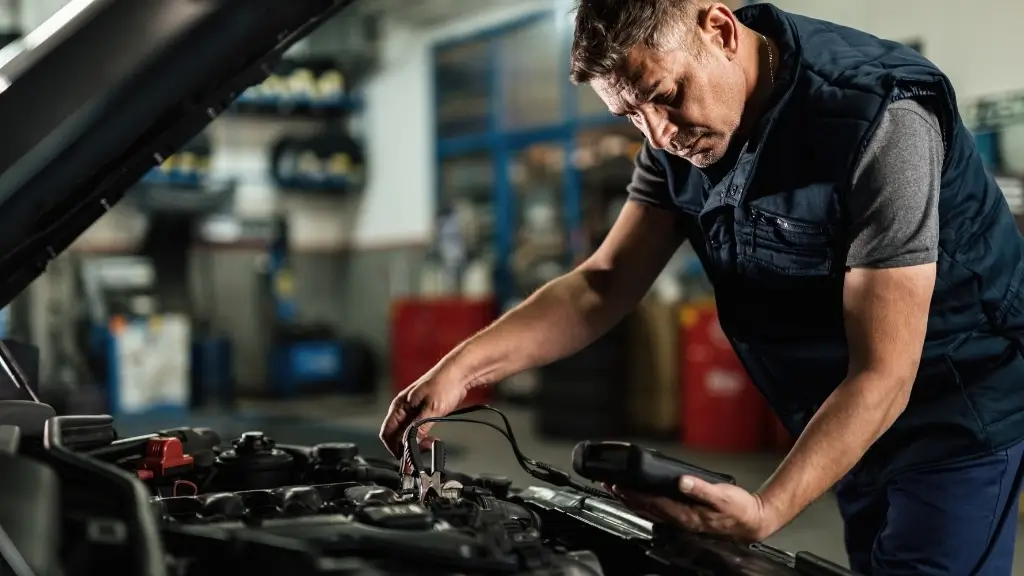
Independent repair facilities are not demanding access to nuclear launch codes. They are asking for the information necessary to diagnose, repair, calibrate, and maintain vehicles that consumers legally purchased. The distinction matters because every year more repairs require access to software, electronic systems, and connected vehicle data.
That trend becomes even more significant when viewed alongside other developments occurring across the automotive industry.
Vehicle telematics continue expanding. Software increasingly controls functions once handled mechanically. Subscription-based features have appeared across multiple brands. Driving behavior data has become valuable enough to attract insurers, data brokers, and analytics firms. Remote software updates allow manufacturers to alter vehicle functionality long after purchase.
Each development can be justified individually.
Viewed together, they reveal an industry steadily increasing its involvement in vehicles after the sale is complete.
That’s where the Right to Repair fight begins to look less like a repair issue and more like an ownership issue.
Farmers encountered a similar problem years ago during the battle over repair restrictions involving agricultural equipment. Many discovered that purchasing expensive machinery did not necessarily guarantee the ability to fully repair it without manufacturer involvement. Software changed the relationship between ownership and control.
The automotive industry now finds itself approaching a similar crossroads.
Consumers are being told these changes are necessary because technology has advanced. That’s true. Modern vehicles are rolling computers. The challenge is that technology often changes incentives. Every new connected system creates opportunities for convenience, efficiency, safety improvements, data collection, recurring revenue, and increased manufacturer influence. Those outcomes frequently arrive together.
What makes H.R. 7389 particularly important is not what remains in the bill.
It’s what was removed.
The fight over telematics access reveals where the battle is headed next. Brake pads, spark plugs, and oil changes were never the long-term objective. The future fight concerns access to information. Who controls it. Who can use it. Who profits from it. And ultimately who decides what can and cannot be done with a vehicle after it has been sold.
For more than a century, vehicle ownership carried a clear meaning. You bought the vehicle. The decisions belonged to you. You could maintain it, modify it, repair it, keep it on the road for decades, or hand it down to the next generation.
Today that definition is becoming less clear.
The question isn’t whether modern vehicles should be secure. Of course they should.
The question isn’t whether technology has made repairs more complicated. It unquestionably has.
The question is whether ownership continues to mean what consumers think it means.
Because if automakers are willing to fight this hard over access to repair data today, consumers should pay close attention to what comes next. The battle over Right to Repair may ultimately be remembered as the moment Americans discovered that ownership in the connected-car era no longer comes with the assumptions previous generations took for granted.
And once those assumptions disappear, getting them back becomes much harder than changing your own brake pads.
Check out my full commentary on this story: https://youtu.be/4mCoVcpxvHU
Looking for more automotive news? https://www.CarCoachReports.com
Listen to The Drive Car Show – https://www.youtube.com/@thedrivecarshow