Welcome back to the latest episode of “The Future of Automotive” on CBT News, where we put recent automotive and mobility news into the context of the broader themes impacting the industry.
I’m Steve Greenfield from Automotive Ventures, and I’m glad that you could join us this week.
Every year in the United States, roughly 40,000 people die in car crashes. Hundreds of thousands more are injured. For young Americans, automobiles sit uncomfortably alongside guns and drugs as a leading cause of death.
Zoom out globally, and the picture is even starker: road collisions claim about 1.2 million lives each year and are now the number one killer of people between the ages of five and twenty-nine.
And for a long time, there was reason to believe we were winning this fight.
Decade after decade, the numbers were moving in the right direction. Seatbelts became standard. Cars were designed to crumple instead of crush. Airbags proliferated. Drunk driving laws were enforced more aggressively. Driving standards improved. Measured per mile traveled, deaths consistently declined.
But then, something changed.
In recent years, that long, steady progress has stalled—and reversed. Traffic fatalities are rising again. So the obvious question is: what’s going on?
Part of the answer may be that many of the most effective safety interventions are already behind us. The big gains of the last 25 years came from policies and technologies like seatbelts, airbags, and public campaigns against drunk driving. It’s possible we’ve entered a period where fewer new safety measures are being introduced—and the returns from old ones have plateaued.
At the same time, American vehicles themselves have gotten bigger. Buyers have moved away from sedans and toward SUVs and full-sized trucks. These vehicles are heavier, taller, and harder to see around. High hoodlines reduce visibility. Their mass increases the severity of crashes. And for drivers, that size can create a false sense of invulnerability—sometimes translating into more aggressive behavior behind the wheel.
Add to that uneven enforcement of speeding laws, and a built environment that often fails to provide safe places to walk or bike, and the risk compounds.
But many experts believe there’s one factor that stands above the rest—a technology that reshaped modern life and quietly undermined decades of progress in road safety.
The smartphone.
For all its benefits, the smartphone is uniquely incompatible with safe driving. It competes relentlessly for attention—for your eyes, your thoughts, your focus. Even when it’s face down in a cupholder, it’s still working on you: emails, texts, notifications, social media—all tugging at the mind.
We’ve built our economy, our relationships, and our daily routines around a small slab of glass. And then we ask people to completely ignore it while piloting two tons of metal at highway speeds.
That’s a difficult ask.
It’s unlikely that Americans will voluntarily return en masse to smaller, lighter vehicles—whatever the occasional political fascination with microcars might be. So where does that leave us?
For many, the hope now rests on technology once again—this time in the form of advanced driver-assistance systems and, eventually, autonomous vehicles. These systems don’t get distracted. They don’t check messages. And they promise, at least in theory, a future where traffic deaths are dramatically reduced—or possibly eliminated altogether.
The question is whether that future arrives fast enough to reverse a deadly trend that, for the first time in generations, is moving in the wrong direction.
So, with that, let’s transition to Our Companies to Watch.
Every week we highlight interesting companies in the automotive technology space to keep an eye on. If you read my weekly Intel Report, we showcase a company to watch, and take the opportunity here on this segment each week to share that company with you.
Today, our new company to watch is The Sweet Spot.
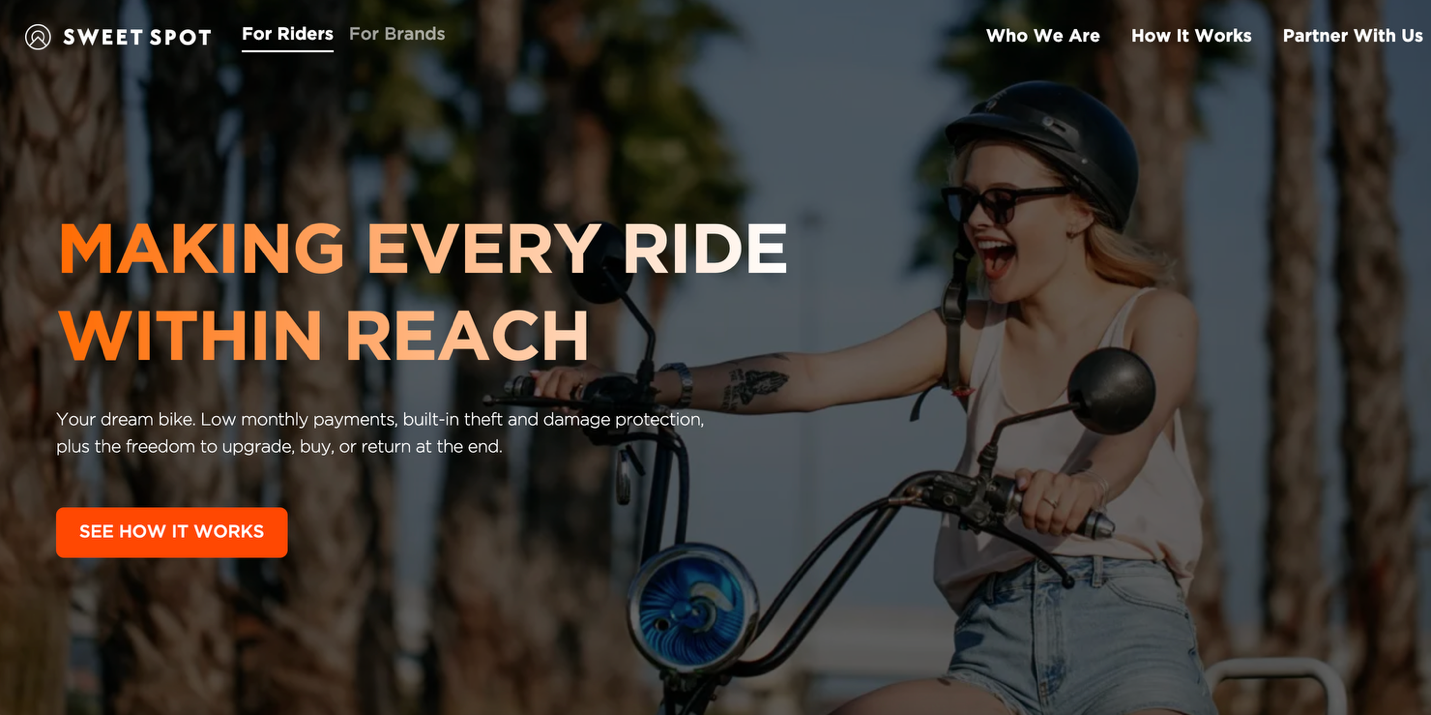
The Sweet Spot presents eBike purchasers an option to lease instead of buy their next eBike.
Sweet Spot leasing option shows up at checkout— in a manner that is secure, familiar, and easy to use.
The Sweet Spot allows users to get the bike they’ve been dreaming of with low monthly payments.
Buyers can ride secure with built-in theft and damage protection, and ride confident knowing they can upgrade, buy, or simply return their bike at the end of the lease term.
If you’d like to learn more about The Sweet Spot, you can check them out at www.thesweetspot.com.
So that’s it for this week’s Future of Automotive segment.
If you’re an AutoTech entrepreneur working on a solution that helps car dealerships, we want to hear from you. We are actively investing out of our DealerFund.
Don’t forget to check out my two books, “The Future of Automotive Retail”, and “The Future of Mobility”, both of which are available on Amazon.com.
Thanks (as always) for your ongoing support and for tuning into CBT News for this week’s Future of Automotive segment. We’ll see you next week!