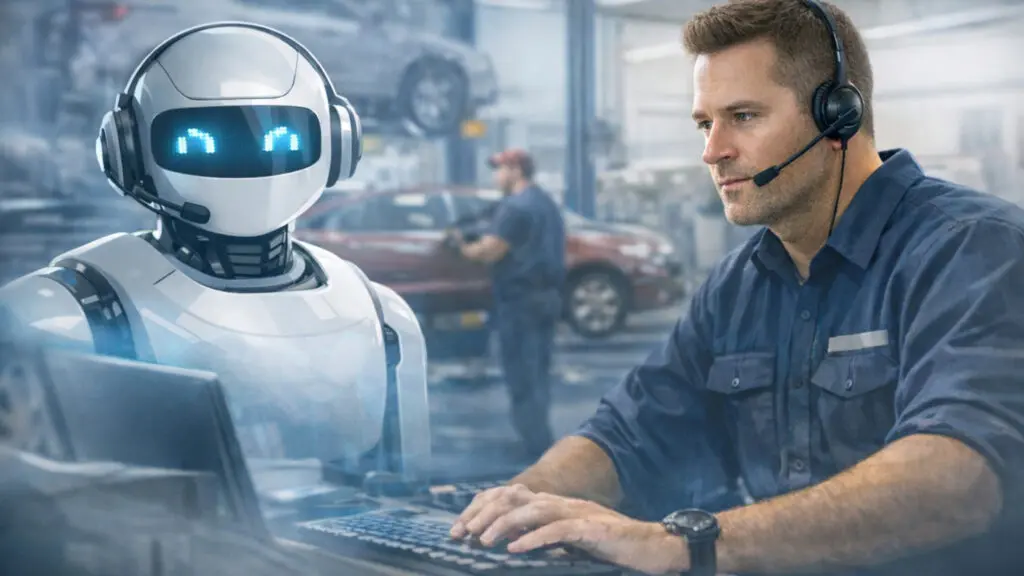
What does “great” AI actually look like in the service lane? Many dealers are still figuring that out. It’s not about the technology itself but how it performs for your customers and teams.
Pressure to adopt AI comes from every angle. Vendors are selling it, 20 groups are talking about it, leadership teams want improved efficiency, and your competitors are already testing AI. The common message is: move fast.
But speed alone isn’t the goal. The real focus should be whether AI actually helps. Can it handle calls accurately without annoying customers? Does it reduce the workload for your team or just add cleanup later?
Those questions matter because AI is often the first point of contact. That initial interaction can influence satisfaction, retention, and revenue.
A practical way to approach AI rollouts
AI deployments perform best when built with transparency and safeguards, think follow-up alerts, transfer triggers, and escalation paths.
At Toma, we approach AI using the ART framework: Adoption, Resolution, and Tailoring. This means introducing AI intentionally, putting it in the right places, ensuring it completes tasks, and customizing it to your dealership’s unique operations.
Adoption: Start where impact meets control
Even one poor interaction can undo a lot of goodwill. Early adoption works best in areas that are high value but carry low risk. Common starting points include:
- After hours service calls
- Overflow during busy periods
- A controlled portion of inbound inquiries
Visibility is key. Your team should be able to see how AI is handling calls, when it escalates to a human, and what follow-ups are triggered. Advisors and BDC staff need clarity on AI capabilities and handoff protocols.
Resolution: Talking isn’t the same as resolving
A common pitfall in AI deployments is mistaking conversation for resolution. Resolution means the task actually gets done.
When evaluating AI, look closely at questions like:
- Can it schedule appointments directly in the DMS?
- Does it provide accurate, real-time recall and pricing information?
- Does it automatically follow up when something isn’t fully resolved?
Without resolution, incomplete calls create friction, lost revenue, and unnecessary rework. High-performing AI platforms that resolve the majority of inbound calls – often upwards of 80% – can significantly reduce operational strain.
Tailoring: Make AI sound and act like your best employee
Pricing rules, loaner policies, recall processes, and even how people talk to customers vary from store to store. Generic AI scripts won’t account for these nuances.
Effective AI adapts to your operations:
- Detecting and escalating frustrated calls
- Sending alerts to prevent overlooked requests
- Maintaining unified context for smooth handoffs
- Reflecting your store’s tone, phrasing, and policies for consistent and on-brand interactions
At Toma, we train AI agents using real calls, your first-party data, and ongoing staff feedback. This ensures AI continuously adapts to your workflows rather than forcing your team and customers to adapt to rigid technology.
Tailored AI drives trust, accuracy, and customer satisfaction.
Deployment: Execution drives value
AI alone won’t drive efficiency. Value comes from how it’s implemented.
- Treat it as an extension of your operational processes, not a quick fix
- Build in safeguards to protect staff and your customer experience
- Continuously monitor results and refine performance
Every task AI completes before reaching a human saves time, reduces stress, and protects revenue. When done right, AI enhances team performance, smooths customer experiences, and preserves operational consistency.
Quick reference: The ART of AI
- Adoption: Start in controlled, high-impact areas, and keep staff in the loop.
- Resolution: Ensure AI completes tasks end-to-end
- Tailoring: Customize to your workflows, policies, and store tone
- Safeguards: Use escalation rules, transfer triggers, follow-up alerts, and shared context
Applied thoughtfully, with the right safeguards, AI will help your team work smarter and keep customers coming back.