
TSLA390.8209.19%
GM75.770-1.12%
F11.880-0.2001%
RIVN15.020-1.38%
CYD40.000-1.21%
HMC24.090-0.25%
TM188.710-3.91%
CVNA382.600-13.2%
PAG169.840-1.68%
LAD290.9000.78%
AN210.000-2.38%
GPI353.670-3.2%
ABG203.010-0.68%
SAH76.430-2.32%
TSLA390.8209.19%
GM75.770-1.12%
F11.880-0.2001%
RIVN15.020-1.38%
CYD40.000-1.21%
HMC24.090-0.25%
TM188.710-3.91%
CVNA382.600-13.2%
PAG169.840-1.68%
LAD290.9000.78%
AN210.000-2.38%
GPI353.670-3.2%
ABG203.010-0.68%
SAH76.430-2.32%
TSLA390.8209.19%
GM75.770-1.12%
F11.880-0.2001%
RIVN15.020-1.38%
CYD40.000-1.21%
HMC24.090-0.25%
TM188.710-3.91%
CVNA382.600-13.2%
PAG169.840-1.68%
LAD290.9000.78%
AN210.000-2.38%
GPI353.670-3.2%
ABG203.010-0.68%
SAH76.430-2.32%

Trump announces 25% tariff on all imported medium- and heavy-duty trucks

New tariffs set to take effect on November 1 aim to protect U.S. manufacturers but could impact trade with Mexico, Canada, and Europe.
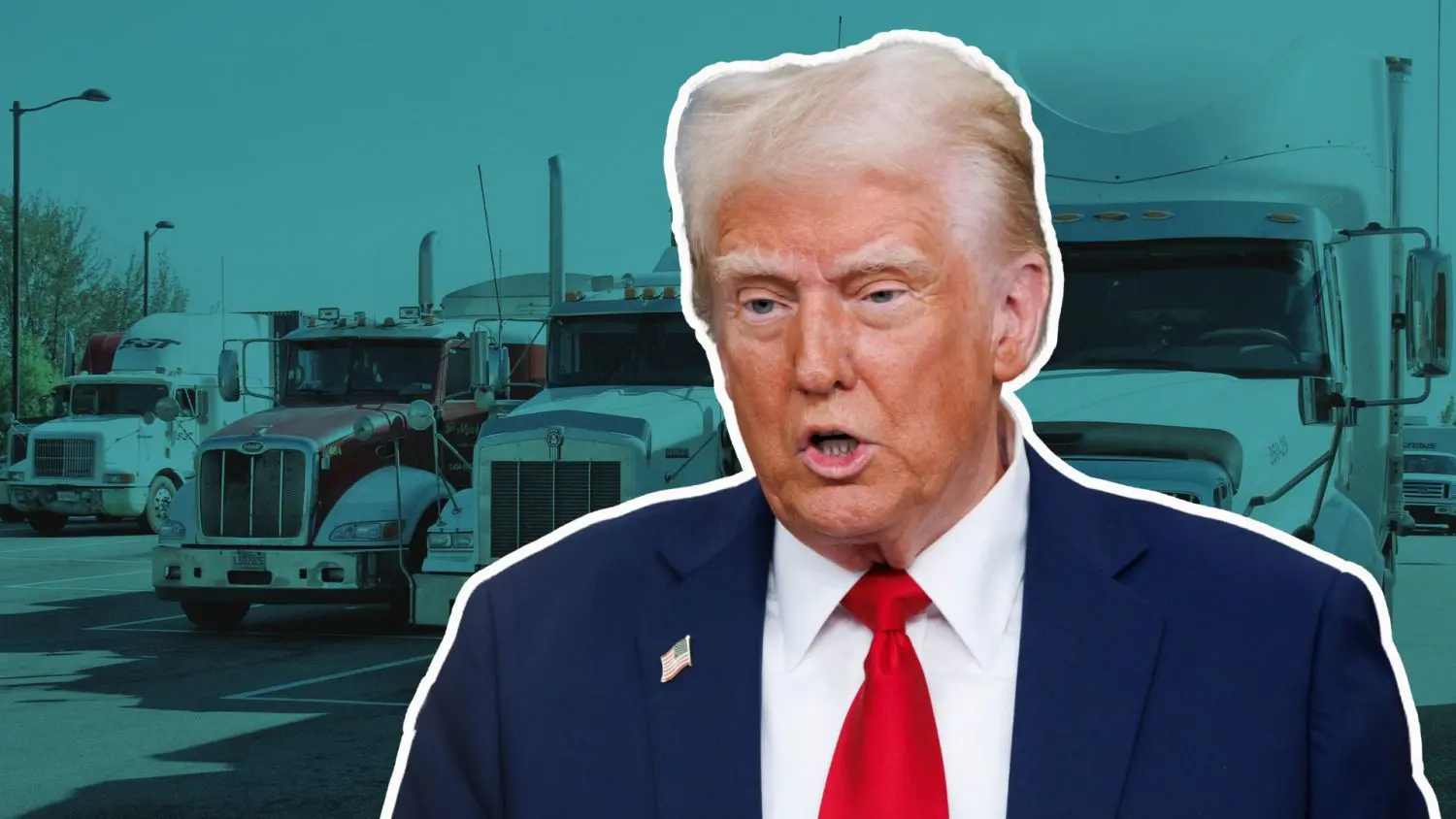
President Trump announced that all medium- and heavy-duty trucks imported into the United States will face a 25% tariff beginning Nov. 1

On the Dash:

  • President Trump will impose a 25% tariff on all imported medium- and heavy-duty trucks starting November 1 to protect U.S. manufacturers.
  • The tariffs could impact major import sources, especially Mexico, which supplies the largest share of these trucks to the U.S.
  • U.S. manufacturers may benefit, but trade relations, supply chains, and multinational truck production could face disruptions.

President Donald Trump announced Monday that all medium- and heavy-duty trucks imported into the United States will face a 25% tariff beginning November 1, a major escalation in his administration’s effort to shield domestic manufacturers from foreign competition.

Trump said the tariffs are intended to protect U.S. companies from “unfair outside competition,” citing national security concerns. Manufacturers expected to benefit include Paccar-owned Peterbilt and Kenworth, as well as Daimler Truck-owned Freightliner.

Sign up for CBT News’ daily newsletter and get the latest industry stories delivered straight to your inbox.

The announcement follows a prior plan to impose new duties on heavy truck imports on October 1, which has now been delayed by one month. Under existing trade agreements with Japan and the European Union, light-duty vehicles are subject to 15% tariffs; however, it remains unclear how larger vehicles will be treated under these agreements. The administration has also allowed producers to deduct the value of U.S. components from tariffs on light-duty vehicles assembled in Canada and Mexico.

The new tariffs apply to a wide range of vehicles, including delivery trucks, garbage trucks, public utility trucks, transit and school buses, semi-trucks, and heavy-duty vocational vehicles. Notably, Mexico is the largest exporter of medium- and heavy-duty trucks to the United States, with imports increasing from approximately 110,000 in 2019 to around 340,000 annually. Other top exporters include Canada, Japan, Germany, and Finland.

Industry stakeholders warned of potential disruptions. Under the United States-Mexico-Canada Agreement (USMCA), medium- and heavy-duty trucks can move tariff-free if at least 64% of their value originates in North America through components, raw materials, or assembly labor. Companies such as Stellantis, which produces heavy-duty Ram trucks and commercial vans in Mexico, had lobbied against the tariffs, as have other multinational truck makers.

The U.S. Chamber of Commerce also expressed opposition, arguing that the top five import sources are all allies or close partners that pose no threat to U.S. national security.

Trump’s announcement signals a continued focus on protecting domestic manufacturing, but it could strain trade relationships and disrupt supply chains for U.S. and multinational truck makers. Analysts predict that the impact will be felt in pricing, production strategies, and cross-border trade in the coming months.


Read More
More from Articles
Ransomware attacks more than doubled in 2025, and the targets now include the vehicles themselves, says a new report from cybersecurity firm Halcyon.

Ransomware attacks on auto industry rise, the security steps you need to take now

- May 1, 2026
On the Dash: Ransomware attacks on the auto industry more than doubled in 2025, accounting for 44% of all cyber incidents. Suppliers are the weakest link, giving criminals a back...
Stellantis, Volkswagen report mixed Q1 results

Stellantis, Volkswagen report mixed Q1 results

- May 1, 2026
On the Dash: Stellantis reports weaker Q1 profitability tied to pricing normalization, higher costs and inventory adjustments. Volkswagen posts an earnings decline amid EV investments and rising operating expenses. Both...
UAW monitor cites governance failures in delayed strike fund investments

UAW monitor cites governance failures in delayed strike fund investments

- May 1, 2026
On the Dash: Federal monitor identifies governance, communication, and oversight failures tied to delayed reinvestment of strike funds. Report finds no misconduct but cites leadership tensions and unclear responsibilities. Monitor...
Rivian increases Georgia plant capacity to 300,000 units, narrows Q1 losses

Rivian increases Georgia plant capacity to 300,000 units, narrows Q1 losses

- May 1, 2026
On the Dash: Rivian is scaling production capacity to cut costs and support its lower-priced R2 strategy. Federal policy changes and softer EV demand are shaping near-term planning. Financial results...
CBT News
Privacy Overview

This website uses cookies so that we can provide you with the best user experience possible. Cookie information is stored in your browser and performs functions such as recognising you when you return to our website and helping our team to understand which sections of the website you find most interesting and useful.