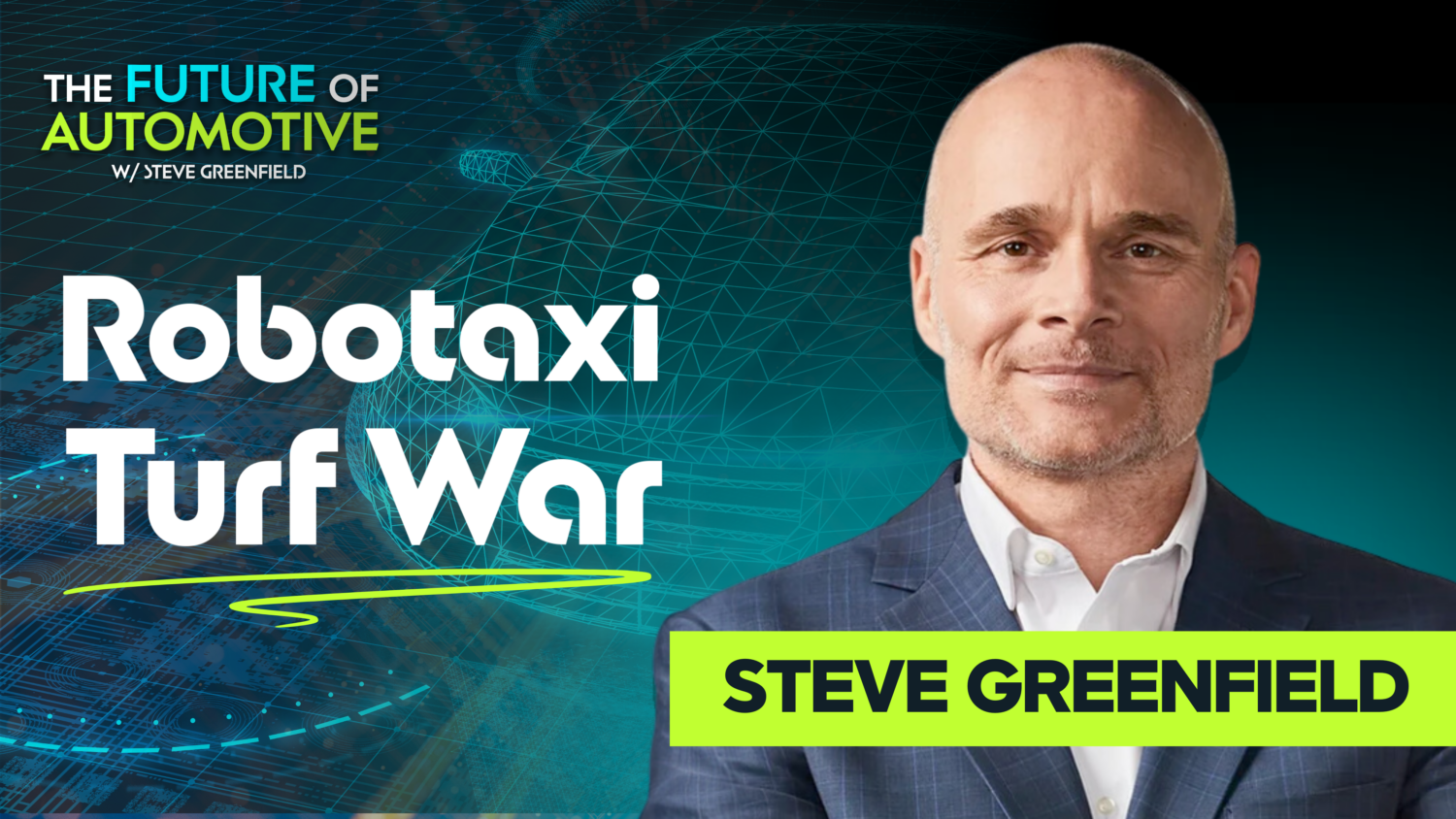
Welcome back to the latest episode of “The Future of Automotive” on CBT News, where we put recent automotive and mobility news into the context of the broader themes impacting the industry.
I’m Steve Greenfield from Automotive Ventures, and I’m glad that you could join us.
As artificial intelligence continues to reshape how we search, shop, and make decisions, one question looms large for the future of car buying: what happens to the dealership when your next vehicle is negotiated not by you—but by your AI agent?
For decades, automotive dealerships have been built around human interactions. Research, comparisons, test drives—all culminating in that face-to-face deal.
But now, we’re entering a world where AI may do most of that work for us. These digital agents, already capable of browsing inventory, comparing specs, and even negotiating terms, could soon become the primary interface between consumers and the automotive market.
That raises an important question: Will these AI agents continue to shop third-party marketplaces like Cars.com or AutoTrader? Or will they go straight to the source—scraping dealer websites directly for the best offers?
And if they do, how can dealerships make sure their inventory, their pricing, their very presence online—is structured in a way that these AI tools can find them?
This shift isn’t just about cars. It’s about the changing economics of the internet itself.
For years, human traffic has been the currency of the web. Page views funded by advertising kept the lights on for publishers, platforms, and communities alike. But as more people ask questions to chatbots instead of search engines, that traffic is drying up—and fast.
Wikipedia has seen an 8% drop in traffic. Stack Overflow—long the go-to resource for programmers—has seen visits cut in half. Reddit’s stock has taken a hit as fewer people arrive via Google. And as that traffic falls, so does the advertising revenue that supported them.
So the web is evolving. Content is being hidden from bots. Paywalls are going up. Platforms are exploring new ways to reach audiences—through podcasts, videos, newsletters, and licensing deals with AI companies. If they can’t get paid for their knowledge, they may stop sharing it altogether.
Meanwhile, OpenAI’s ChatGPT—just launched in late 2022—is now used by an estimated 800 million people. It’s the number one app on the iPhone. Apple says that for the first time ever, traditional searches in Safari are down. And Google, feeling the pressure, has responded with AI summaries and a new “AI Mode” in search—promising to, quote, “let Google do the Googling for you.”
But if Google is doing the Googling, fewer people are visiting the websites that provide the answers.
Health sites have lost 31% of their traffic. Education sites, down 10%. Reference sites—15%.
All of this points to a fundamental question: what is the internet without people browsing it?
And for industries like automotive—still heavily reliant on digital leads, advertising dollars, and consumer discovery—this could be the next great disruption.
There is a massive opportunity here for entrepreneurs and technologists who can help dealerships adapt to this AI-first future.
Because the way we buy cars is changing. And so is the way we find them.
So, with that, let’s transition to Our Companies to Watch.
Every week we highlight an interesting company in the automotive technology space to keep an eye on. If you read my weekly Intel Report, we showcase a company to watch, and we then take the opportunity here on this segment each week to share that company with you.
Today, our new company to watch is Recurrent.
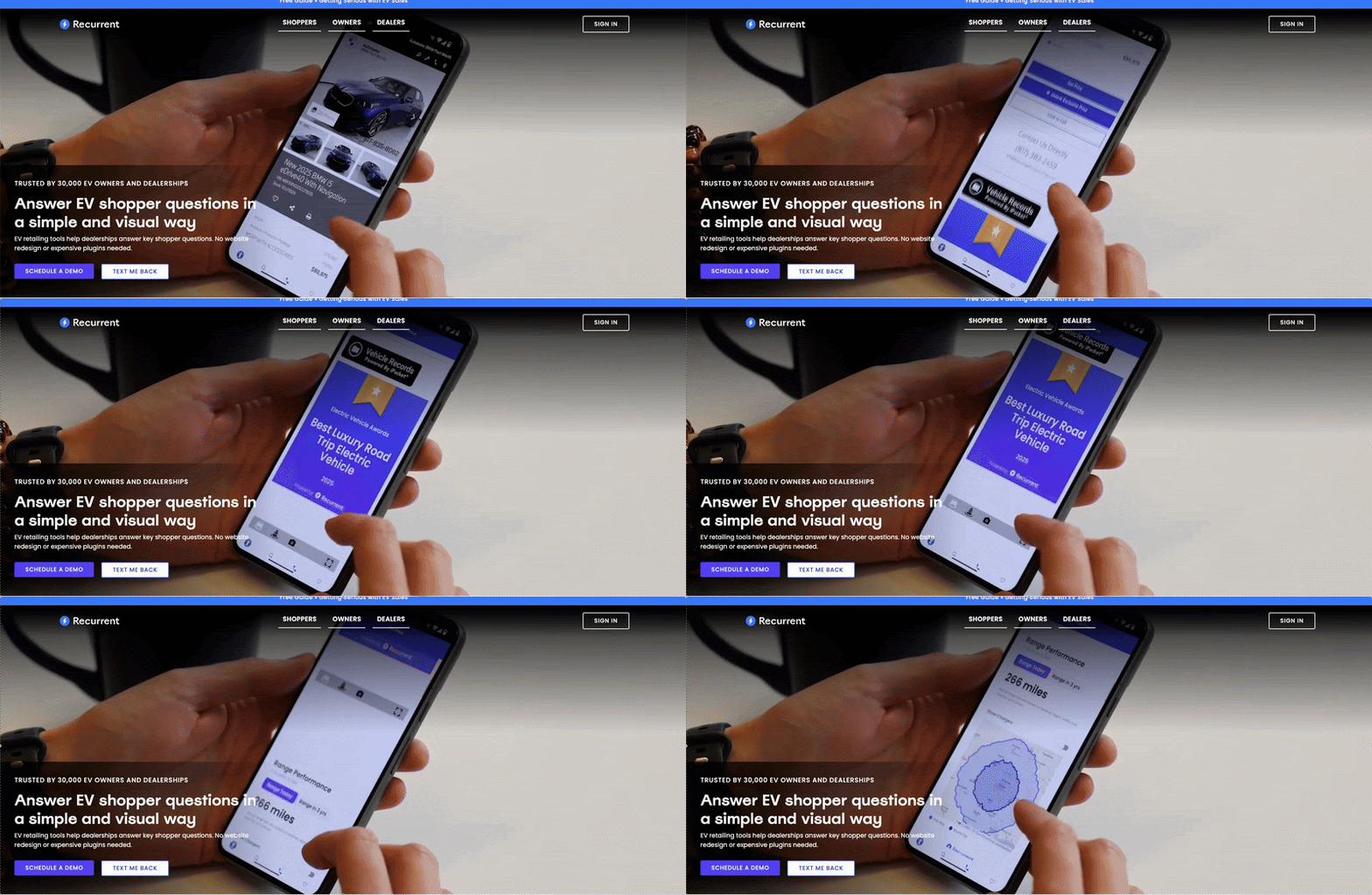
Recurrent provides transparency so buyers and sellers have confidence in an electric car and its battery.
It’s normal for EV range to decrease over time. Sudden changes can be more serious. Recurrent provides transparency so buyers and sellers have confidence in an electric car and its battery — whether you’re an individual owner or a dealership.
Factors like temperature, age, charging habits, driving style and battery chemistry all impact battery performance.
Recurrent’s team of battery scientists conduct EV research to help you get the most from your electric car.
Dealerships can answer EV shopper questions in a simple and visual way.
EV retailing tools help dealerships answer key shopper questions. No website redesign or expensive plugins needed.
If you’d like to learn more about Recurrent, you can check them out at www.RecurrentAuto.com
So that’s it for this week’s Future of Automotive segment.
If you’re an AutoTech entrepreneur working on a solution that helps car dealerships, we want to hear from you. We are actively investing out of our DealerFund.
Don’t forget to check out my first book, “The Future of Automotive Retail,” and my new book, “The Future of Mobility”, both of which are available on Amazon.
Thanks (as always) for your ongoing support and for tuning into CBT News for this week’s Future of Automotive segment. We’ll see you next week!