TSLA352.840-4.61%
GM80.470-0.17%
F12.310-0.07%
RIVN14.9700.18%
CYD32.6100.17%
HMC32.090-0.4%
TM186.710-1.59%
CVNA63.6203.15%
PAG201.780-5.44%
LAD289.260-13.81%
AN156.800-4.56%
GPI240.930-1.3%
ABG173.950-5.73%
SAH59.850-2.6%
TSLA352.840-4.61%
GM80.470-0.17%
F12.310-0.07%
RIVN14.9700.18%
CYD32.6100.17%
HMC32.090-0.4%
TM186.710-1.59%
CVNA63.6203.15%
PAG201.780-5.44%
LAD289.260-13.81%
AN156.800-4.56%
GPI240.930-1.3%
ABG173.950-5.73%
SAH59.850-2.6%
TSLA352.840-4.61%
GM80.470-0.17%
F12.310-0.07%
RIVN14.9700.18%
CYD32.6100.17%
HMC32.090-0.4%
TM186.710-1.59%
CVNA63.6203.15%
PAG201.780-5.44%
LAD289.260-13.81%
AN156.800-4.56%
GPI240.930-1.3%
ABG173.950-5.73%
SAH59.850-2.6%

Trump, Ishiba fail to reach trade deal amid mounting tariff pressure

Stalled talks at the G-7 summit deepen risks for Japan’s economy and auto sector.
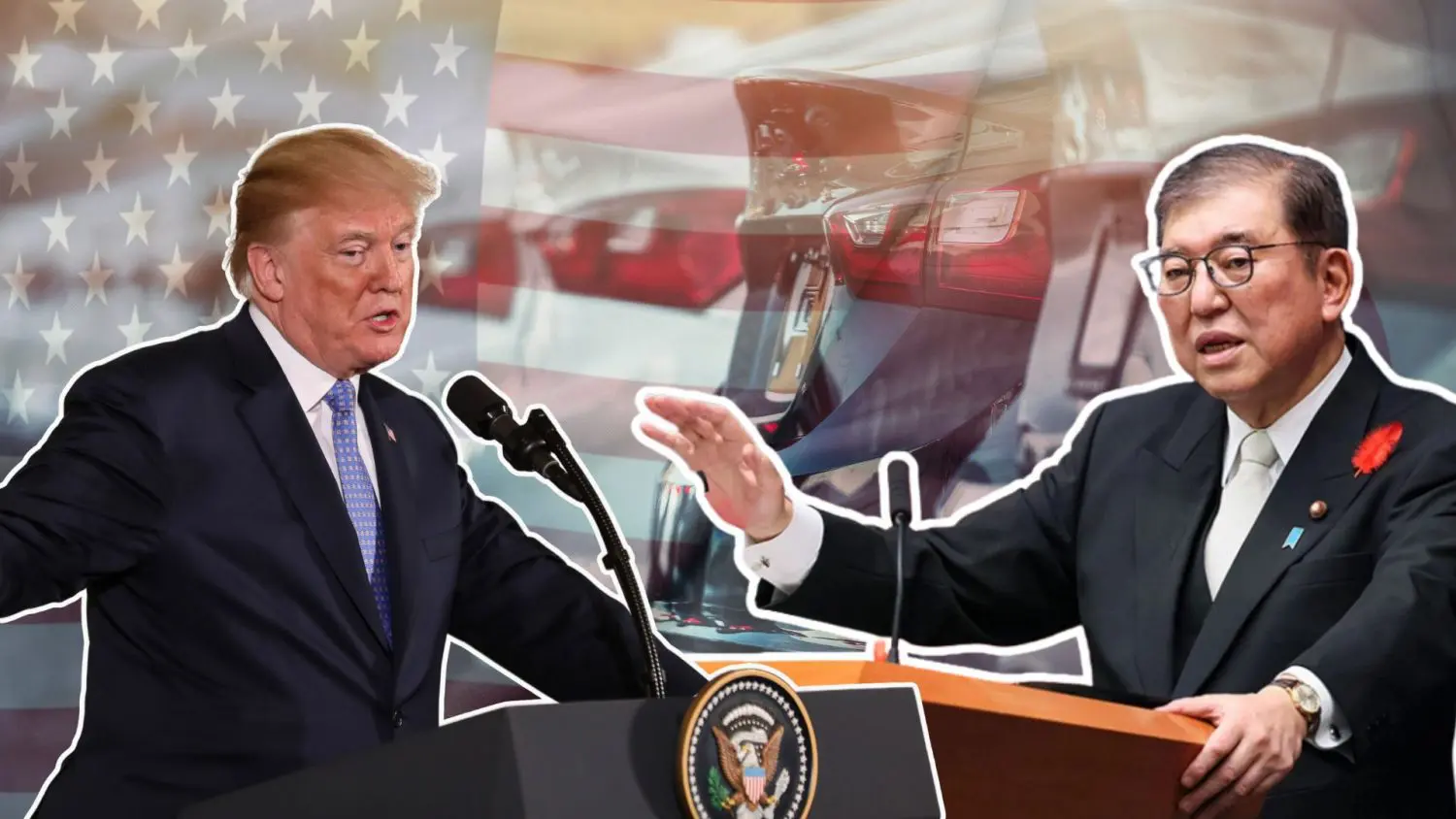
U.S. President Donald Trump and Japanese Prime Minister Shigeru Ishiba failed to reach an agreement on a trade package during the G-7 summit.

U.S. President Donald Trump and Japanese Prime Minister Shigeru Ishiba failed to reach an agreement on a trade package during the Group of Seven summit in Calgary, Canada, raising further concerns for Japan’s economy as U.S. tariffs continue to hit key industries, particularly automotive manufacturing.

Ishiba told reporters on Monday that the two sides remain divided on several issues, and no timeline was given for when an agreement might be reached. The lack of progress follows nearly two months of ongoing trade negotiations and comes just weeks ahead of Japan’s upper house election, potentially weakening Ishiba’s political standing.

Sign up for CBT News’ daily newsletter and get the latest industry stories delivered straight to your inbox.

Japan’s auto industry is facing mounting pressure from a 25 percent U.S. tariff on vehicles and parts, a sector that accounts for 10 percent of the nation’s GDP and supports approximately 5.6 million jobs. Major automakers, including Toyota, Honda, Mazda, and Subaru, are bracing for a collective $19 billion loss this fiscal year due to the tariffs.

Ishiba said Japan will continue negotiations at the ministerial level but insisted that any agreement must protect national interests. U.S. tariff hikes, including a 50 percent levy on steel and aluminum and a general tariff increase from 10 to 24 percent on other goods, remain a major threat to Japan’s export-driven economy.

The Japanese government has sought to leverage its position as the largest foreign investor in the United States, with $783 billion in direct investment as of 2023. Ishiba previously pledged to raise that amount to $1 trillion. Japan has also offered concessions, including increased soybean imports and cooperation on shipbuilding, in an effort to narrow the trade gap.

Despite these efforts, Japan appears to be losing ground in global trade diplomacy, as the U.S. has already finalized agreements with the UK and China. The failed summit outcome may erase recent gains in Ishiba’s approval ratings, which had climbed to 38 percent following domestic inflation relief efforts.

Trade talks began with six rounds of negotiations between Japan’s top negotiator, Ryosei Akazawa, and U.S. Commerce Secretary Howard Lutnick, as well as Treasury Secretary Scott Bessent. However, no major breakthroughs were achieved ahead of the G-7 meeting.

Japan’s economy relies heavily on its auto industry, which is supported by a strong network of small- and mid-sized businesses. This reliance highlights the significant stakes involved in the stalled negotiations. Notably, companies with fewer than 1,000 employees employ two-thirds of the national workforce, many of whom are closely connected to vehicle production.

Read More
More from Articles
GM and LG expand LMR battery production with 500 new Tennessee jobs

GM and LG expand LMR battery production with 500 new Tennessee jobs

- September 30, 2026
On the Dash: Ultium Cells plans to become the first manufacturer to commercially produce LMR prismatic battery cells, with production expected to begin after facility upgrades are completed in 2028. ...
Mercedes-Benz won't be banned under Chinese vehicle bill, Sen. Bernie Moreno says

Sen. Moreno says Chinese vehicle bill will not ban Mercedes-Benz in the U.S.

- September 30, 2026
On the Dash: Sen. Bernie Moreno (R-Ohio) says the Chinese vehicle bill will not ban Mercedes-Benz from selling in the U.S. Mercedes-Benz has nearly 20% Chinese ownership, which is above...
BMW targets 5% margins by 2028 as it expands local production

BMW targets 5% margins by 2028 as it expands local production

- September 30, 2026
On the Dash: BMW is targeting a 3% to 5% automotive division margin by 2028, with a longer-term goal of 8% to 10% in the early 2030s. The automaker plans...
CarMax reports second quarter fiscal 2027 results

CarMax reports second quarter fiscal 2027 results

- September 30, 2026
RICHMOND, Va.--(BUSINESS WIRE)-- CarMax, Inc. (NYSE:KMX) today reported results for the second quarter ended August 31, 2026. Second Quarter Highlights:(1) Total net revenues rose 19.5% to $7.9 billion. Combined retail and...
CBT News
Privacy Overview

This website uses cookies so that we can provide you with the best user experience possible. Cookie information is stored in your browser and performs functions such as recognising you when you return to our website and helping our team to understand which sections of the website you find most interesting and useful.