

On the Dash:
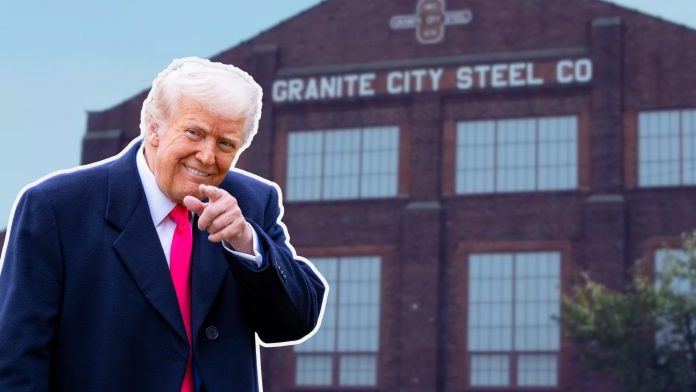
- President Trump used his “golden share” authority to block U.S. Steel from closing its Granite City, Illinois, plant.
- The closure plan would have affected nearly 800 workers, but U.S. Steel reversed course and will keep the facility open.
- Nippon Steel’s acquisition deal required Granite City operations to continue until 2027, a condition the union said the closure violated.
President Donald Trump blocked U.S. Steel’s plan to shut down operations at its Granite City, Illinois, plant this fall, preserving nearly 800 jobs. The company notified employees two weeks ago that operations would cease in November, but stated that it would continue to pay wages.
A source familiar with the matter told the Wall Street Journal that Commerce Secretary Howard Lutnick called U.S. Steel CEO Dave Burritt to relay that President Trump would invoke his “golden share” authority to block the closure. On Friday, U.S. Steel withdrew the plan and announced that Granite City Works will remain open.
U.S. Steel was acquired in June by Japan’s Nippon Steel through a national-security agreement with the U.S. government. The deal grants President Trump and future U.S. presidents a “golden share,” giving them veto power over corporate decisions. As part of the agreement, Nippon Steel also pledged to keep U.S. Steel’s existing plants in operation through 2035 and maintain the Granite City plant until 2027.
The United Steelworkers union argued that U.S. Steel’s intention to close the Granite City operation directly contradicted those commitments. The union has pushed back on the Nippon Steel deal, citing the company’s history of trade violations and recent duties for illegal steel dumping. The USW stressed that it was not consulted on the merger or the so-called “golden share” and emphasized that public statements alone are insufficient. Its primary concern remains protecting the long-term viability of U.S. Steel facilities, safeguarding jobs, community stability, and retirement security, and ensuring binding commitments prioritize workers over shareholder or executive interests.