TSLA364.270-1.93%
GM82.200-4.42%
F13.210-0.4%
RIVN14.990-0.41%
CYD35.4000.88%
HMC32.200-0.33%
TM191.530-2.38%
CVNA65.120-0.72%
PAG212.610-2.14%
LAD316.270-5.41%
AN168.290-6.59%
GPI246.420-8.53%
ABG183.060-4.85%
SAH63.660-2.29%
TSLA364.270-1.93%
GM82.200-4.42%
F13.210-0.4%
RIVN14.990-0.41%
CYD35.4000.88%
HMC32.200-0.33%
TM191.530-2.38%
CVNA65.120-0.72%
PAG212.610-2.14%
LAD316.270-5.41%
AN168.290-6.59%
GPI246.420-8.53%
ABG183.060-4.85%
SAH63.660-2.29%
TSLA364.270-1.93%
GM82.200-4.42%
F13.210-0.4%
RIVN14.990-0.41%
CYD35.4000.88%
HMC32.200-0.33%
TM191.530-2.38%
CVNA65.120-0.72%
PAG212.610-2.14%
LAD316.270-5.41%
AN168.290-6.59%
GPI246.420-8.53%
ABG183.060-4.85%
SAH63.660-2.29%

Honda extends Japan plant shutdown as earthquake disrupts parts supply

The automaker trails rivals in restarting production after a key supplier sustained earthquake damage, while Toyota, Nissan and Mitsubishi have resumed operations.

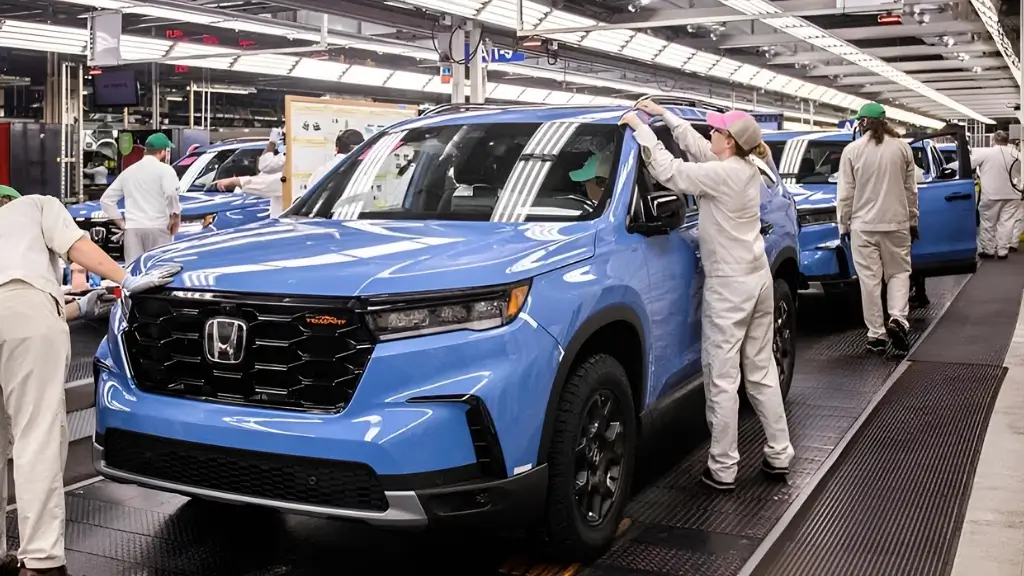
Honda extends Japan plant shutdown as earthquake disrupts parts supply

Image Source | Honda Nucar

On the Dash:

  • Honda dealers should see little immediate impact on U.S. inventory, as most Honda vehicles sold in America are built in North America.
  • The disruption highlights how single-supplier bottlenecks can still affect global production, even when assembly plants avoid direct damage.
  • Toyota, Nissan and Mitsubishi have largely resumed operations, suggesting the broader Japanese supply chain is recovering faster than after past disasters.

Japanese automaker Honda said it will keep two of its Japanese assembly plants idle until August 19 due to a key supplier’s incomplete recovery from earthquake damage sustained July 28.

Although the automaker has not provided a specific timeline for restarting production, CFO Masao Kawaguchi told Automotive News that Honda is actively working with the supplier, Astemo, to determine when parts production can resume. 

Sign up for CBT News’ daily newsletter and get the latest industry stories delivered straight to your inbox.

Conversely, most Japanese automakers have already returned to production as Toyota and Nissan restarted their affected plants on August 6. Meanwhile, Mitsubishi resumed operations on August 5. The earthquake temporarily disrupted supplies of semiconductors, dampers, door components and other critical parts. As a result, analysts expect the shutdowns to reduce industrywide production by nearly 20,000 vehicles.

Honda has indicated that the production disruption will not impact its U.S. inventory since the company imports relatively few vehicles from Japan. In fact, less than 1% of Honda’s U.S. sales during the first half of 2026 came from Japanese imports. Notably, Honda imports only the Civic Type R and Prelude Hybrid to the U.S. from Japan.

On a positive note, the supply chain has shown improved resilience as semiconductor supplier Renesas restored production within days and expects to return to pre-earthquake output levels within three weeks. Automakers have credited stronger disaster planning and enhanced supply chain resilience, developed since Japan’s 2011 earthquake, for this recovery. Manufacturers plan to implement recovery schedules to make up lost production once operations return to normal.


More from Global Industry News
Canada targets $720B investment push as trade tensions reshape its economy

Canada targets $720B investment push as trade tensions reshape its economy

- September 14, 2026
On the Dash: Canada is targeting C$1 trillion, or about $720 billion, in investment over the next five years to strengthen domestic growth. The government is pitching more than 160...
Canada retaliates with tariffs as U.S. trade tensions escalate

Canada retaliates with tariffs as U.S. trade tensions escalate

- September 8, 2026
On the Dash: Canada’s new tariffs add another layer of uncertainty to cross-border trade and vehicle supply chains. Trump has threatened 50% tariffs on Canadian cars, trucks and automotive parts...
U.S.-Canada trade tensions deepen as tariff dispute threatens auto sector

U.S.-Canada trade tensions deepen as tariff dispute threatens auto sector

- September 4, 2026
On the Dash: New U.S. tariffs, now at 50% on about $20 billion worth of Canadian goods, could raise costs for vehicles, parts and other products moving across the border. ...
Hyundai sales hit four-year low as South Korea strikes disrupt production

Hyundai sales hit four-year low as South Korea strikes disrupt production

- September 1, 2026
On the Dash:  Hyundai’s strikes cut August output and pushed global sales to their lowest level since early 2022. South Korean sales plunged 41%, highlighting the near-term impact of labor...
CBT News
Privacy Overview

This website uses cookies so that we can provide you with the best user experience possible. Cookie information is stored in your browser and performs functions such as recognising you when you return to our website and helping our team to understand which sections of the website you find most interesting and useful.