You may be paying more for car insurance because of information you have never seen, never checked, and may not even know exists. Somewhere in the growing business of connected vehicles and consumer data, information about how you drive can become a product, packaged into reports and made available to companies that evaluate insurance risk. The biggest problem isn’t just that this information exists. It’s that most drivers have no idea what’s in their file, who has access to it, or whether the information is even accurate.
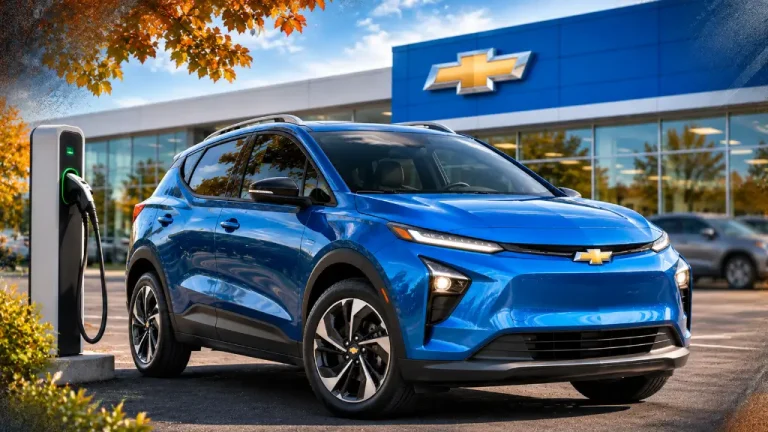
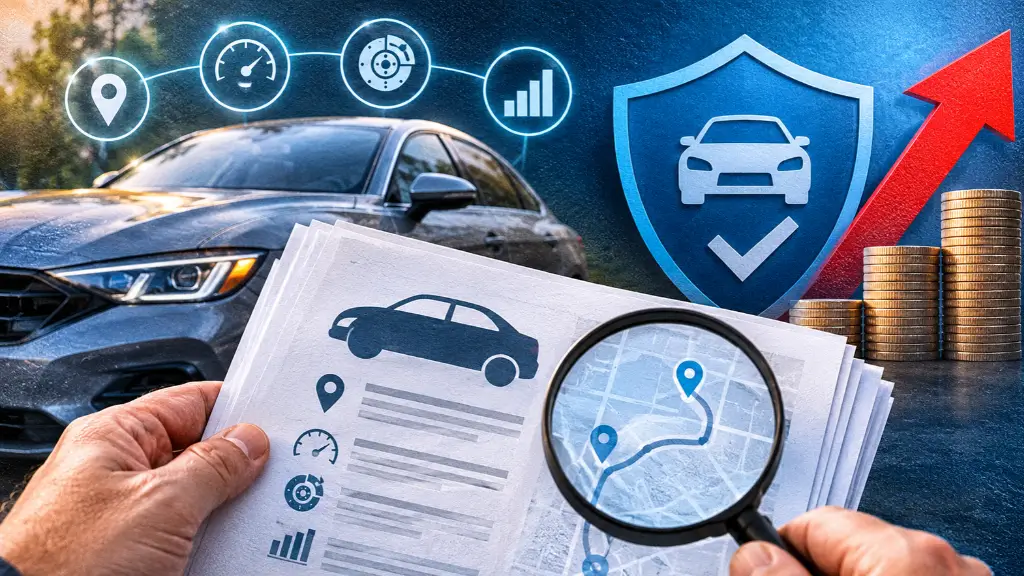
Consider what happened to Kenn Dahl, a Chevrolet Bolt owner in Washington state. After his insurance bill jumped 21%, he began investigating and learned that his LexisNexis consumer report was a factor. He requested a copy and received 258 pages. More than 130 pages detailed 640 trips, including dates, times, distances, speeding events, hard braking, and rapid acceleration. This wasn’t a traffic ticket or an accident report. It was a detailed record of driving behavior connected to his vehicle.
And Dahl wasn’t the only driver who discovered what these records could contain. Michigan resident Ryan Bates requested his own records and received approximately 200 pages documenting driving activity associated with his Chevrolet Bolt EUV. His report included braking, acceleration, speed events, mileage, and vehicle information. These are two separate cases, but they expose the same uncomfortable reality: drivers can have extensive files about their driving without understanding how those records were created or where the information goes.
Your driving data has a market value
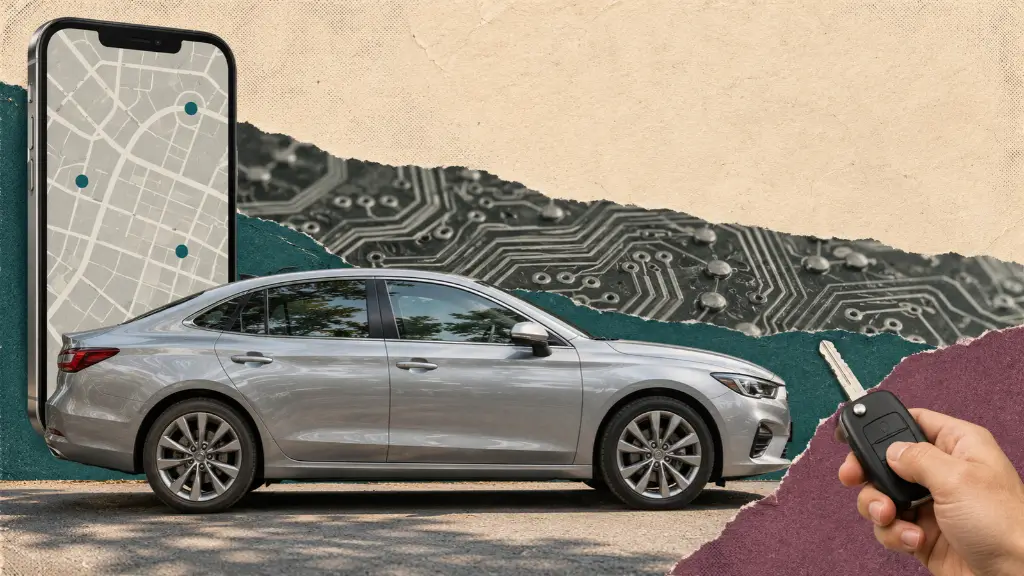
Automakers have spent years adding connectivity to vehicles. Navigation, emergency assistance, remote start, smartphone integration, vehicle diagnostics, and connected services can make a car more convenient. But those features also create opportunities to collect information. Depending on the vehicle, services activated, and privacy agreements, that information may include mileage, location, trip details, acceleration, braking, and other driving behavior.
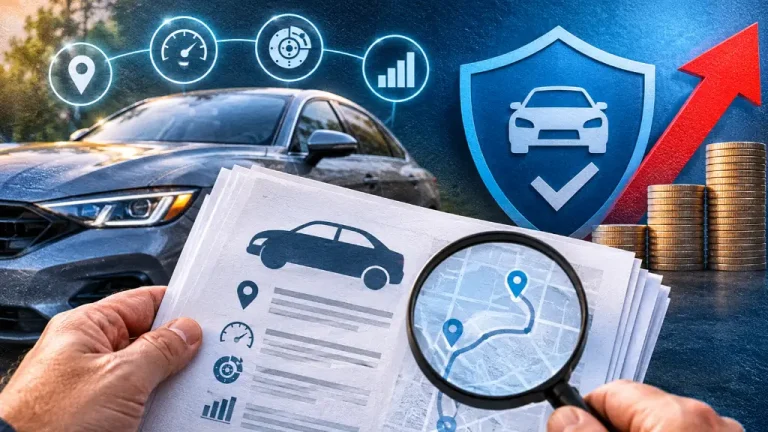
The information doesn’t necessarily stay with the automaker. It can be processed or shared with outside companies, including data providers serving the insurance industry. LexisNexis Risk Solutions, for example, offers Telematics OnDemand, a product that provides driving behavior information to help insurers assess risk and price policies. The Consumer Financial Protection Bureau specifically identifies this service as a source of driving behavior data used for auto insurance pricing.
This is where consumers need to pay attention. Insurance companies already evaluate risk using claims history, driving records, vehicle information, and other factors. Telematics adds another layer of information, potentially turning everyday driving behavior into another piece of the pricing equation. That doesn’t mean every insurer uses every available data source, or that every connected vehicle owner has the same report. It does mean consumers should stop assuming their driving information stays inside their own vehicle.
A hard-braking event, for example, doesn’t tell the whole story. Maybe traffic stopped suddenly. Maybe another driver cut someone off. Maybe a child ran into the street. A computer can record the event, but the data may not explain why it happened. If that information becomes part of a risk assessment, context matters. And if the information is wrong, the driver needs an opportunity to challenge it.
Stop guessing. Request your records.
The first step is to find out what information companies actually maintain about you. LexisNexis provides a consumer disclosure process that allows individuals to request their reports. Start at its official consumer portal: https://consumer.risk.
Request the applicable consumer disclosure report, follow the identity verification process, and keep a copy of your confirmation. The CFPB lists LexisNexis C.L.U.E. and Telematics OnDemand as insurance-related consumer reporting services. It also states that consumers can request one free report every 12 months.
Don’t assume LexisNexis is the only company holding information. Ask your insurance company which consumer reporting agencies and data providers it uses. The CFPB publishes a list of specialty consumer reporting companies, including businesses that provide insurance-related information. You can use that list to identify additional companies and learn how to request reports.
When the records arrive, read them. Check the vehicle identification number, dates, mileage, driving events, and any other information associated with your vehicle. Look for records involving a vehicle you no longer own, trips you don’t recognize, or information that appears to belong to someone else. Keep the original report and make a separate list of anything you believe is inaccurate.
If you find an error, dispute the specific information with the reporting company and, when appropriate, the company that supplied it. Under the Fair Credit Reporting Act, consumers have rights to dispute inaccurate or incomplete information in covered consumer reports. The CFPB explains that companies must conduct a reasonable investigation, and that information providers must correct errors and notify consumer reporting companies to which they supplied the inaccurate information.
Don’t send a vague complaint saying your report is wrong. Identify the entry, explain what is inaccurate, and provide supporting documentation. Keep copies of every letter, submission, and response. If an insurer takes adverse action based on a consumer report, ask which reporting company supplied the information and how to obtain your report.
The freeze that doesn’t shut everything off
There is another step consumers should understand, but this is where people can make a costly mistake. LexisNexis offers a security freeze for covered consumer reports. You can request one through its consumer portal: https://consumer.risk.
A security freeze can restrict access to the covered report, subject to legally permitted exceptions. It is not a universal shutdown switch for your vehicle’s data collection. It does not automatically cancel connected services, stop an automaker from transmitting information, or freeze every report held by every other company.
Those are separate issues, and treating them as the same thing creates a false sense of security.
If you want to limit vehicle data collection, review your automaker’s privacy portal, connected-services account, smartphone app, and vehicle settings. Look for options involving location sharing, driving behavior, connected vehicle data, analytics, and optional programs. If you participate in a usage-based insurance program, contact your insurer and ask how to withdraw, what data is collected, and what happens to information already submitted.
Get the answers in writing whenever possible. Ask whether the information comes from the vehicle itself, a smartphone application, a plug-in device, or a third-party service. Don’t assume deleting an app or canceling a subscription ends every form of data collection. And don’t start disconnecting vehicle hardware or safety equipment. Use the manufacturer’s documented privacy controls and ask exactly what each setting changes.
There have also been important developments in federal oversight. In January 2026, the Federal Trade Commission finalized an order involving General Motors and OnStar. The order requires affirmative express consent for covered connected-vehicle data collection, use, and sharing, provides for consumer access and deletion requests, and includes opt-out requirements. It also prohibits GM from disclosing certain geolocation and driver behavior data to consumer reporting agencies for five years. This order applies to GM, not every automaker, but it demonstrates that regulators are beginning to address the problem directly.
Your information. Your right to see it.
The automotive industry is becoming a data business as much as a vehicle business. Manufacturers and technology companies have built an ecosystem around connected services, and information generated by a vehicle can have value long after the driver turns off the ignition. The convenience of modern technology should not mean consumers lose sight of who is collecting their information or how it may be used.
Drivers need to ask their insurance companies direct questions: Do you use telematics or driving behavior data? Which reporting companies do you work with? Have you obtained a report about my driving? Am I enrolled in a voluntary program? Can I withdraw, and how do I challenge information used in an insurance decision?
This isn’t about rejecting technology or pretending connected vehicles have no benefits. It’s about informed consent, transparency, and accountability. If a company is building a file about your driving, you should be able to see it. If the information is wrong, you should be able to challenge it. And if you don’t want to participate in an optional data-sharing program, you should understand how to opt out.
The next time your insurance premium increases, don’t just accept the explanation that everything costs more. Find out what information is being used to evaluate you. Request your records, check the details, and ask who has access.
You may be surprised by what’s in that file. The bigger question is why you had to go looking for it in the first place.
Source information:
Form to Track Your Driving Data Forms – https://carcoachreports.com/
Track Your Driving Data Forms https://carcoachreports.com/
Check out my full commentary on this story: https://youtu.be/Y-WGY0KvRTA
Looking for more automotive news? https://www.CarCoachReports.com
Listen and subscribe to The Drive with Lauren and Karl – https://www.youtube.com/@thedrivecarshow