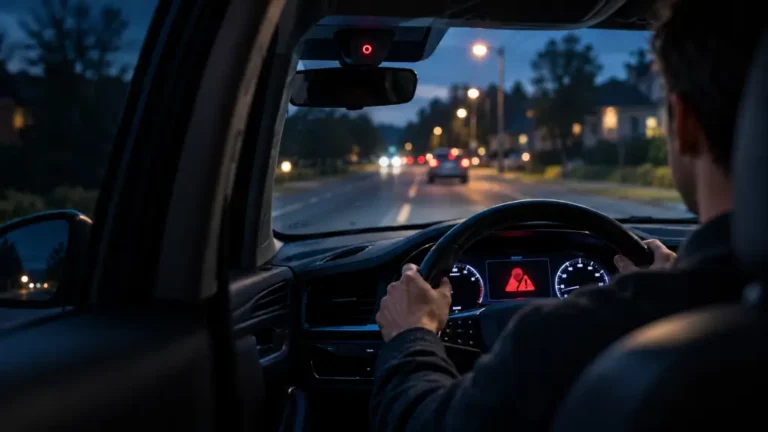

New York lawmakers have a message for drivers: You are apparently driving too much. Not because you are speeding, driving recklessly, or breaking the law. The problem, according to a growing movement in transportation policy, is that Americans are simply driving too many miles.
That idea is now moving through Albany in Senate Bill S4044 and Assembly Bill A4230. The legislation would establish a statewide goal of reducing vehicle miles traveled in New York by 20 percent by 2050. Certain highway-capacity projects would be evaluated against that goal, and projects expected to increase vehicle miles traveled could require additional analysis or mitigation.
The bills have not passed, and they remain in committee. But New Yorkers would be foolish to dismiss them simply because they have not yet become law. The larger issue is the philosophy behind them, because New York is hardly the first state where policymakers have decided that reducing private driving should become an official government objective.
The obvious question is one lawmakers need to answer honestly: How exactly do you expect millions of people to drive 20 percent less?
New York is not Manhattan, despite the tendency of some policymakers to treat the entire state as if everyone lives within walking distance of a subway station, grocery store, bike lane, and coffee shop. Much of New York depends on the automobile. People drive to work, take children to school and activities, travel to medical appointments, visit family, transport equipment, make deliveries, and run businesses. In many communities, there simply is no practical alternative. A nurse finishing a late shift cannot necessarily catch a bus. A contractor cannot load tools and materials onto a bicycle. A family in a rural community cannot magically move closer to a grocery store because Albany has decided driving needs to be reduced by a government-approved percentage.
S4044 and A4230 do not impose a mileage tax, and it is important to be accurate about that. There is no provision in the legislation that would send New Yorkers a bill based on every mile they drive. But the bills would establish something that could have consequences far beyond a single tax: a policy framework built around the premise that driving less is itself a government objective. A qualifying road project would no longer be judged simply by whether it improves safety, reduces congestion, accommodates growth, or serves the people who depend on it. It could also be evaluated according to whether it contributes to an increase in vehicle miles traveled and whether that increase must somehow be offset.
The mitigation language deserves particular attention because this is where government policy begins moving from measuring behavior toward influencing it. The legislation identifies tools that can be used to reduce vehicle miles traveled, including public transportation, pedestrian and bicycle infrastructure, transportation-demand management, remote work, broadband expansion, parking management, changes to parking requirements, and parking cost adjustments. It also points toward increased residential density, mixed-use development, and transit-oriented development.
There is nothing inherently wrong with better transit, safer sidewalks, bike lanes, or giving people more transportation choices. The problem begins when providing alternatives turns into making private driving the behavior government is actively trying to reduce. There is a significant difference between saying, “Here is a better bus system if you choose to use it,” and saying, “The state has established a target to reduce how much people drive, and transportation projects must be evaluated according to whether they help us reach that target.”
New York is also part of a larger pattern developing across the country. California shifted transportation analysis toward Vehicle Miles Traveled, moving away from the traditional focus on automobile delay and traffic congestion. Minnesota now requires certain highway-capacity projects to be evaluated for greenhouse-gas emissions and vehicle-miles-traveled impacts, with projects potentially altered or mitigated if they fail to meet state standards. Colorado has embedded greenhouse-gas reduction requirements into transportation planning and requires planners to consider induced demand and strategies that reduce vehicle travel. Washington State has established long-term goals aimed at dramatically reducing per-capita vehicle miles traveled, while Oregon has pioneered road-usage programs that charge participating drivers based on the number of miles they travel.
These policies are not identical, and pretending that New York’s legislation is secretly the same thing as Oregon’s per-mile road charge would be dishonest. But pretending there is no larger direction would be equally dishonest.
Across the country, governments are becoming increasingly interested in measuring how much people drive, modeling future driving, establishing targets to reduce it, and exploring new ways to fund transportation as traditional fuel-tax revenue declines. One state calls it climate policy. Another calls it sustainability. Another calls it transportation demand management. Another calls it a road-usage charge.
Drivers should pay attention to the common denominator: Government is becoming increasingly involved in determining how much Americans drive and what should be done about it.
There is another part of this story that deserves much more scrutiny, and that is where the money begins to enter the picture.
I have not found evidence that S4044 or A4230 contains a secret provision directing taxpayer money to a particular company, and nobody should make accusations that cannot be proven. But government regulation has a predictable habit of creating an industry around compliance. Once the state creates a requirement to measure vehicle miles traveled, somebody has to perform the analysis. Someone has to collect or sell the data. Someone has to build the models, prepare the reports, establish the methodologies, determine whether projects meet the standards, and design the mitigation when they do not.
That means opportunities for transportation consultants, engineering firms, mobility-data companies, environmental specialists, planners, and contractors. California has already demonstrated what happens when VMT becomes a major part of transportation and development policy. A professional ecosystem develops around helping government agencies and developers measure, model, and comply with the new rules.
New York should not pretend that building a similar framework will somehow be free. The studies will cost money. The data will cost money. The consultants will cost money. The mitigation will cost money. The bureaucracy needed to oversee the system will cost money. In the end, those costs find their way to taxpayers, consumers, businesses, and drivers.
That raises a question Albany should answer before moving any further: Who benefits from creating this system?
The deeper investigation into lobbying, campaign contributions, consultants, advocacy organizations, and companies positioned to profit is a story in itself. But New Yorkers should recognize a basic truth about government policy. When lawmakers create a new problem that must be measured, managed, mitigated, and monitored, there will never be a shortage of private companies ready to sell the government the tools to solve it.
The people most likely to get caught in the middle are ordinary drivers, particularly those who do not live in places where abandoning the car is a realistic option. What does a 20 percent reduction in driving mean for Buffalo? What does it mean for communities across Upstate New York, the North Country, Long Island, or rural areas where public transportation may be limited or nonexistent?
What happens when a community desperately needs a safer intersection or additional road capacity because population and traffic have grown, but the project must now navigate a state policy designed to reduce vehicle travel? What happens when parking becomes a tool for changing behavior rather than simply a practical necessity for people trying to get to work, shop, or visit a business?
Those are not anti-environmental questions. They are questions about whether transportation policy still serves the people who depend on transportation.
Everyone wants cleaner air, safer roads, and less congestion. But there is a significant difference between improving transportation and making the reduction of private driving a government objective. Roads exist because people need to move. Cars give people the freedom to choose where they work, live, shop, and raise their families. For millions of Americans, particularly outside dense urban centers, driving is not a luxury or a political statement. It is how life works.
New York lawmakers have not yet passed S4044 or A4230, which means drivers still have an opportunity to ask the questions Albany has not adequately answered. How exactly will the state expect people to drive 20 percent less? Will rural and suburban communities be treated differently from New York City? Will needed road and safety projects face new barriers? How will parking prices and transportation demand management be used to achieve the state’s objectives? What will this new assessment and mitigation system cost, and who will receive the contracts to build and operate it?
Before New York decides that reducing your driving is an official state objective, lawmakers owe the public a clear explanation of how they intend to accomplish it, what it will cost, and who stands to benefit from the system they are creating.
Because once government decides that your driving is the problem, there will never be a shortage of bureaucrats, consultants, contractors, and special interests ready to sell the government a solution. Because New Yorker and other states may ultimately be the ones paying for it.
Check out my full commentary on this story: https://youtu.be/jmfJAmPicjY
Looking for more automotive news? https://www.CarCoachReports.com
Listen and subscribe to The Drive with Lauren and Karl – https://www.youtube.com/@thedrivecarshow