On the Dash:
- Lucid, Nuro and Uber have unveiled a production-intent robotaxi and begun autonomous on-road testing.
- The luxury electric SUV-based service is targeting a 2026 launch in the San Francisco Bay Area via Uber’s app.
- The program supports a long-term plan to deploy up to 20,000 Lucid Gravity robotaxis by 2032.
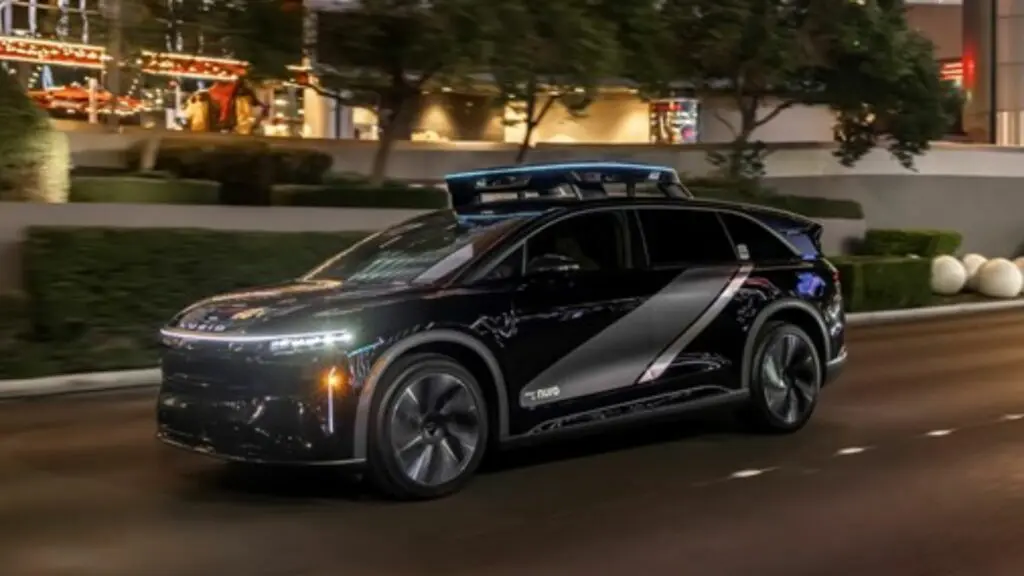
Lucid, Nuro and Uber have unveiled the production-intent vehicles for their global robotaxi program and confirmed that autonomous on-road testing began in December, marking a major step toward a planned commercial launch in 2026.
The companies introduced the luxury-focused robotaxi and its Uber-designed in-cabin experience at CES 2026 in Las Vegas. The vehicles are based on the all-electric Lucid Gravity SUV and will operate within Uber’s ride-hailing network, with initial service expected to launch in the San Francisco Bay Area later this year.
Nuro is leading the autonomous testing program, using engineering prototypes supervised by trained operators. The testing evaluates real-world performance across a wide range of driving scenarios and builds on Nuro’s existing safety and validation framework, which combines closed-course testing, simulation and public-road operation.
The robotaxi features a next-generation sensor suite that includes high-resolution cameras, solid-state lidar and radar. These systems provide 360-degree awareness and are integrated throughout the vehicle body and a low-profile roof-mounted module designed to preserve Lucid’s exterior design.
Inside the cabin, the experience focuses on personalization and transparency. Riders can control climate, seating and entertainment through interactive screens. Real-time visualizations display how the vehicle perceives its surroundings and plans maneuvers such as lane changes, traffic light responses and pedestrian yielding. The interior layout accommodates up to six passengers and offers ample cargo space, targeting group travel and premium ride-hailing use cases.
High-performance computing is powered by NVIDIA DRIVE AGX Thor, enabling real-time artificial intelligence processing required for Level 4 autonomous driving. Pending final validation, production of the robotaxi vehicles is expected to begin later this year at Lucid’s Casa Grande, Arizona, facility.
The CES debut builds on a broader long-term strategy. Lucid has already delivered its first Gravity robotaxi to Nuro and plans to support a rollout of up to 20,000 autonomous SUVs by 2032. Uber has committed $300 million to Lucid as part of the partnership, reinforcing its push to scale autonomous ride-hailing despite broader industry pullbacks in electric vehicle investment.