

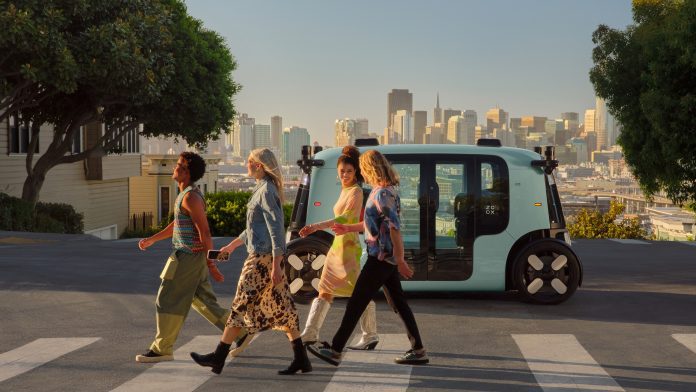
Amazon-backed Zoox has received a federal exemption from the National Highway Traffic Safety Administration (NHTSA) that allows it to deploy self-driving vehicles without traditional manual controls like steering wheels or brake pedals. The approval applies to Zoox’s purpose-built robotaxi, a shuttle-like vehicle with four inward-facing seats and no driver controls. The exemption marks a major regulatory milestone for Zoox, which plans to scale production at its California facility with a goal of manufacturing up to 10,000 vehicles annually.
Here’s why it matters:
This exemption from NHTSA removes one of the key regulatory barriers to the deployment of fully autonomous vehicles in the U.S. For the automotive industry, this opens the door to greater innovation in vehicle design, allowing companies to break from the traditional car format and develop vehicles optimized solely for autonomy. For dealers, this signals a longer-term shift in how mobility services may evolve, potentially reducing private vehicle ownership in dense urban markets and increasing demand for fleet maintenance, service infrastructure, and technology integration. The decision also highlights the Trump administration’s continued efforts to streamline AV regulations to encourage domestic innovation and competition.
Key takeaways:
- Zoox gets NHTSA exemption for driverless cars without steering wheels
The federal exemption allows Zoox to legally operate its purpose-built robotaxis on public roads without traditional driver controls. - Robotaxi production ramping up in California
Zoox recently opened a dedicated production facility where it plans to manufacture up to 10,000 autonomous shuttles annually. - Traditional safety standards are being re-evaluated
NHTSA’s updated policy enables U.S.-made autonomous vehicles to qualify for exemptions previously granted only to imported models. - Other automakers also affected by regulatory changes
The move benefits other developers of self-driving vehicles, including GM and Tesla, by reducing approval friction for non-traditional vehicle designs. - Policy shift reflects pro-AV stance by Trump administration
The exemption and future rule changes align with broader federal efforts to support AV innovation and speed up regulatory reviews.