Here we go again. Another expensive lesson in what happens when political ambition outruns engineering reality, this time playing out in the dead of winter in Burlington, Vermont. Electric buses, unveiled with great fanfare as symbols of progress and climate virtue, are now sitting idle in the snow while the supposedly outdated diesel fleet does the actual work of moving people. Taxpayers paid millions for these vehicles, and at the moment, they cannot do the job they were purchased to do.
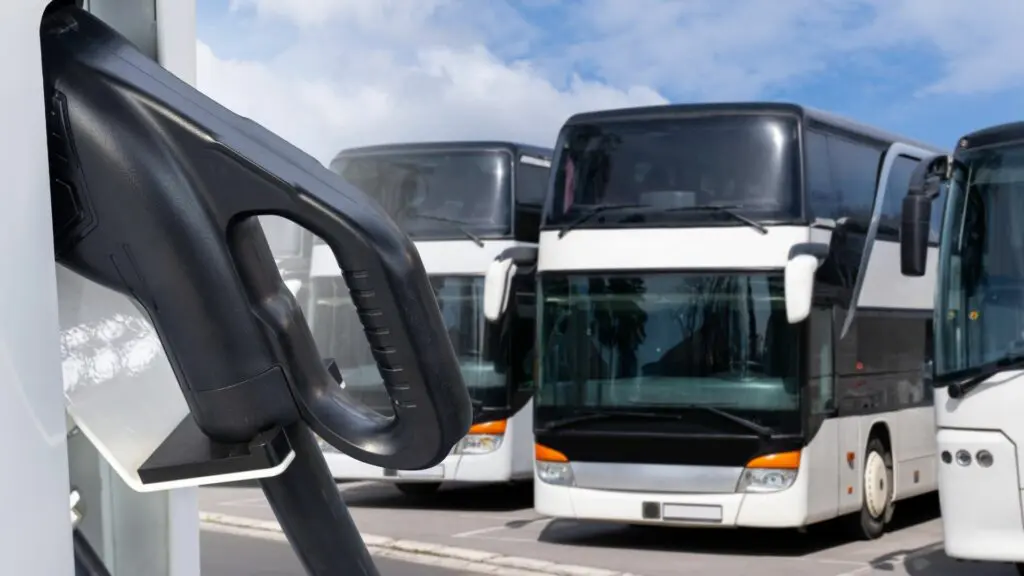
Green Mountain Transit added five new electric buses to its fleet last year, announcing the move in the warmth of summer. At the time, officials praised the decision as a major step toward Burlington’s net-zero energy goals and a reduction in carbon emissions. The buses were touted as modern, clean, and capable, each equipped with a 520-kilowatt-hour battery and a theoretical range of up to 258 miles on a single charge. Even in the original announcement, however, there was an important caveat: real-world range would vary depending on terrain, passenger load, and weather.
Winter has now provided the answer to just how much those variables matter.
Less than a year after delivery, all five electric buses were pulled from service following a battery recall. The manufacturer warned of a potential fire risk, which meant the buses could no longer be stored inside the transit authority’s garage. As a result, they were forced to remain outdoors, exposed to Vermont’s winter temperatures. That created a second, compounding problem. The buses require ambient temperatures of at least 41 degrees Fahrenheit to safely charge, conditions that have been rare this winter. The outcome was predictable. The buses sat outside, dusted with snow, unable to charge and unable to operate.
The price tag for this experiment was approximately $8 million. Those five buses now represent roughly ten percent of Green Mountain Transit’s fleet, and with all of them sidelined, the system has been operating on what its own general manager described as a razor-thin margin. A few runs have already been cut due to a lack of available vehicles, and officials have acknowledged that any additional mechanical failure could force broader service cancellations. Meanwhile, the diesel buses that were supposed to be phased out are being pushed harder than ever to keep the system running.
This is not a story about careless drivers or mismanagement by local transit employees. It is about a policy mindset that treats electrification as an unquestionable good, regardless of climate, infrastructure, or operational realities. Electric buses may perform adequately in mild, year-round warm environments, but expecting them to seamlessly replace diesel buses in northern states with long, cold winters ignores basic physics. Batteries lose efficiency in cold weather. Charging systems become more complex and more fragile. Range drops, charging times increase, and reliability suffers.
By comparison, a conventional diesel bus typically has a range close to three times that of these electric models and can be refueled in minutes rather than hours. Once fueled, it can return immediately to service and run hundreds of additional miles without interruption. That is not ideology. That is an operational fact. Public transit systems exist to provide reliable service, especially in harsh conditions, not to serve as test beds for political signaling.
Supporters of these programs often frame them as necessary sacrifices in the fight against climate change, but the cost-benefit analysis rarely receives serious scrutiny. The emissions reductions claimed at the local level are minuscule in a global context, while the financial burden on taxpayers is very real and long-lasting. Millions of dollars have been spent on buses that are currently unusable, and residents are left paying for both the electric fleet and the diesel backup required to keep the system afloat.
What makes this situation particularly troubling is how familiar it has become. Cold-weather failures of electric buses have been reported repeatedly across northern regions, yet each new purchase is announced as if the technology has suddenly overcome its limitations. The lessons of previous winters are ignored, only to be relearned at significant public expense.
Someday, voters and policymakers may look back at episodes like this and wonder how so many obvious risks were brushed aside. For now, the people of Burlington are living with the consequences. In the middle of winter, their transit system depends on the very diesel buses officials were eager to replace, while millions of dollars’ worth of electric buses sit frozen and unused. That is not progress. It is a cautionary tale about what happens when political goals come first and practical reality comes second.
Check out my full commentary on this story: https://youtu.be/-
Looking for more automotive news? https://www.CarCoachReports.com
Listen to The Drive Car Show – https://www.youtube.com/@thedrivecarshow