

On the Dash:
- Stellantis and Pony.ai will begin testing robotaxis in Luxembourg before expanding across Europe in 2026.
- The project combines Pony.ai’s autonomous software with Stellantis’ electric vehicles, starting with the Peugeot e-Traveller.
- The collaboration marks Pony.ai’s second international expansion and reflects growing competition in global robotaxi deployment.
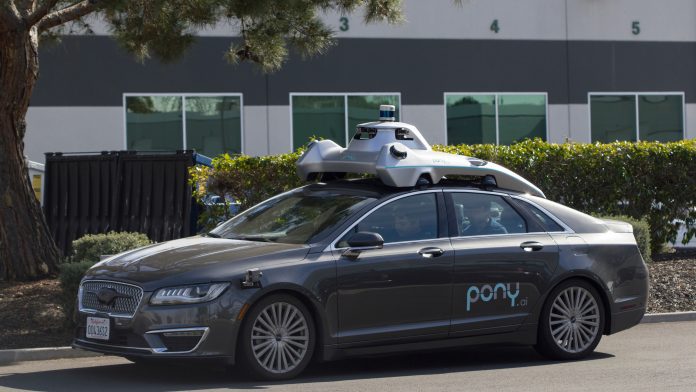
Stellantis is teaming up with Chinese autonomous driving company Pony.ai to test self-driving taxis in Europe, beginning with pilot operations in Luxembourg in the coming months. The initiative will expand to other European cities in 2026 as the companies push to establish a foothold in the continent’s growing autonomous mobility market.
Under the agreement, Pony.ai will provide its proprietary autonomous driving software, while Stellantis will supply electric vehicles, starting with the Peugeot e-Traveller. The collaboration will focus on integrating Pony.ai’s technology into Stellantis’ light commercial vehicles as part of early-stage testing on public roads to meet safety and regulatory standards.
The partnership aligns with Stellantis’ commitment to advancing mobility solutions through technology collaboration. The automaker has developed vehicle systems designed for autonomous integration and has positioned itself to work with leading technology developers to accelerate adoption. For Pony.ai, the partnership reinforces its strategy to expand its robotaxi services beyond China, where it already operates in major cities, including Beijing and Guangzhou.
This marks Pony.ai’s second international expansion after its recent move into the Middle East, underscoring the company’s growing global ambitions amid rising competition in the autonomous driving sector. Chinese rivals WeRide and Baidu’s Apollo have also been extending their robotaxi operations into Europe, reflecting an industry-wide effort to gain early regulatory and operational experience across diverse markets.
The announcement follows a similar development from U.S.-based Waymo, which revealed plans this week to begin testing robotaxis in London. The wave of international testing underscores a broader industry race to deploy autonomous mobility solutions at scale and demonstrate commercial viability in global markets.