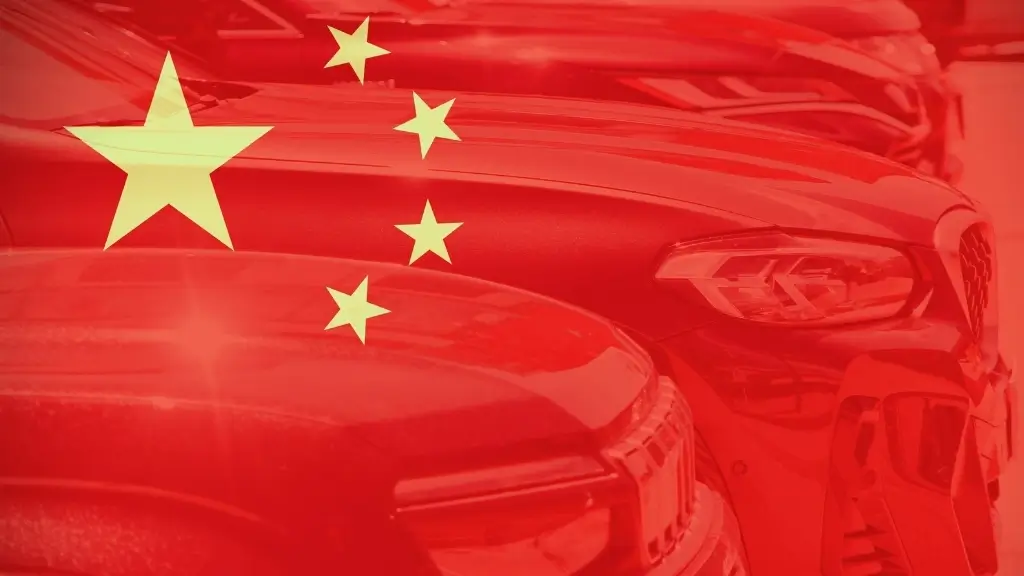
If you’ve spent any time on YouTube, you’ve probably seen Chinese electric vehicles and plug-in hybrids packed with giant touchscreens, advanced driver assistance systems, premium interiors, and impressive range, all selling overseas for the price of an entry-level compact car.
Many Americans have the same reaction.
“Why can’t we buy those here?”
This week the Senate Commerce Committee gave their official answer. On July 15 they took up the Connected Vehicle Security Act of 2026 — bipartisan legislation introduced by Ohio Republican Senator Bernie Moreno and Michigan Democrat Senator Elissa Slotkin. The bill would permanently codify and strengthen the earlier Commerce Department rule banning connected vehicles and the specific software and hardware tied to China and other designated foreign adversaries. It’s not limited to finished cars wearing a Chinese badge. It goes straight after the telematics control units, the cellular modems, the GPS modules — the actual nervous system that lets a modern vehicle constantly phone home with data.
The Connected Vehicle Security Act would permanently block Chinese-connected passenger vehicles from entering the U.S. market. The bill has bipartisan support and builds on regulations already put in place by the Biden administration. Supporters argue that Chinese software inside connected vehicles presents an unacceptable national security risk. Modern vehicles collect enormous amounts of data, from GPS locations and driving habits to cameras, microphones, and wireless communications. Few would argue that those concerns should be ignored.
But there is another side of this story that deserves far more attention.
The legislation doesn’t simply address cybersecurity. It also eliminates what could become the largest source of price competition the American auto industry has seen in decades.
For consumers already struggling with vehicle prices approaching $50,000, that’s a conversation worth having.
Today’s average new vehicle transaction price hovers near historic highs. Even compact crossovers routinely exceed $35,000, while electric vehicles often stretch well beyond that before incentives. At the same time, used car prices remain elevated, interest rates have increased financing costs, and insurance premiums continue climbing.
Then Americans watch videos from Europe, Australia, Mexico, or South America.
They see BYD, Geely, MG, Chery, XPeng, and dozens of other brands offering vehicles loaded with technology for thousands less than comparable American models.
Some cost half as much.
Naturally, consumers begin asking questions.
If these vehicles can be built and sold profitably overseas, why can’t American buyers even have the option?
Washington’s answer is security.
And to be fair, the concerns aren’t imaginary.
Modern vehicles have become rolling computers. They constantly communicate with cloud servers, manufacturers, navigation providers, mobile apps, and software update systems. Many contain multiple cameras, microphones, Bluetooth connections, Wi-Fi, GPS tracking, and increasingly sophisticated artificial intelligence.
A malicious manufacturer—or a government capable of compelling that manufacturer—could potentially access enormous amounts of sensitive information.
Given China’s national security laws, which require companies to cooperate with government intelligence requests, lawmakers argue that allowing Chinese-built connected vehicles onto American roads creates unacceptable risks.
That’s a legitimate debate.
But here’s where my eyebrows went up.
If the concern is data collection, why does the conversation stop at China?
Nearly every modern vehicle sold in America already collects extraordinary amounts of information about its owners. Domestic automakers know where many vehicles travel, how they’re driven, when they’re serviced, and often much more. Insurance companies increasingly use connected vehicle data. Third-party data brokers purchase and sell information generated by connected cars.
Congress seems highly motivated to prevent China from collecting American driving data. It has shown far less urgency about limiting who else can collect it.
That’s a separate issue, but it’s impossible to ignore.
There’s another question policymakers rarely answer.
If Chinese vehicles remain banned, who benefits economically?
Certainly not consumers looking for lower prices.
The absence of additional competition helps preserve pricing power for existing manufacturers. American automakers have spent years moving away from affordable entry-level cars in favor of larger SUVs and pickups with significantly higher profit margins. Several inexpensive sedans have disappeared entirely from dealer showrooms because manufacturers simply make more money selling larger vehicles.
Adding dozens of lower-priced competitors would put pressure on those margins.
That’s exactly what competition is supposed to do.
History shows that foreign competition often forces industries to improve. Japanese automakers challenged Detroit in the 1970s and 1980s. Korean manufacturers transformed themselves from budget brands into respected competitors over the past two decades.
Consumers benefited from better quality, improved reliability, and lower prices.
Chinese manufacturers could eventually create similar competitive pressure.
Instead, Washington has decided that race won’t happen.
Whether that’s the right decision depends largely on how you weigh national security against consumer choice.
But there’s another wrinkle.
Even while finished Chinese vehicles are effectively locked out, much of the global battery supply chain still depends on China.
China dominates battery mineral processing, battery components, and numerous critical materials used by automakers around the world. Even vehicles assembled in North America frequently rely on Chinese supply chains somewhere in their production.
In other words, America is trying to reduce dependence on China while remaining deeply connected to Chinese manufacturing in many of the industry’s most important components.
That contradiction won’t disappear simply because imported vehicles are prohibited.
Building secure domestic supply chains will take years, perhaps decades.
Until then, American buyers continue paying more.
The Connected Vehicle Security Act may ultimately be good national security policy.
Reasonable people can certainly make that argument.
But Americans deserve honesty about its economic consequences.
Blocking Chinese vehicles isn’t free.
It limits competition.
It reduces consumer choice.
And it helps keep vehicle prices higher than they might otherwise be.
If Washington believes those trade-offs are necessary for national security, lawmakers should make that case openly.
Because at the end of the day, the people absorbing the cost aren’t politicians or automakers.
They’re the families walking into dealerships wondering why their next vehicle costs $10,000 or $15,000 more than they expected.
National security matters. But so does transparency.
Americans deserve to know not only what their government is protecting them from, but also what those protections are costing them every time they shop for a new vehicle.
Check out my full commentary on this story: https://youtu.be/3tIHM2cPFDg
Looking for more automotive news? https://www.CarCoachReports.com
Listen to The Drive Car Show – https://www.youtube.com/@thedrivecarshow