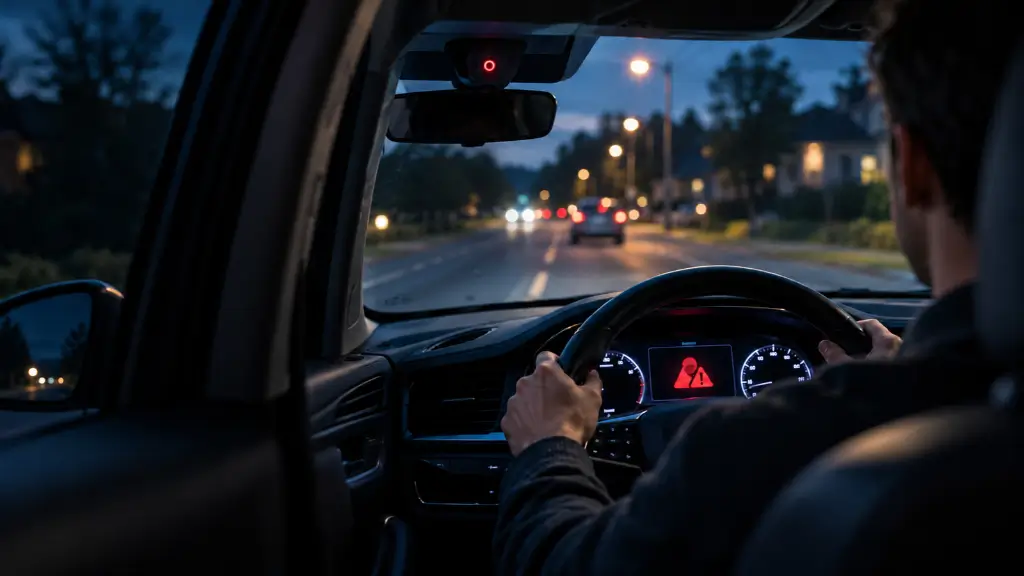
For more than two decades, California’s electric vehicle drivers enjoyed a privilege that millions of traditional commuters envied: the ability to glide into the carpool lane while driving solo. That perk, created under the state’s Clean Air Vehicle program, was meant to reward early adopters of electric cars and hybrids while encouraging the broader public to embrace cleaner transportation. But after September 30, that advantage comes to an end.
California’s Department of Motor Vehicles confirmed it stopped accepting new applications for Clean Air Vehicle decals on August 29, and existing decals will no longer be valid beginning October 1. That means a Tesla, Chevy Bolt, or Toyota Prius Prime with a single driver will be treated the same as a gas-powered sedan in traffic. Use the high-occupancy vehicle lane alone, and you risk a ticket of up to $490.
The reason behind this abrupt shift is not state policy but federal law. The Clean Air Vehicle program was last authorized through the 2015 federal transportation law, which included a sunset clause requiring Congress to extend it. That extension never happened. Without Washington’s approval, California cannot legally continue granting carpool lane access to EV drivers.
This has sparked frustration among both state officials and drivers who had come to view the privilege as a key reason to purchase an electric vehicle. Since its inception in 2001, California has issued more than 1.2 million decals, with about 512,000 still valid this summer. The scale of adoption made California a national model for incentivizing EV use. For many, skipping bumper-to-bumper traffic was just as important as lower fuel costs or environmental benefits.
Governor Gavin Newsom sharply criticized the lapse, blaming congressional inaction. His office warned that revoking EV access to HOV lanes will worsen traffic congestion and increase air pollution. California already struggles with air quality, hosting five of the nation’s 10 smoggiest cities according to the American Lung Association. State officials argue that taking incentives away from EVs could discourage adoption at a time when they want more drivers behind the wheel of battery-powered cars.
But the politics of EV incentives have shifted dramatically in recent years. Bipartisan support has fractured, and federal priorities have moved away from programs like California’s Clean Air Vehicle initiative. Under President Donald Trump, environmental waivers that California used to set its own strict emissions standards were revoked.
He also signed an executive order halting federal EV incentives such as the $7,500 tax credit and moved to eliminate the state’s zero-emissions vehicle mandate. More recently, his administration backed several resolutions overturning California’s regulations, including its 2035 ban on new gas-powered cars.
California, for its part, has doubled down on electrification. Electric vehicles accounted for 25 percent of new car sales in 2024, the highest in the nation. The state now has more EV chargers than gas stations, and its climate policies require automakers to meet aggressive EV sales quotas if they want to continue selling gasoline-powered models. To bridge the gap, state lawmakers passed legislation in 2024 to extend the Clean Air Vehicle program until 2027. But because federal approval was necessary, that effort has now hit a wall.
The loss of carpool lane access raises serious questions about the balance between incentives and mandates. Many Californians purchased EVs with the expectation of long-term access to HOV lanes, and for commuters in areas like Los Angeles or the Bay Area, the time savings are significant. Taking that away could undermine consumer confidence in state-backed incentives. If benefits can vanish overnight, will drivers think twice before making the leap to an electric car, especially with prices still higher than many gasoline vehicles?
There’s also the issue of traffic itself. With over half a million cars losing carpool access at once, HOV lanes may open up—but the general flow of traffic could get worse. California has long promoted these lanes as a way to reduce congestion and emissions. Yet now, drivers who purchased EVs expecting relief from gridlock will be back in the same stop-and-go conditions as everyone else.
Some critics argue that carpool incentives were always meant to be temporary. When the program launched in 2001, the idea was to kickstart adoption of a new technology, not to create a permanent class of special drivers. EV sales are now far higher than expected when the program began, and some transportation analysts suggest that the incentives have already served their purpose. In their view, it’s time to reassess whether carpool perks are fair, especially as EVs become mainstream.
Still, the political framing remains contentious. California officials see the lapse as part of a broader pattern of federal resistance to their climate policies. They argue that while EVs have become more popular, the fight against pollution requires every possible tool, including access incentives. Without federal cooperation, the state faces limits on how far it can go.
Drivers, meanwhile, are caught in the middle. A Tesla owner who counted on the decal as part of their daily commute could soon be facing hundreds of dollars in fines. Discounts on toll programs, such as those tied to FasTrak Clean Air Vehicle tags, will also vanish unless drivers meet normal occupancy rules.
This moment highlights a broader tension in the transition to electric vehicles: the clash between ambitious state-level initiatives and shifting federal policy. California wants to lead the nation in electrification, but it cannot do so entirely on its own. As EV adoption accelerates, the question becomes whether incentives should keep pace—or whether it’s time for the market to stand on its own.
For now, the result is clear. Starting October, California’s EV drivers will no longer be able to rely on their clean-air decals to speed through traffic. Instead, they’ll have to join the same lanes as everyone else, while the larger policy debates play out in Washington and Sacramento.
What happens next will depend on how lawmakers balance environmental goals, commuter realities, and political priorities. But one thing is certain: the end of California’s Clean Air Vehicle program marks a turning point in how America incentivizes electric cars. For drivers, it’s a reminder that government programs can change overnight—and the road ahead may be more complicated than expected.
Check out my full commentary on this story: http://youtu.be/HCefm4AsYOo
Looking for more automotive news? https://www.CarCoachReports.com
Listen to The Drive Car Show – https://www.youtube.com/@thedrivecarshow