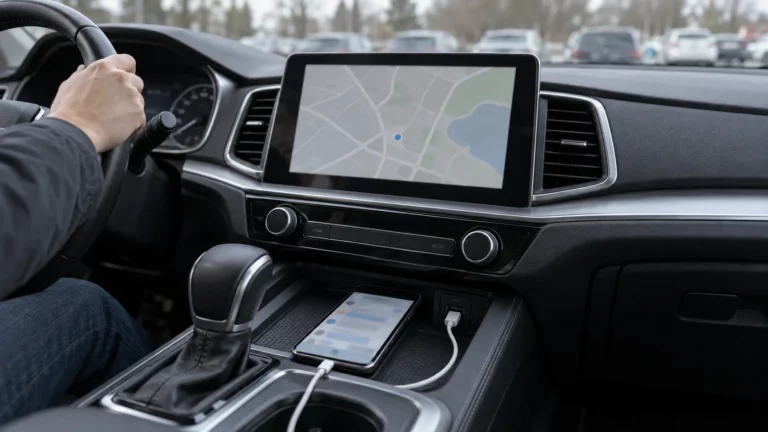
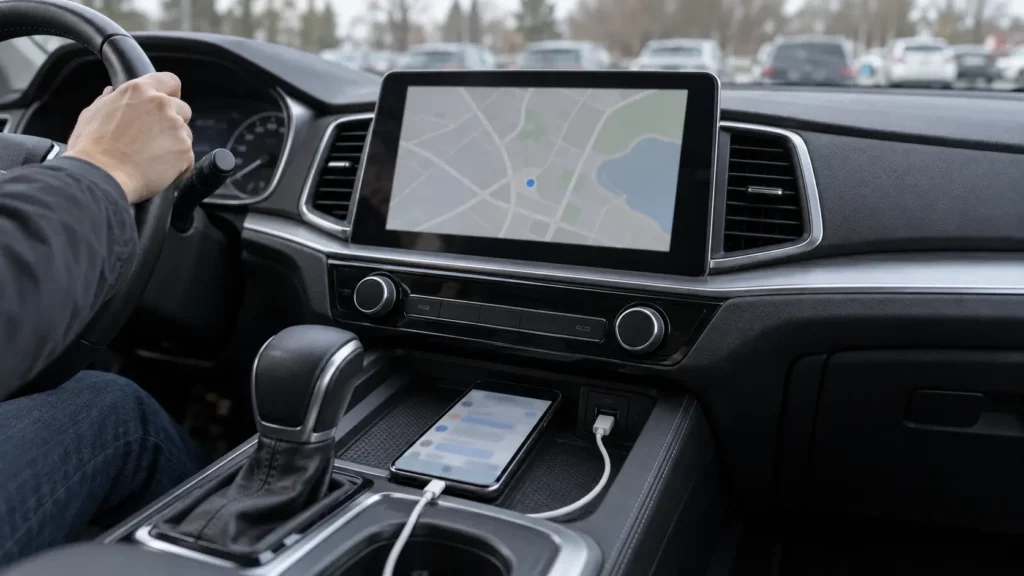
Your car may be collecting far more than the miles on your odometer. Depending on the vehicle and connected services, it can capture information about where you drive, how you drive, and even information pulled from your phone.
And the disturbing part isn’t simply that the data exists. It’s where that data can go.
A federal lawsuit involving Honda, Toyota, Volkswagen and General Motors raised an extraordinary question: Can connected-car systems capture and store private text messages and call information from a driver’s phone?
The case was ultimately dismissed on a specific legal issue. That does not mean a federal court gave automakers blanket permission to intercept everyone’s texts. But the underlying technology didn’t disappear when the lawsuit ended.
Researchers from Northeastern University and Consumer Reports recently tested 21 connected vehicles and 30 companion smartphone apps. They found that 19 of the 21 vehicles contacted at least one outside third party over Wi-Fi. Even more concerning, 28 of 30 companion apps sent data to outside advertising or analytics companies.
Seven apps transmitted personally identifiable information such as an owner’s name, vehicle identification number or precise location. Apps including myChevrolet, myCadillac, myBuick, myGMC, HondaLink, MyNissan and the Lincoln app were among those found sending VINs paired with an email address or location.
That matters because a VIN can become a powerful identifier when combined with other personal information. Your vehicle isn’t just a machine anymore. It’s connected to an ecosystem of companies that can potentially link the car to a specific person.
And then we get to insurance.
This is where the issue moves from a privacy debate to a consumer issue that can hit your wallet.
General Motors provides one of the clearest documented examples. GM previously offered OnStar Smart Driver, which collected driving behavior. In 2024, GM announced that it was discontinuing Smart Driver and terminating its relationships with LexisNexis and Verisk. GM said data sharing with those companies ended March 20, 2024.
GM’s own statement is significant because it confirms the relationships existed.
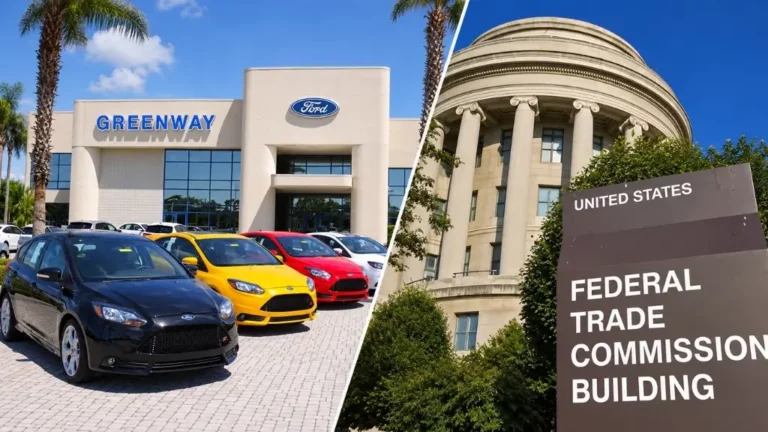
The Federal Trade Commission went further. The agency alleged that GM and OnStar collected precise geolocation and driving behavior information from millions of vehicles and shared or sold that information without adequately notifying consumers or obtaining affirmative consent.
According to the FTC, the information could include hard braking, speeding, precise location and other driving behavior. The agency also alleged that consumer reporting companies used the information to create reports that insurers could use when making decisions about coverage and pricing.
Consider what that means. Your vehicle can generate a record of how you drive, that information can move through companies you’ve never heard of, and it can potentially become relevant when an insurance company decides what you pay.
There are also individual reports that show why consumers are alarmed. One driver reported an 80% increase in insurance rates after having OnStar and said a subsequent insurance denial directed the driver to check a LexisNexis report.
That one account doesn’t prove every insurance increase is caused by connected-car data. But it raises a question consumers should be asking: What information about my driving is sitting in a consumer report that I have never seen?
And don’t assume this only applies to the newest cars.
Depending on the vehicle and connected services, this issue can reach back roughly five to 10 years. The technology has been spreading through vehicles for years, which means this isn’t simply a 2026 problem.
The industry will understandably argue that connected services require data. That’s true. Navigation, emergency assistance and other features cannot function without collecting some information.
But that doesn’t answer the bigger question: How much data is necessary, who receives it, and what happens to it afterward?
Consumers shouldn’t need to become privacy lawyers to understand what their vehicle is doing. And they shouldn’t have to discover years later that information generated by their own driving became valuable to another company.
The connected car was sold as a safer, smarter and more convenient vehicle.
But if convenience also turns your driving behavior into a commodity, consumers have every right to ask who is making money from it.
The question isn’t whether connected cars collect data.
Check out my full commentary on this story: https://youtu.be/sKvJujRedn0
Looking for more automotive news? https://www.CarCoachReports.com
Listen and subscribe to The Drive with Lauren and Karl – https://www.youtube.com/@thedrivecarshow