On the Dash:
- Toyota’s CEO change reinforces a profitability-first approach that favors steady product planning over rapid EV expansion.
- Hybrid demand strength supports dealer confidence amid slowing EV adoption in key U.S. markets.
- Cost control and tariff management will shape future pricing, incentives, and allocation strategies.
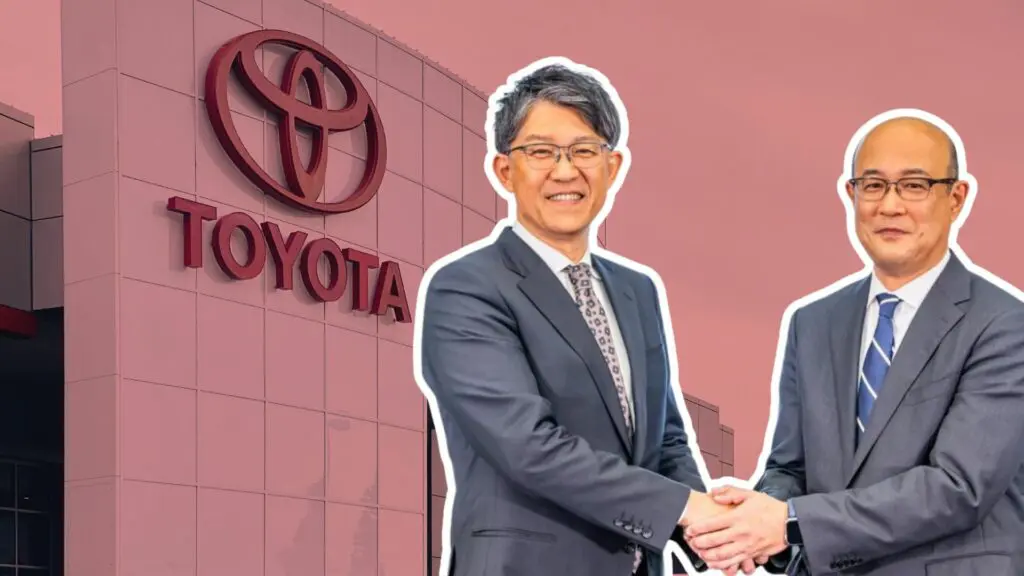
Toyota announced on February 6 that it would make a surprise leadership change, naming Chief Financial Officer Kenta Kon as CEO effective April 1, replacing Koji Sato after a three-year tenure, as global automakers navigate mounting economic and competitive pressures.
According to the automaker, Sato will move into a newly created role as Vice Chairman and Chief Industry Officer, where Toyota said he will focus on external industry initiatives. The transition comes as automakers worldwide recalibrate strategies amid slowing electric vehicle adoption, rising tariffs, and increased competition from Chinese manufacturers.
Analysts described the move as unexpected, given Toyota’s strong performance under Sato. During his tenure, Toyota leaned heavily into its hybrid-first electrification strategy, a decision that has proven resilient as battery electric vehicle demand has softened in several key markets, particularly in the United States.
Kon’s appointment signals a sharper focus on financial discipline amid intensifying trade and cost pressures. Toyota has said tariffs imposed by the Trump administration will reduce operating profit by about $9 billion in the current fiscal year, which ends March 31. Japanese-built vehicles exported to the U.S. are now subject to a 15 percent tariff under a trade agreement finalized last year.
Despite those headwinds, Toyota raised its full-year operating profit forecast by nearly 12%, citing cost reductions and a weaker yen. Shares rose about 3 percent during U.S. trading Friday following the announcement.
Toyota remains the world’s most profitable automaker and sold a record 11.3 million vehicles globally in 2025, including 2.5 million in the U.S. The company has continued investing heavily in North America, pledging billions to expand hybrid production capacity as consumer demand for gas-electric vehicles grows.