On the Dash:
- Hyundai Motor Group is launching new V2G and V2H services across Korea, Europe and the United States to deepen EV integration with energy systems.
- Korea will begin its first V2G pilot in Jeju in 2025, while Europe will introduce a commercialized V2G program in the Netherlands.
- U.S. customers will gain V2H capabilities that allow EVs to serve as backup home power sources and reduce electricity costs.
Hyundai Motor Group is expanding its global Vehicle-to-Everything services as part of a broader strategy to integrate electric vehicles more deeply into power grids, homes and renewable-energy networks. The company announced new Vehicle-to-Grid and Vehicle-to-Home programs across Korea, Europe and the United States as it pushes toward a unified energy ecosystem built around its EV lineup.
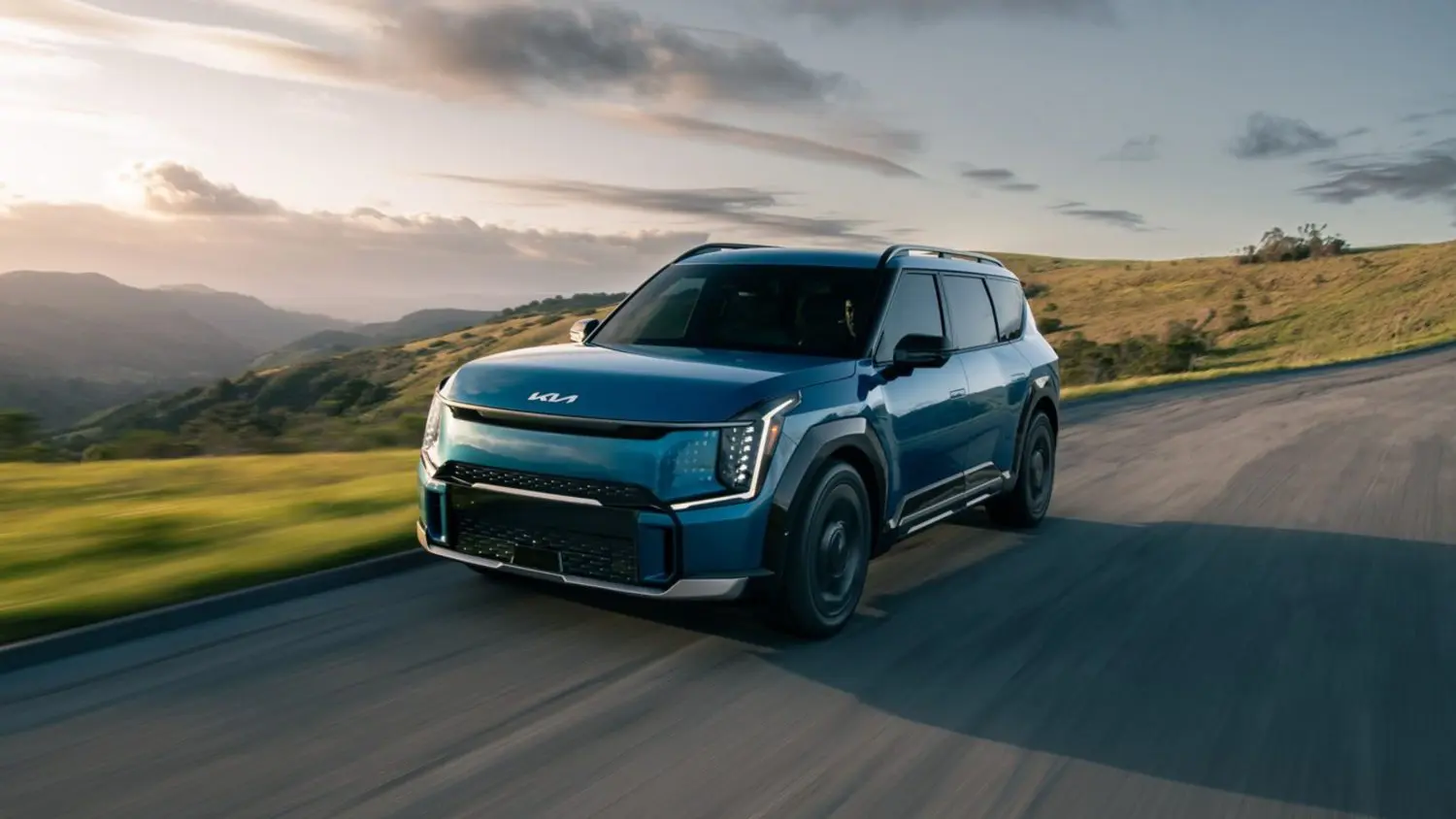
The first major rollout begins in Korea, where Hyundai Motor and Kia will introduce the nation’s first V2G pilot service on Jeju Island by the end of 2025. The project will use the Kia EV9 and Hyundai IONIQ 9 to support the island’s renewable-energy goals by returning stored electricity from EVs back to the grid when needed. Participants will be able to charge vehicles when energy prices are low and discharge power when prices increase, helping balance grid demand and reduce energy costs. The pilot is a collaboration with Jeju authorities, Korea Electric Power Corporation and Hyundai Engineering and is intended to expand nationwide after testing is complete.
In Europe, Hyundai Motor Group will move beyond its existing Smart Charging program with the launch of a commercialized V2G service in the Netherlands at the end of 2025. The offering allows EV owners to optimize charging during lower-rate periods and sell surplus electricity back to the grid during peak times. The program uses bidirectional chargers compatible with Hyundai and Kia models and aims to reduce customer electricity expenses while improving overall grid stability. Initial availability will be limited to the EV9 and IONIQ 9, with plans to add more models and expand into additional European markets.
In the United States, the Group is preparing to roll out V2H services that allow EVs to serve as emergency backup power sources during outages, natural disasters or high-demand periods. Kia already launched the feature earlier in 2025 for EV9 owners, and Hyundai will add the capability to the IONIQ 9. Kia will also extend coverage to the EV6. The service enables drivers to store lower-cost electricity during off-peak hours and use it at home when demand rises, thereby improving energy resilience and potentially saving on costs.