On the Dash:
- Michigan dealerships relying on cross-border shipments may face slower deliveries and higher costs.
- Canadian imports and U.S.-made vehicles transported via the bridge could see delays or additional costs.
- Regulatory changes or tariffs tied to the bridge and U.S.-Canada trade disputes could affect operations and margins.
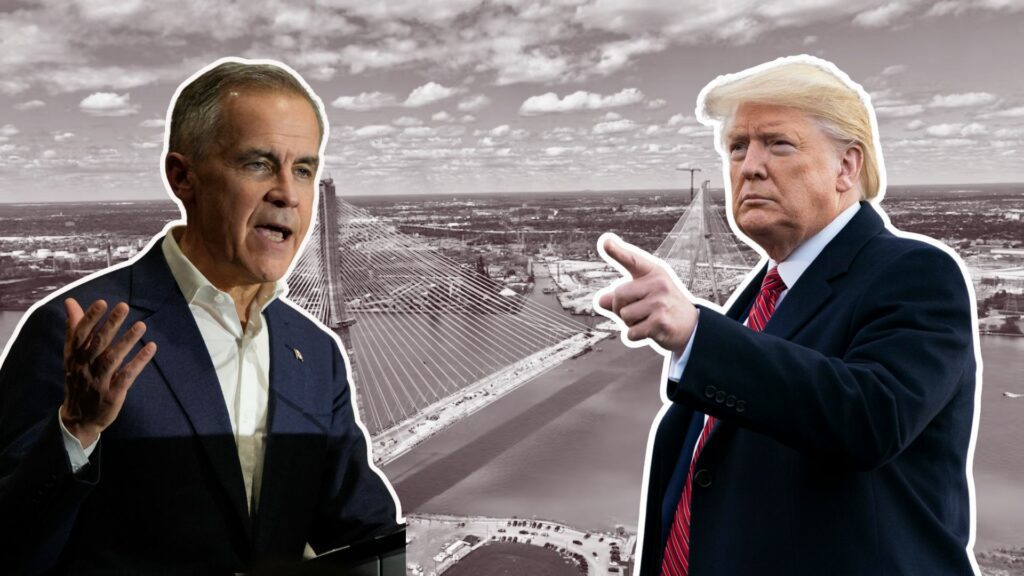
President Trump on Monday said he may block the opening of the nearly completed Gordie Howe International Bridge, escalating trade tensions between the United States and Canada and casting uncertainty over a major cross-border infrastructure project.
In a post on Truth Social, Trump wrote that he would not allow the bridge to open until the United States is “fully compensated” and treated with “fairness and respect.” He also suggested the U.S. should potentially own at least half of the asset.
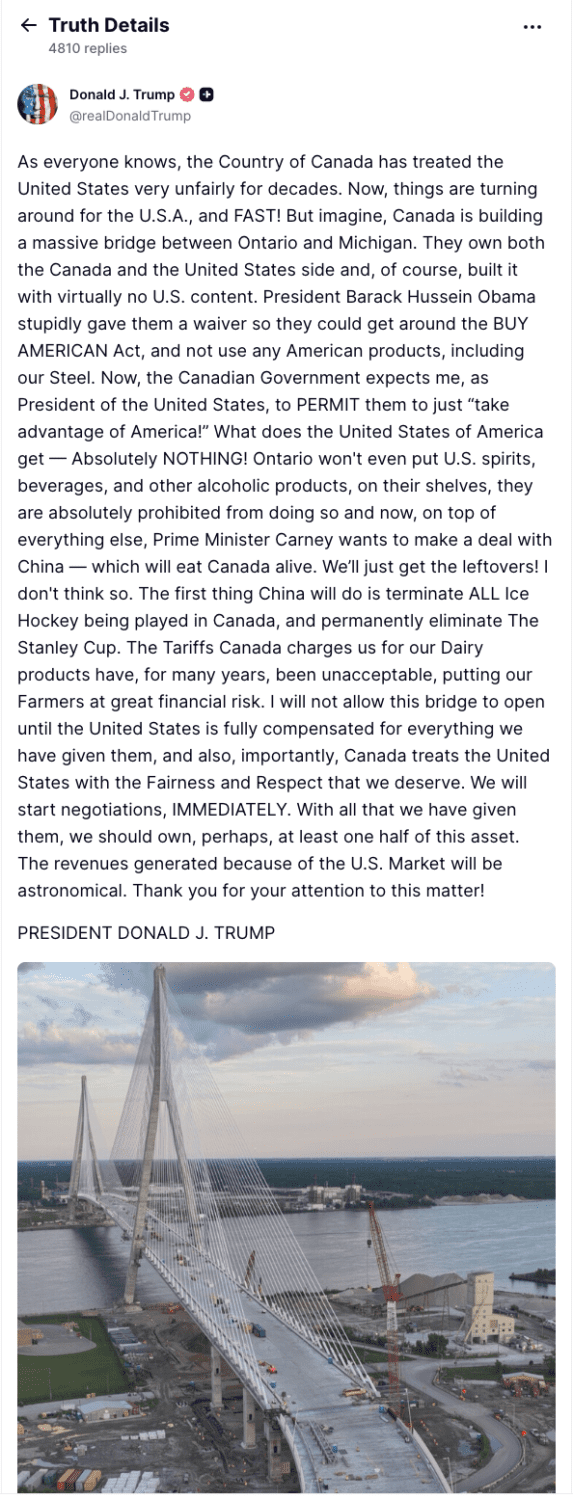
The 1.5-mile cable-stayed span, largely funded by Canada, is designed to ease congestion at the Detroit-Windsor crossing, the busiest commercial land border in North America. The bridge is expected to serve as a critical trade corridor for automotive, manufacturing, and agricultural shipments between the two countries when it opens, currently scheduled for early 2026.
The project stems from a 2012 agreement between the U.S. and Canada under which Canada agreed to cover most of the construction costs and collect toll revenue to repay the private-sector builder. No tolls would be collected on the U.S. side, and Michigan was not required to contribute funding. The U.S. Department of Transportation estimates the total cost of the bridge at $4.4 billion.
Trump had previously backed the bridge in 2017 following a bilateral meeting with then-Prime Minister Justin Trudeau, describing it at the time as a vital economic link between the two nations.
However, the President’s latest comments come amid broader friction between Washington and Ottawa. Previously, Trump criticized Canada over tariffs and trade policies, including recent agreements between Canada and China, signaling that trade disputes may factor into the administration’s stance on the bridge.