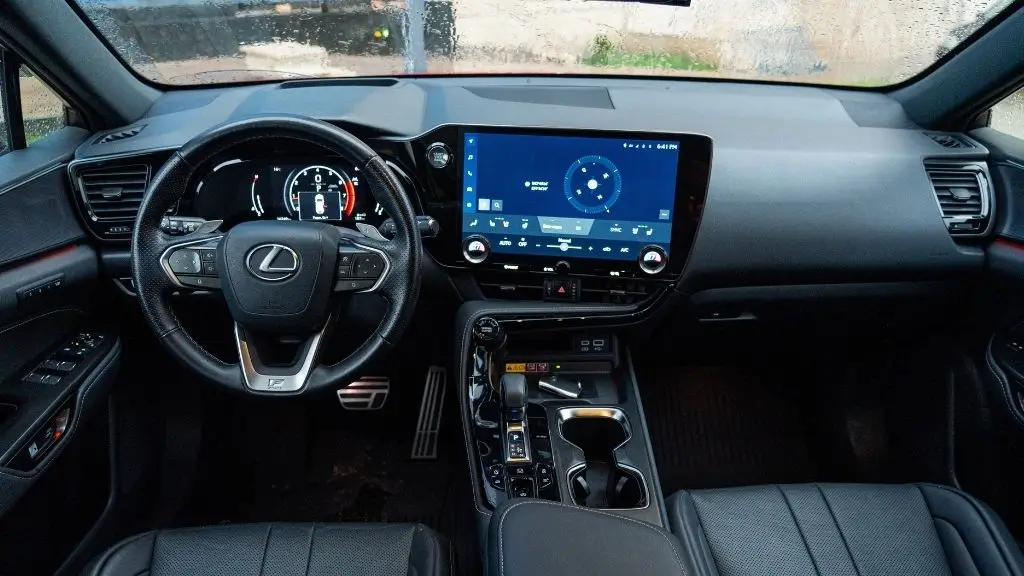
German drivers who purchased Lexus vehicles expecting full access to their climate and remote convenience features recently learned a hard lesson about modern car ownership. Features they paid for and relied on were suddenly restricted or unavailable due to regulatory compliance, connectivity limitations, and software control. No broken parts. No worn-out hardware. Just a digital change that altered how their vehicle functioned.
This isn’t a mechanical issue. It’s a control issue.
And it exposes a reality that every American driver needs to understand. Your vehicle may sit in your driveway, your name may be on the title, and your insurance company may recognize you as the owner—but increasingly, critical features inside that vehicle exist at the discretion of software systems, connectivity infrastructure, and regulatory frameworks.
This is not speculation. It’s already happening.
At the center of the controversy is the evolution of modern vehicles into what the industry calls “software-defined vehicles.” Today’s cars are rolling computer networks. They rely on cellular connections, cloud servers, encryption systems, and regulatory-approved software architectures to enable many of their most desirable features.
Remote start, climate preconditioning, remote lock and unlock, vehicle tracking, and diagnostic monitoring all depend on telematics systems. These systems connect your car to external servers using cellular networks. When that connection is disrupted, restricted, or deemed non-compliant, the feature can disappear instantly.
Not because your vehicle can’t physically perform the function—but because the software layer controlling access has changed.
In the case of Lexus vehicles in Germany, the parent company, Toyota Motor Corporation, confirmed that certain connected services were modified due to compliance requirements and infrastructure limitations. While automakers describe these changes as regulatory compliance and technical necessity, consumers experience them very differently.
They experience them as lost functionality in vehicles they already paid for.
That distinction matters. For decades, vehicle ownership was simple. When you purchased a car, its features remained available as long as the physical components worked. Heated seats functioned. Climate systems operated. Remote entry worked. Nothing external could suddenly revoke those capabilities.
Software has changed that equation. Now, features can be controlled remotely. Enabled remotely. And disabled remotely.
This is not limited to Lexus or Germany. It is the direct result of regulatory shifts, telecommunications changes, and the automotive industry’s rapid transition toward software-controlled functionality.
Europe has implemented strict cybersecurity standards requiring automakers to certify the security of connected vehicle systems. These regulations were created to protect consumers from hacking, data theft, and unauthorized vehicle access.
Those goals are legitimate. Modern vehicles contain millions of lines of code and dozens of interconnected electronic modules. Cybersecurity vulnerabilities could pose real safety risks.
But cybersecurity compliance comes with consequences. Older telematics hardware may not meet new regulatory requirements. Legacy communication systems may no longer qualify under updated security protocols. When that happens, automakers must either redesign systems, retrofit vehicles, or discontinue connected features.
In many cases, they discontinue the features. Telecommunications infrastructure adds another layer of vulnerability. Cellular carriers worldwide have been shutting down older 2G and 3G networks. These older networks supported telematics systems in millions of vehicles built over the past 10 to 15 years. Once those networks disappear, vehicles relying on them lose connectivity.
No connectivity means no remote functionality. This transition has already affected multiple brands, multiple countries, and millions of vehicles globally. The larger issue is not just about connectivity. It’s about control.
When vehicle functionality depends on external servers, regulatory approval, and software authorization, the owner is no longer the sole authority over what the vehicle can do. Automakers maintain technical control. Regulators maintain legal control.
Telecommunications providers maintain infrastructure control. The owner becomes dependent on all three. This represents a fundamental shift in the nature of vehicle ownership. Automakers have also introduced subscription-based features that reinforce this model. Remote start, heated seats, advanced driver-assistance systems, and performance upgrades are increasingly offered as software-enabled services rather than permanent hardware functions.
From a corporate perspective, this creates recurring revenue streams. From a technical perspective, it allows automakers to manage features dynamically. From a consumer perspective, it introduces a new layer of uncertainty.
Features are no longer guaranteed indefinitely.
Organizations such as the World Economic Forum have openly discussed how connectivity, software, and digital ecosystems are transforming ownership models across industries. Vehicles are among the most visible examples of this transformation.
The automotive industry is following the same path as smartphones, computers, and other connected devices.
Software defines functionality.
Companies specializing in large-scale data infrastructure, including Palantir Technologies, demonstrate how digital systems can monitor, manage, and analyze vast networks of connected endpoints. While consumers may not see this infrastructure, it exists behind the scenes, enabling everything from software updates to system diagnostics.
Your vehicle is now part of that connected ecosystem.
This connectivity provides real benefits. Software updates can improve safety, enhance performance, and fix problems quickly. Automakers can correct defects without requiring physical recalls. Advanced driver-assistance systems can improve over time. Diagnostics can identify problems early.
But connectivity also introduces dependency. The Lexus situation illustrates how quickly functionality can change when regulatory requirements, telecommunications infrastructure, or software support shifts.
Many consumers assume that once they buy a vehicle, its functionality remains fixed. That assumption no longer holds true.
Modern vehicles are governed as much by software authorization as by mechanical capability. This raises legitimate consumer protection questions.
How long will connected features remain supported?
What happens when telecommunications infrastructure changes?
What obligations do automakers have to maintain functionality?
What rights do consumers have when features are discontinued?
These questions do not yet have universally consistent answers.
Automakers include terms and conditions that define connected services as optional and subject to change. Regulatory compliance requirements can override existing functionality. Infrastructure changes can make continued support impractical.
From a legal standpoint, automakers often retain the authority to modify connected services.
From a consumer standpoint, that reality can come as a surprise. The United States is not immune to these trends. American vehicles use the same telematics architecture, rely on the same cellular infrastructure, and operate under evolving cybersecurity and emissions regulations. Remote start, remote climate control, and app-based vehicle access are now standard features across multiple price segments.
Those features exist within the same software-controlled ecosystem. The transition toward electric vehicles will accelerate this trend even further. Electric vehicles rely more heavily on software to manage battery systems, charging, thermal management, and performance optimization. Software updates play a critical role in maintaining functionality. Connectivity is no longer optional. It is foundational.
That means software authority is becoming inseparable from vehicle operation. This does not mean automakers or regulators are acting with malicious intent. Cybersecurity protections are necessary. Software updates improve safety. Infrastructure upgrades improve performance and reliability.
But it does mean the traditional concept of vehicle ownership is evolving. Ownership now exists alongside software governance.
The Lexus situation in Germany serves as a warning signal—not because of one specific feature, but because it demonstrates the technical capability to alter vehicle functionality remotely. That capability exists across the industry.
Most drivers have never considered this reality. They assume ownership equals control. Increasingly, ownership equals access which means access is governed by software, connectivity, and compliance. Consumers should not panic. But they should pay attention.
When purchasing a modern vehicle, buyers should understand which features depend on connectivity, how long those features are supported, and what happens if supporting infrastructure changes. Software-defined vehicles are here to stay. Connectivity will continue expanding. Regulatory oversight will continue evolving. Convenience will continue increasing.So will complexity.
The automotive industry is entering a new era—one where the most important component in your vehicle is no longer under the hood. It’s the software.
Check out my full commentary on this story: https://youtu.be/qXinr_F-4Ac