TSLA435.790-6.31%
GM83.240-1.11%
F17.4400.79%
RIVN16.3001.1%
CYD56.7200.39%
HMC26.990-0.3%
TM189.950-1.89%
CVNA73.000-0.49%
PAG167.370-0.8%
LAD290.890-4.73%
AN187.720-6.02%
GPI316.340-10.09999%
ABG187.710-7.04%
SAH82.620-1.12%
TSLA435.790-6.31%
GM83.240-1.11%
F17.4400.79%
RIVN16.3001.1%
CYD56.7200.39%
HMC26.990-0.3%
TM189.950-1.89%
CVNA73.000-0.49%
PAG167.370-0.8%
LAD290.890-4.73%
AN187.720-6.02%
GPI316.340-10.09999%
ABG187.710-7.04%
SAH82.620-1.12%
TSLA435.790-6.31%
GM83.240-1.11%
F17.4400.79%
RIVN16.3001.1%
CYD56.7200.39%
HMC26.990-0.3%
TM189.950-1.89%
CVNA73.000-0.49%
PAG167.370-0.8%
LAD290.890-4.73%
AN187.720-6.02%
GPI316.340-10.09999%
ABG187.710-7.04%
SAH82.620-1.12%

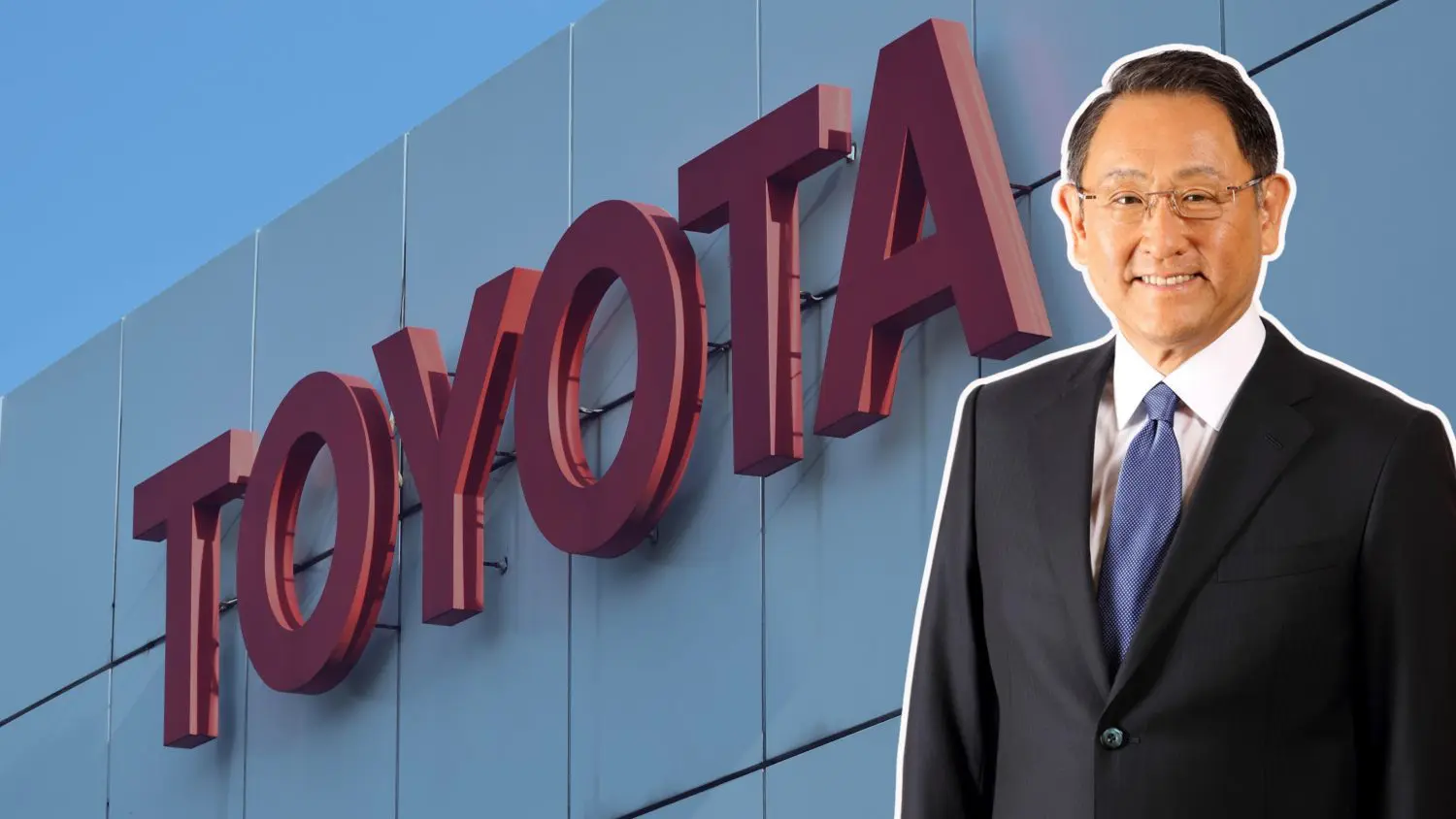
Akio Toyoda launches $33B bid to privatize Toyota Industries

The move aims to streamline Toyota’s business structure and strengthen family influence amid corporate reforms.
Toyota

Akio Toyoda, chairman of Toyota Motor Corp. and grandson of the automaker’s founder, is leading a $33 billion (¥4.7 trillion) buyout bid to take Toyota Industries Corp. private. The tender offer, announced Tuesday, includes a $114 (¥16,300) per share buyout, representing an 11% discount to the company’s recent closing price. It is expected to close by December 2025.

The bid will be executed through a newly formed holding company primarily owned by Toyota Fudosan Co., an unlisted real estate firm that serves as the Toyoda family’s investment arm. Toyoda will personally contribute $7 million (¥1 billion) to the acquisition, which will be financed with $19.7 billion (¥2.8 trillion) in loans from Japan’s top three banks: Mitsubishi UFJ, Sumitomo Mitsui, and Mizuho Financial Group. Toyota Motor will also inject $7 billion (¥1 trillion) into the deal through an equity investment at a lower share price.

Sign up for CBT News’ daily newsletter and get the latest industry stories delivered straight to your inbox.

This marks one of the largest buyouts on record and could give the Toyoda family tighter control over the broader Toyota business group. The move aligns with Japanese government reforms that encourage conglomerates to unwind complex cross-shareholdings and improve transparency. Although the deal’s discount has raised concerns among some investors, company leaders emphasize that the structure is intended to strengthen operational unity and long-term growth within the Toyota Group.

The privatization will also dissolve Toyota Industries’ cross-shareholdings with Toyota Motor, Aisin Corp., Denso Corp., and Toyota Tsusho Corp. As part of the restructuring, these firms will repurchase their own shares held by Toyota Industries and divest their stakes in the company. Toyota Motor, however, will retain involvement through preferred shares.

Toyota Industries, originally founded by Toyoda’s great-grandfather Sakichi, has evolved from textile loom manufacturing into a global supplier of forklifts, vehicle components, and automotive systems. Its upcoming shareholder meeting is scheduled for June 10, followed by Toyota Motor’s on June 12.

The buyout comes as Toyota seeks to restore governance credibility following recent compliance scandals at group subsidiaries, including Toyota Industries. Leadership insists that the transaction reflects a commitment to corporate improvement rather than a management takeover, with Toyoda providing strategic guidance rather than seeking direct control.

Read More
More from Articles
New U.S. trade proposal would raise vehicle content requirements, reshape North American supply chains

New U.S. trade proposal would raise vehicle content requirements, reshape North American supply chains

- June 1, 2026
On the Dash: Higher U.S. content requirements could increase sourcing and manufacturing costs across the automotive supply chain. Changes to USMCA rules may affect vehicle pricing, production strategies, and inventory...
Mercedes-Benz dealers face uncertainty as Congress weighs ownership restrictions

Mercedes-Benz dealers face uncertainty as Congress weighs ownership restrictions

- June 1, 2026
On the Dash: Proposed legislation could bar Mercedes-Benz from importing, selling, or manufacturing vehicles in the U.S. for five years. Dealers should monitor the bill's ownership thresholds, which could affect...
What the FTC's warning letters mean for car dealers and their social media teams

What the FTC’s warning letters mean for car dealers and their social media teams

- June 1, 2026
For years, dealership social media teams have treated vehicle posts like digital window stickers with a little extra sparkle: “Only $399/month,” “Huge savings TODAY ONLY,” “This one won’t last,” “$5,000...
Why inventory, service, and sales can't operate as separate experiences anymore

Why inventory, service, and sales can’t operate as separate experiences anymore

- June 1, 2026
Reynolds and Reynolds For decades, dealerships have been organized around departments. Sales focused on inventory and deals. Service focused on repair orders and retention. Marketing worked within its own systems to...