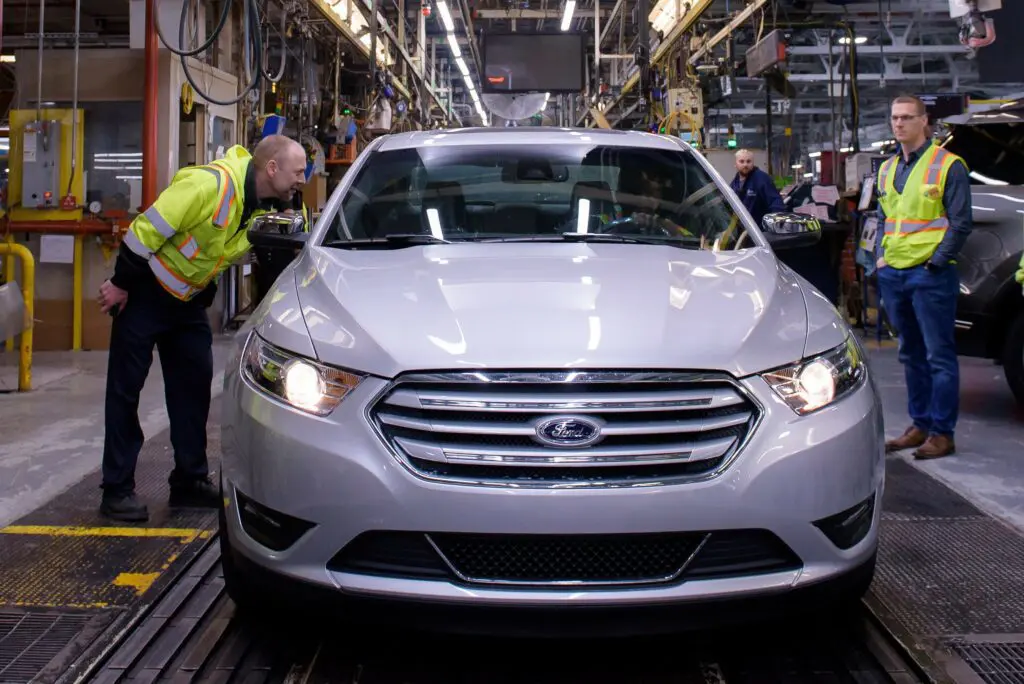
A semiconductor chip shortage continues to vex the auto industry worldwide. Several factories across nameplates such as Ford, Subaru, Toyota, Volkswagen, Audi, Nissan, Chrysler, and Dodge have been significantly throttled down as semiconductor chips are in short supply. These shortages have become a worldwide concern with Ford of India and VW’s operations in China just a couple of examples.
The world’s largest carmaker, VW, is the first to put financial pressure on chip manufacturers as they consider claiming damages from their suppliers, according to a Reuters report. Both Bosch and Continental are affected suppliers, although their production depends on chips from Taiwan. VW is attempting to restore the supply chain with their pressure. A spokesperson for the company said, “For Volkswagen, the top priority is to minimize the effects of the semiconductor bottleneck on production.“
Taiwan’s Ministry of Economic Affairs acknowledged that car companies have been in contact. The department reported that “Since the end of last year, diplomatic channels have indeed received requests from relevant countries due to the shortage of automotive chips,” and that they’ve asked manufacturers to provide “full assistance” to auto customers.
“The relevant supply and demand situation is also closely related to the plans of automotive chip factories to reduce inventory during the off-season,” the ministry said.
Taiwan Semiconductor Manufacturing Co Ltd (TSMC), released a statement regarding the importance they place on the shortage for auto makers. “It is our top priority, and TSMC is working closely with our automotive customers to resolve the capacity support issues.”
And for the first time, indications are that the shortage could continue in some capacity for a decade. Increased demand for chips related to more advanced vehicles is adding never-before-seen strain on Chinese and Taiwanese manufacturers.
Alternative chip production could ease the burden
Homegrown solutions for ramping up microchip production had been a hot topic prior to the pandemic to alleviate the reliance on foreign semiconductor manufacturing for the auto industry. That has yet to come to fruition as monstrous factories would need to be built first, and securing additional graphite and other materials is extremely restrictive.
That supply could be met by producing semiconductor chips from natural, organic materials like hemp, according to Jesse Henry, CEO of Heartland Industries. Graphene development from hemp fibers can have the same quality graphene as graphite or better, and the company is planning to have the material in production within the next 12 to 24 months. Although a plant-based product, there’s no recorded degradation on the end product.
With graphene supply as one of the bottlenecks in manufacturing semiconductor chip, getting the raw product into production could put a dent in the shortage. Henry says companies are limited to the market’s supply of graphene. “Heartland will build the supply chain so that large manufacturers have a reliable supply of raw materials for the scalable production of end products within the automotive sector. There are only a few companies across the world that have the capacity to produce thousands of pounds of graphene. Heartland will be competing alongside these companies to embed graphene into specific use cases within the mobility sector.”
Although still in the R&D phase, Henry says, “Initial testing has proved that hemp-based graphene can provide the conductivity, strength and durability required for automotive applications. Testing and regulatory approvals will still be required in accordance with standard product testing processes within automotive. We are working with several partners to continue research and testing for future applications.”
In the interim, chip shortages would be the prevailing news for manufacturing. Dealers could feel the effects as inventory bears the brunt.
Did you enjoy this article from Jason Unrau? Read other articles from him here.
Be sure to follow us on Facebook and Twitter to stay up to date or catch-up on all of our podcasts on demand.
While you’re here, don’t forget to subscribe to our email newsletter for all the latest auto industry news from CBT News.